Antibacterial agent used in common soaps found in increasing amounts in freshwater lakes
When people wash their hands with antibacterial soap, most don't think about where the chemicals contained in that soap end up. University of Minnesota engineering researchers do.
A new University of Minnesota study determined that the common antibacterial agent, called triclosan, used in soaps and many other products is found in increasing amounts in several Minnesota freshwater lakes. The findings are directly linked to increased triclosan use over the past few decades.
In addition, the researchers found an increasing amount of other chemical compounds, called chlorinated triclosan derivatives, that form when triclosan is exposed to chlorine during the wastewater disinfection process. When exposed to sunlight, triclosan and its chlorinated derivatives form dioxins that have potential toxic effects in the environment. These dioxins were also found in the lakes.
The study was just accepted by the journal Environmental Science and Technology and is published online.
The study's results raise new questions about the use of triclosan. Triclosan was patented in 1964 and introduced into the market in the early 1970s. Since then it has been added to many consumer products including soaps and body washes, toothpastes, cosmetics, clothing, dishwashing liquid, and kitchenware. Beyond its use in toothpaste to prevent gingivitis, the U.S. Food and Drug Administration has found no evidence that triclosan in antibacterial soaps and body washes provide any benefit over washing with regular soap and water. The FDA and the Environmental Protection Agency continue to study the effects of triclosan on animal and environmental health.
"It's important for people to know that what they use in their house every day can have an impact in the environment far beyond their home," said the study's lead author William Arnold, a civil engineering professor in the University of Minnesota's College of Science and Engineering. "Consumers need to know that they may be using products with triclosan. People should read product labels to understand what they are buying."
Arnold said this research can also help chemical manufacturers understand some of the potential long-term impacts from triclosan on the environment.
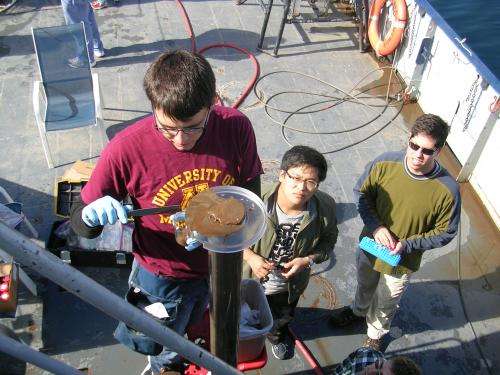
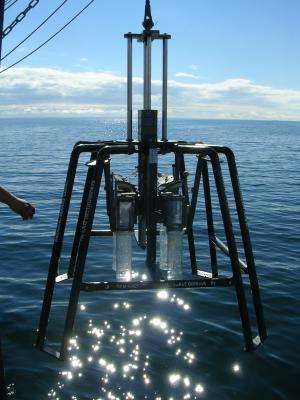
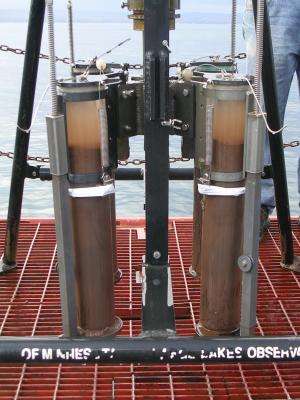
The researchers studied the sediment of eight lakes of various size throughout Minnesota with varying amounts of treated wastewater input. They gathered sediment cores about one meter long from each of the lakes. After slicing the cores into several segments about two to four centimeters in thickness, they worked with researchers at the Science Museum of Minnesota's St. Croix Watershed Research Station to date the sediment. Some sediment segments dated back more than 100 years. Professor Arnold's group and researchers from Pace Analytical Services in Minneapolis used high tech methods to analyze the chemicals contained in the sediments over time.
The research found that sediment collected from large lakes with many wastewater sources had increased concentrations of triclosan, chlorinated triclosan derivatives, and triclosan-derived dioxins since the patent of triclosan in 1964. In small-scale lakes with a single wastewater source, the trends were directly attributed to increased triclosan use, local improvements in treatment, and changes in wastewater disinfection since the 1960s. When UV disinfection technology replaced chlorine in one of the wastewater treatment plants, the presence of chlorinated triclosan derivatives in the sediments decreased.
In the lake with no wastewater input, no triclosan or chlorinated triclosan derivatives were detected. Overall, concentrations of triclosan, chlorinated triclosan derivatives, and their dioxins were higher in small lakes, reflecting a greater degree of wastewater impact.
"The results were similar to other recent studies worldwide, but this was the first broad study that looked at several different lakes with various wastewater treatment inputs," Arnold said. "While wastewater treatment removes the vast majority of triclosan, these systems were not designed with this in mind. We need to continue to explore all aspects of this issue."
Journal information: Environmental Science and Technology
Provided by University of Minnesota


