Innovative medical textiles eliminates bacteria
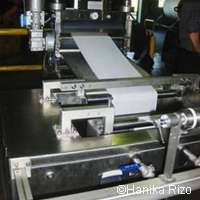
Scientists at the Universitat Politècnica de Catalunya BarcelonaTech (UPC) in Spain have succeeded in eliminating infectious bacteria from medical textiles by using an enzymatic pre-treatment combined with simultaneous deposition of nanoparticles and biopolymers under ultrasonic irradiation. This was an outcome of the SONO ('A pilot line of antibacterial and antifungal medical textiles based on a sonochemical process') project, which is funded under the 'Nanosciences, nanotechnologies, materials and new production technologies' (NMP) Theme of the EU's Seventh Framework Programme (FP7) to the tune of EUR 8.3 million. SONO is targeting the improvement of antimicrobial properties on medical textiles through the use of the state-of-the-art technique.
The researchers said the technique creates fully sterile antimicrobial textiles that help keep hospital-acquired infections at bay. One of the biggest challenges facing hospitals are nosocomial infections, which are infections not present and without evidence of incubation at the time of admission. These types of infections include bacterial and fungal infections, and they are aggravated by the reduced resistance of patients.
The SONO consortium, headed up by Bar-Ilan University in Israel and made up of 17 European partners, used enzymes that improve adhesion of the antimicrobial nanoparticles to the fabric under ultrasonic irradiation. The application of the enzymes allowed them to boost the durability of the nanoparticles on the fabric to a level that ensured their presence even after 70 laundry cycles.
Thanks to the results of this study, production of textiles with antimicrobial properties that are 100 % effective is possible. Another winning factor for the antimicrobial treatment's effectiveness is to incorporate hybrid materials into the fabric. These materials are based on organic and inorganic components, including zinc and chitosan nanoparticles. So not only do these materials eradicate the bacteria that are present, they also hinder the growth of new microbes.
The researchers are already collaborating with producers to make hospital gowns and linens; two prototype machines are being used to accomplish this, with one at the facilities of the Italian firm Klopman International and the other at the Davo Clothing group in Romania. A hospital in Sofia, Bulgaria is testing the fabrics, and the results are positive so far.
The growing rate of nosocomial infections are due to various factors, including the appearance of resistant microorganisms, an increased number of immunocompromised patients, more complex medical interventions and the performance of invasive procedures.
Studies have shown that infections acquired in hospitals are strong triggers of mortality and increased morbidity in in-patients. Between 3 % and 10 % of in-patients become infected while at hospital and the mortality rate for nosocomial infections is 1 %. But this problem also puts a great deal of pressure on the health system. These infections lead to longer hospital stays, up to 10 days, thus exacerbating this growing problem.
More information: www.fp7-sono.eu/
Provided by CORDIS


