Cold cricket case could defrost mysteries of changing climate
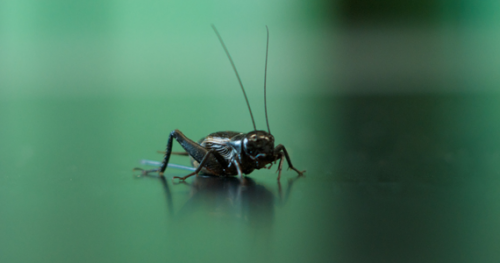
(Phys.org)—Biologists from Western University have discovered that insects recover from chill-coma by getting water and salt back where it belongs. These findings, published online today by Proceedings of the National Academy of Sciences (PNAS), not only identify the very mechanisms that drive insect movement at low temperatures but will lead to a better understanding of agriculture management, biodiversity and climate change.
Wildlife photographers often pose insects by cooling them down in a refrigerator, where they enter a paralyzed state called chill-coma. Insects in chill-coma appear dead, but are still very much alive. If the shutterbug is patient, he or she will witness the bug as it awakens. Chill-coma was first noted more than a century ago and photographers are not the only ones who have found use for it.
Many alpine spiders prey on insects that have inadvertently landed on snowfields and have gone into a chill-coma while biologists, like Western professor Brent Sinclair and his PhD student Heath MacMillan, use chill-coma recovery as a way to measure insect cold tolerance. A research team, led by MacMillan, studied recovery from chill-coma in fall field crickets and found that recovery depends on fixing the water and salt imbalances that materialize when the insect is cold.
"Insects lose the ability to maintain proper water balance in the cold so when they are chilled, water and sodium move from the insect blood, called hemolymph, into their gut," says MacMillan. "This is bad for the insect because it concentrates potassium in the blood that remains, which leaves muscles unable to function."
To get their muscles working again, crickets restore normal hemolymph potassium concentration, which can occur in a matter of minutes. But just because the insect can move, which MacMillan notes is useful when insects don't wish to be eaten, doesn't mean its physiology has returned to normal.
"Crickets still need to restore sodium and water balance," explains MacMillan. "We measured the metabolic cost of this reboot and found that the process increased a cricket's metabolic rate by as much as 50 per cent for a few hours."
"This work is significant because it allows us to identify the mechanisms that drive insect movement at low temperatures," adds Sinclair. "This will lead to a better understanding of the biology of pest and beneficial insects during cold snaps at any time of year, and maybe help us to predict how different insects respond to changing conditions. This will also help us manage agriculture and biodiversity in a changing climate."
More information: communications.uwo.ca/media/chillcoma/
Journal information: Proceedings of the National Academy of Sciences
Provided by University of Western Ontario


