The art of sustainable development
Einstein said that we can't solve problems by using the same kind of thinking used when we created them. Wise words, except few people heed them when it comes to sustainable solutions for our ailing planet. Despite decades of scientific research into everything from air pollution to species extinction, individuals are slow to act because their passions are not being ignited.
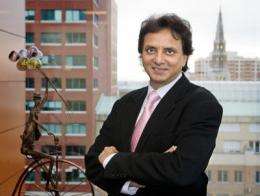
For Paul Shrivastava, the Director of the David O'Brien Centre for Sustainable Enterprise at Concordia University's John Molson School of Business (JMSB), combining science with the arts will bring about the passionate implementation of sustainable development. "No significant human endeavour has ever been accomplished without passion. Science and technology by themselves aren't enough. We need to turn to the arts in order to infuse passion into the pursuit of sustainability and get real results that will heal the planet," he says.
In a forthcoming article in the International Journal of Technology Management, co-authored by colleagues from the University of Lorraine and the ICN Business School in Nancy, France, Shrivastava argues that art is a survival instinct. "Narratives, stories, music and images served to warn our early ancestors against predators and natural disasters. Art helped them develop defence mechanisms. My colleagues and I believe that art should be used to deal with modern survival threats such as climate change and environmental crises."
This is an idea that the corporate world would be wise to take into account. Sustainable organizations need the arts to enhance employee creativity and innovation, attract creative workers, improve worker satisfaction, as well as design eco-friendly and innovative products and services. Indeed, the arts influence the sustainability of companies through architecture, aesthetics of workspaces, design of products and services, graphic art in advertising, and arts-based training methods.
Here in Montreal, that attitude is becoming a reality. Best-selling author Richard Florida wrote in 2008 that Montreal is well positioned not just to weather the economic storm but also to flourish in the long run because of its widespread creative class. "Nearly a fifth of the Montreal region's workforce forms a super-creative," writes Florida. This means that Montreal has "underlying economic and social capacities which, if properly harnessed, will position [it to] serve as a model for other regions in Canada."
Shrivastava hopes that model will be quick to spread. "We've spent decades relying on science and technology and the planet is still in shambles. Art allows fresh perspectives and new ways interpreting the world. In Montreal and beyond, art is what will make us give up our old habits in favour of planet-changing behaviour."
Provided by Concordia University


