Cockatoo survival under threat
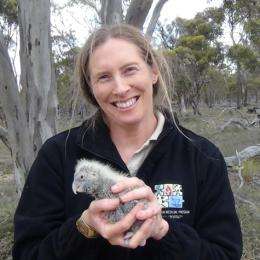
The long-term survival of three black cockatoo species endemic to the south west of Western Australia is under threat.
Carnaby’s cockatoo, Baudin’s cockatoo and Forest red-tailed black cockatoo are suffering major declines in numbers, breeding distribution and breeding success.
Researchers from Murdoch University, in collaboration with the Department of Environment and Conservation and Perth Zoo, have been looking at the health of wild black cockatoo populations.
Dr. Kris Warren, senior lecturer in wildlife and zoo medicine, Murdoch University, says the research shows a need for long-term studies to determine if disease may be a threat for these bird populations.
“We know about the major threats to the black cockatoos such as habitat loss, competition with other species for nest hollows and human impacts such as shooting and poaching but we don’t know yet whether disease is also a threatening factor for these birds,” said Dr. Warren.
Professor John Rodger, bid director for the Safeguarding Biodiversity Cooperative Research Centre (CRC) says essential and urgent research is needed to address threats to biodiversity.
“We are only just beginning to understand how to rebuild wildlife populations and restore function to damaged ecosystems. Attempts to restore, rebuild and relocate wildlife populations often fail, we need to know more so that the resources invested in conservation will make a difference,” explained Professor Rodger.
The Safeguarding Biodiversity CRC is hoping to secure long-term funding to undertake research to develop the tools to do this repair work and safeguard biodiversity for the future.
“The Safeguarding Biodiversity CRC would allow us to do research on a scale not previously possible,” said Dr. Warren.
“We hope to undertake large-scale radio tracking of the three black cockatoo species which will enable us to study the movement of the birds, identify critical feeding and breeding habitat, and address the ecological questions we haven’t been able to answer.
“It’s not often you can see a threatened species in your backyard, but many people living in Perth see and hear the black cockatoos in their neighbourhoods and this has helped raise awareness of their plight. Safeguarding biodiversity is critical – once a species is extinct it’s gone.”
A documentary, On A Wing and a Prayer, highlighting the plight of a family of Carnaby’s cockatoos, will screen on ABC1 on Tuesday, March13.
Provided by Murdoch University


