SpaceX delays upcoming 1st Dragon launch to ISS
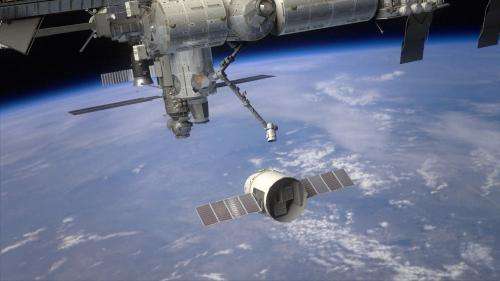
The first test launch of a commercially built spacecraft to the International Space Station has been delayed by its builder, Space Exploration Technologies or SpaceX, in order to carry out additional testing to ensure that the vehicle is fully ready for the high stakes Earth orbital mission.
SpaceX and NASA had been working towards a Feb. 7 launch date of the company’s Dragon spacecraft and announced the postponement in a statement today (Jan. 16).
A new target launch date has not been set and it is not known whether the delay amounts to a few days, weeks or more. The critical test flight has already been rescheduled several times and was originally planned for 2011.
The unmanned Dragon is a privately developed cargo vessel constructed by SpaceX under a $1.6 Billion contract with NASA to deliver supplies to the ISS and partially replace the transport to orbit capabilities that were fully lost following the retirement of the Space Shuttle in 2011.
“In preparation for the upcoming launch, SpaceX continues to conduct extensive testing and analysis, said SpaceX spokeswoman Kirstin Grantham in the statement.
“We [SpaceX] believe that there are a few areas that will benefit from additional work and will optimize the safety and success of this mission.”
“We are now working with NASA to establish a new target launch date, but note that we will continue to test and review data. We will launch when the vehicle is ready,” said Grantham.
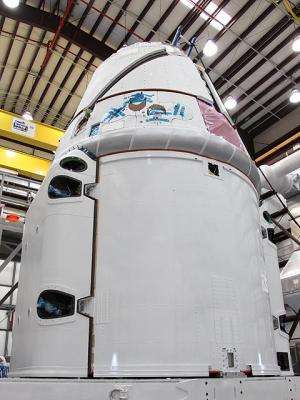
Dragon’s purpose is to ship food, water, provisions, equipment and science experiments to the ISS.
The demonstration flight – dubbed COTS 2/3 – will be the premiere test flight in NASA’s new strategy to resupply the ISS with privately developed rockets and cargo carriers under the Commercial Orbital Transportation Services (COTS) initiative.
The Dragon will blast off atop a Falcon 9 booster rocket also built by SpaceX and, if all goes well, conduct the first ever rendezvous and docking of a privately built spacecraft with the 1 million pound orbiting outpost.
After closely approaching the ISS, the crew will grapple Dragon with the station’s robotic arm and berth it to the Earth-facing port of the Harmony node.
“We’re very excited about it,” said ISS Commander Dan Burbank in a recent televised interview from space.
Since the demonstration mission also involves many other first time milestones for the Dragon such as the first flight with integrated solar arrays and the first ISS rendezvous, extra special care and extensive preparatory activities are prudent and absolutely mandatory.
NASA’s international partners, including Russia, must be consulted and agree that all engineering and safety requirements, issues and questions related to the docking by new space vehicles such as Dragon have been fully addressed and answered.
William Gerstenmaier, NASA’s associate administrator for the Human Exploration and Operations Mission Directorate recently stated that the launch date depends on completing all the work necessary to ensure safety and success, “There is still a significant amount of critical work to be completed before launch, but the teams have a sound plan to complete it.”
“As with all launches, we will adjust the launch date as needed to gain sufficient understanding of test and analysis results to ensure safety and mission success.”
“A successful mission will open up a new era in commercial cargo delivery to the international orbiting laboratory,” said Gerstenmaier.
SpaceX is also working on a modified version of the spacecraft, dubbed DragonRider, that could launch astronaut crews to the ISS in perhaps 3 to 5 years depending on the amount of NASA funding available, says SpaceX CEO and founder Elon Musk.
Source: Universe Today


