Intel backs ultra-light laptops with new age controls
January 9, 2012

About 50 ultrabooks were expected to debut at CES

Enlarge

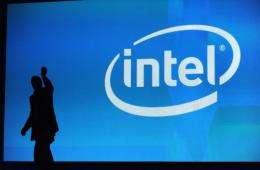
Intel Chief Executive Officer Paul Otellini waves as he walks off the stage at the end of his keynote address at the 2010 International Consumer Electronics Show, in Las Vegas, Nevada. US chip giant Intel on Monday heralded a coming wave of affordable high-powered, thin laptops that could double as tablet computers and be controlled by gestures or spoken commands.

US chip giant Intel on Monday heralded a coming wave of affordable high-powered, thin laptops that could double as tablet computers and be controlled by gestures or spoken commands.

Intel vice president Mooly Eden showed off coming "ultrabooks" by Lenovo, Acer, Asus, Samsung, Toshiba, LG and Hewlett Packard as well as a curiously innovative prototype Nikiski laptop powered by yet-to-be-released Windows 8 software.

The Nikiski had a transparent touch pad panel below a standard keyboard. When closed the panel provided a window to the and allowed it to be controlled with touches or swipes in a tablet style.

This video is not supported by your browser at this time.

"We started six months ago to deliver ultrabooks and are ramping as we speak," Eden told reporters packed into a ballroom for a press conference on the eve of the official opening of the on Tuesday.

"We would like average people to be able to enjoy the ultrabook experience, because you know the first ones were $999 or more," he continued. "Our target is to pull the price down and make ultrabooks mainstream."

About 50 ultrabooks were expected to debut at CES in one of the defining trends of this year's show.

Mooly said the power of has finally enabled laptop makers to deliver sleek and slim, yet powerful, ultrabooks with the potential to be controlled by gestures or voice and to eventually serve as spoken language interpreters.

(c) 2012 AFP

Filter


Move the slider to adjust rank threshold, so that you can hide some of the comments.


Display comments: newest first

TheSpiceIsLife
Jan 10, 2012

Rank: 1 / 5 (1)
MacBook Air... iPad...

Catch up.
Rank 5 /5 (5 votes)
Relevant PhysicsForums posts

More news stories

Nvidia trumpets Tegra 3 phone design wins for 2012

(Phys.org) -- Nvidia’s competitive war paint has a name, Tegra 3. On the heels of Nvidia announcements about lowering costs of its Tegra 3 processors and Nvidia-enabled tablets running Android Ice Cream ...

Electronics / Hardware

created 13 hours ago | popularity 5 / 5 (2) | comments 1 | with audio podcast report

Dell tablet leak: 10.1-inch display, two-battery choice

(Phys.org) -- Headline after headline talks about vendors’ tablets in the wings as likely number-one contenders for the iPad. Such claims have justifiably been taken with a grain of salt, considering ...

Electronics / Consumer & Gadgets

created May 26, 2012 | popularity 5 / 5 (3) | comments 10 | with audio podcast report

Nvidia says Kai platform will turn price tide for tablets

(Phys.org) -- In March, Nvidia gave some signs that they were working to lower the cost of their Tegra 3 processors and they suggested consumers might see prices for Android tablets as low as $199. Connect ...

Electronics / Hardware

created May 24, 2012 | popularity 4.3 / 5 (4) | comments 3 | with audio podcast report

OmniVision tops up sensors for cameras, phones

(Phys.org) -- OmniVision has announced two high-resolution image sensors for the digital still and digital video camera market (DS/DVC) and higher end smartphones. In end-user language, it is a claim for superior ...

Electronics / Hardware

created May 25, 2012 | popularity 5 / 5 (6) | comments 3 | with audio podcast report

MIT researchers devise new means to synchronize a group of robots (w/ Video)

(Phys.org) -- For several years, roboticists have been working out ways to get a group of robots to perform synchronized activities as demonstrated most often in dance routines. It’s not just about trying ...

Electronics / Robotics

created May 25, 2012 | popularity 5 / 5 (1) | comments 1 | with audio podcast report


Stunning image of smallest possible five-ringed structure

Scientists have created and imaged the smallest possible five-ringed structure – about 100,000 times thinner than a human hair – and you'll probably recognise its shape.

'Unzipped' carbon nanotubes could help energize fuel cells, batteries

Multi-walled carbon nanotubes riddled with defects and impurities on the outside could replace some of the expensive platinum catalysts used in fuel cells and metal-air batteries, according to scientists at ...

Change in developmental timing was crucial in the evolutionary shift from dinosaurs to birds: study

At first glance, it's hard to see how a common house sparrow and a Tyrannosaurus Rex might have anything in common. After all, one is a bird that weighs less than an ounce, and the other is a dinosaur that ...

Computer model used to pinpoint prime materials for efficient carbon capture

When power plants begin capturing their carbon emissions to reduce greenhouse gases – and to most in the electric power industry, it's a question of when, not if – it will be an expensive undertaking.

T cells 'hunt' parasites like animal predators seek prey, study shows

By pairing an intimate knowledge of immune-system function with a deep understanding of statistical physics, a cross-disciplinary team at the University of Pennsylvania has arrived at a surprising finding: T cells use a movement ...

Land and sea species differ in climate change response: study

(Phys.org) -- Marine and terrestrial species will likely differ in their responses to climate warming, new research by Simon Fraser University and Australia’s University of Tasmania has found.