Guilt, gender play roles in human-animal relations
January 17, 2012 By Linda B. Glaser

Guilt, gender play roles in human-animal relations

Enlarge

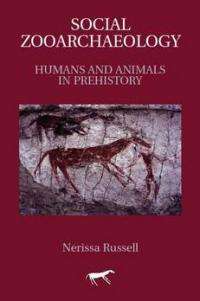
Until recently, most archaeologists viewed human-animal relationships primarily in terms of their dietary role. But the social and symbolic functions of animals and meat may often be of equal or even greater importance, writes Nerissa Russell in her newly released book "Social Zooarchaeology: Humans and Animals in Prehistory" (Cambridge University Press). Russell, a Cornell associate professor and chair of anthropology, cautions that ignoring the importance of these factors results in interpretations of data "that are just plain wrong."

Animals have always played myriad roles in : as wealth, companions, spirit helpers, sacrificial victims, totems, centerpieces of feasts, objects of taboos and more. But when Russell began writing "Social Zooarchaeology" a decade ago, few people paid attention to more than "protein and calories." While that has changed, Russell's book is the first to provide a systematic overview of social zooarchaeology, the study of past human-animal relations.

The deep feeling of people have with is nearly universal, says Russell. "Animals are never neutral objects. Even in industrialized agriculture, people have very strong reactions about them."

In societies that rely on hunting, it's understood that being a good hunter requires thinking like the prey. But identifying closely with an animal you're going to kill does not lead to an easy conscience, especially when it's clear the animal has some level of sentience. As a result, -- and how to deal with it -- underlies many human-animal relations, says Russell. She notes that sacrifices where the animal takes the place of the human and hunting rituals that put the hunter in the place of the hunted are responses to this guilt.

Gender, too, has played a major role in human-animal relations, according to Russell. Equating hunting with sex seems to be nearly universal ethnographically and historically, she says, adding that guilt and gender are pervasive themes throughout the book. It covers such topics, for example, as the metaphors of women as prey and hunter as lover, the identification of women with animals, and the resurgence of hunting or of art depicting hunting during times of change when gender roles are threatened.

Understanding the long history of human-animal relationships has relevance today, says Russell, who admits to frustration that most western discussions of animal and human relations are narrow in scope. "Either an animal is a pet or it's an object. A lot of the political impasses we get into that involve animals come from being only able to see those two categories."

"Social Zooarchaeology" is intended for reference and college classroom use. It has already been chosen as the text for an archaeology course being taught this spring at New York University.

Provided by Cornell University search and more info website


Rank 5 /5 (3 votes)
Relevant PhysicsForums posts

More news stories

Manufacturing genes to attack flu virus

An international research team has manufactured a new protein that can combat deadly flu epidemics.

Biology / Biotechnology

created 7 hours ago | popularity not rated yet | comments 0 | with audio podcast

Scientist: Evolution debate will soon be history

(AP) -- Richard Leakey predicts skepticism over evolution will soon be history. Not that the avowed atheist has any doubts himself.

Biology / Evolution

created May 26, 2012 | popularity 3.5 / 5 (20) | comments 93

More plant species responding to global warming than previously thought

(Phys.org) -- Far more wild plant species may be responding to global warming than previous large-scale estimates have suggested.

Biology / Ecology

created May 22, 2012 | popularity 4.6 / 5 (14) | comments 18 | with audio podcast

For monogamous sparrows, it doesn't pay to stray (but they do it anyway)

It's quite common for a female song sparrow to stray from her breeding partner and mate with the male next door, but a new study shows that sleeping around can be costly.

Biology / Plants & Animals

created May 22, 2012 | popularity 5 / 5 (2) | comments 8 | with audio podcast

Thousands of shellfish found dead in Peru

Thousands of crustaceans were found dead off the coast of Lima following the mystery mass death of dolphins and pelicans, the Peruvian Navy said Friday.

Biology / Ecology

created May 26, 2012 | popularity 4.7 / 5 (7) | comments 7


Stunning image of smallest possible five-ringed structure

Scientists have created and imaged the smallest possible five-ringed structure – about 100,000 times thinner than a human hair – and you'll probably recognise its shape.

'Unzipped' carbon nanotubes could help energize fuel cells, batteries

Multi-walled carbon nanotubes riddled with defects and impurities on the outside could replace some of the expensive platinum catalysts used in fuel cells and metal-air batteries, according to scientists at ...

Change in developmental timing was crucial in the evolutionary shift from dinosaurs to birds: study

At first glance, it's hard to see how a common house sparrow and a Tyrannosaurus Rex might have anything in common. After all, one is a bird that weighs less than an ounce, and the other is a dinosaur that ...

Computer model used to pinpoint prime materials for efficient carbon capture

When power plants begin capturing their carbon emissions to reduce greenhouse gases – and to most in the electric power industry, it's a question of when, not if – it will be an expensive undertaking.

T cells 'hunt' parasites like animal predators seek prey, study shows

By pairing an intimate knowledge of immune-system function with a deep understanding of statistical physics, a cross-disciplinary team at the University of Pennsylvania has arrived at a surprising finding: T cells use a movement ...

Land and sea species differ in climate change response: study

(Phys.org) -- Marine and terrestrial species will likely differ in their responses to climate warming, new research by Simon Fraser University and Australia’s University of Tasmania has found.