INFLUENCE GAME: Online companies win piracy fight
(AP) -- Outspent but hardly outgunned, online and high-tech companies triggered an avalanche of Internet clicks to force Congress to shelve legislation that would curb online piracy. They outmaneuvered the entertainment industry and other old guard business interests, leaving them bitter and befuddled.
Before Senate and House leaders set aside the legislation Friday, the movie and music lobbies and other Washington fixtures, including the U.S. Chamber of Commerce, had put in play their usually reliable tactics to rally support for the bills.
There were email campaigns, television and print ads in important states, a Times Square billboard, and uncounted phone calls and visits to congressional offices in Washington and around the country. That included about 20 trips to the Capitol by leaders of the National Songwriters Association International, often accompanied by songwriters who performed their hits for lawmakers and their staffs.
"We bring our guitars on our backs," said songwriter Steve Bogard, the association's president.
Such campaigns are often music to the ears of lawmakers. This time, however, it was smothered by an online outpouring against the legislation that culminated Wednesday. According to organizers, at least 75,000 websites temporarily went dark that day, including the English-language online encyclopedia Wikipedia, joined by 25,000 blogs.
"The U.S. Congress is considering legislation that could fatally damage the free and open Internet," said a message on Wikipedia's home page, which was shrouded in shadows and provided links to help visitors reach their members of Congress.
Thousands of other sites posted messages protesting the bills and urging people to contact lawmakers. Protest leaders say that resulted in 3 million emails.
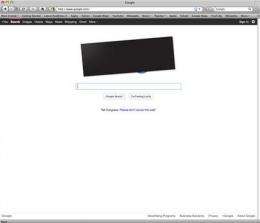
Google, its logo hidden beneath a stark black rectangle, solicited 7 million signatures on a petition opposing the bills. Craigslist counted 30,000 phone calls to lawmakers and there were 3.9 million tweets on Twitter about the bills, according to NetCoalition, which represents leading Internet and high tech companies.
"It's still something we're trying to comprehend," said Google spokeswoman Samantha Smith. "We had such an overwhelming response to our petition that it honestly far exceeded our expectations."
As co-sponsors of the bills peeled away, Senate Majority Leader Harry Reid, D-Nev., on Friday postponed a vote that had been set for this Tuesday on moving to the legislation. The vote seemed doomed well beforehand. Rep. Lamar Smith, R-Texas, chairman of the House Judiciary Committee, also put off further work. "I have heard from the critics," he said.
Just weeks ago, the bills seemed headed toward quiet approval with bipartisan backing that ranging from liberals such as Rep. Howard Berman, D-Calif., to conservatives such as Sen. Marco Rubio, R-Fla. The turnabout was so unexpected that some think the online world's triumph signals a pivotal moment marking its arrival as Washington's newest power broker.
"This does serve as a watershed moment," said Jennifer Stromer-Galley, a communications professor at the State University of New York at Albany who studies how political groups use high technology. "Certain channels for communication that people routinely use have the power to get their users to become political activists on their behalf."
Both bills are aimed at thwarting illegal downloads and sales of thousands of American movies, songs and books, as well as counterfeit pharmaceuticals, software and other copyrighted products. They would do so by making it easier to stop American websites and search engines from steering visitors to largely foreign websites that pirate the items.
Supporters estimate that online piracy costs the U.S. at least $100 billion annually and thousands of jobs; even the bills' critics say sales of pirated products must be stopped. But foes say the legislation goes too far, threatening to curb Internet free speech, stifle online innovation and burden online businesses with damaging regulations.
"People love their Internet. They use it every day, they don't want it to change and they don't want Washington messing with it," said Maura Corbett, spokeswoman for NetCoalition.
Claims that "big brother" would oversee the Internet infuriate bill supporters, who say their opponents employed fear-mongering and distortion to foment an online frenzy.
"They've misidentified this issue as an issue about your Internet, your Internet is being jeopardized," said Mike Nugent, executive director of Creative America, a coalition of entertainment unions, movie studios and television networks. "In fact their business model is being asked to be subjected to regulation. They're misleading their huge base."
Misleading or not, the online community had a huge impact on members of Congress, with many saying they heard little from the entertainment industry but plenty from Internet users.
"Everyone's online, and a lot of people online are very inclined to complain about" new fees and other problems, said Rep. Gerald Connolly, D-Va. "It's a culture of fairly quick mobilization."
The bills' champions said they purposely avoided hauling entertainment celebrities to Washington, saying they preferred to focus on how the measure would help the entire economy.
"If we brought in Hollywood stars, that would play into the other side's narrative that this is all about Hollywood," said Steven Tepp, who helped guide the campaign for the Chamber of Commerce. "We want to keep the focus on the reality that this is much, much broader."
In the end, the outcome showed the lobbying world is changing, said Kathy Garmezy, an official with the Directors Guild of America, which supports the bills.
"Of course you say to yourself, `What can you change?'" she said. "I don't think we've come to conclusions or closure."
Participants say last week's online protests were spawned last fall, as Congress was writing the bills and Internet users started chatting and emailing about them.
The blogging service Tumblr called attention to the measures on its website in November. Other efforts also garnered attention, including a drive by owners to remove their domain names from GoDaddy.com, which sells domain names and was a supporter of the anti-piracy legislation.
Among the first to publicly say they would darken their sites on Wednesday were Reddit and Wikipedia.
"Like most things on the Internet, it was very unorganized and chaotic," said Erik Martin, Reddit's general manager.
In terms of their Washington presence, online businesses are adolescents compared to the well-established industries they are battling.
According to Maplight, a nonpartisan group that analyzes money's role in politics, current senators have received $14.4 million over the past six years from entertainment interest groups supporting the online piracy bills, seven times the $2 million they got from Internet groups opposing the legislation.
The differences are also stark when it comes to lobbying.
Google, one of the Internet world's largest players in Washington, spent $5.9 million lobbying on all issues during the first nine months of 2011, according to data from the Center for Responsive Politics, which tracks money in politics. The Chamber of Commerce spent $46 million, the most in town.
Even so, online businesses have been beefing up their representation in Washington, the center's figures show.
Google's $5.9 million paid for 112 lobbyists last year, more than double the $2.8 million it spent for 54 lobbyists in 2008. Facebook's $910,000 for lobbying during the first three quarters of 2011 paid for 21 lobbyists, compared with two lobbyists and $351,000 it spent a year earlier.
High tech companies are also learning the value of big names. One Google lobbyist is former Missouri Rep. Richard Gephardt, a House Democratic leader and presidential candidate. Last year, Facebook hired Joe Lockhart, a press secretary for President Bill Clinton, as vice president of global communications.
Bill supporters lost one advantage because former Democratic Sen. Christopher Dodd, chairman of the Motion Picture Association of America, could not personally lobby senators. The Capitol Hill veteran retired from the Senate last year and is legally barred from lobbying his former colleagues for two years.
More information:
Senate's Protect Intellectual Property Act: http://tinyurl.com/7lqbgzh
House's Stop Online Piracy Act: http://tinyurl.com/75vtcxg
NetCoalition: http://www.netcoalition.com
©2012 The Associated Press. All rights reserved. This material may not be published, broadcast, rewritten or redistributed.


