Bats, dolphins, and mole rats inspire advances in ultrasound technology
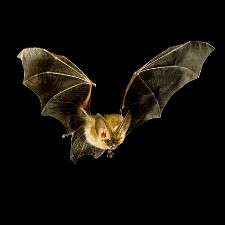
November 14, 2011

Bats, dolphins, and mole rats inspire advances in ultrasound technology

Sonar and ultrasound, which use sound as a navigational device and to paint accurate pictures of an environment, are the basis of countless technologies, including medical ultrasound machines and submarine navigation systems. But when it comes to more accurate sonar and ultrasound, animals' "biosonar" capabilities still have the human race beat.

But not for long. In a new project that studies bats, dolphins, and mole rats, Prof. Nathan Intrator of Tel Aviv University's Blavatnik School of Computer Science, in collaboration with Brown University's Prof. Jim Simmons, is working to identify what gives biosonar the edge over human-made technologies. Using a unique method for measuring how the animals interpret the returning signals, Prof. Intrator has determined that the key to these animals' success is superior, real-time data processing. "Animal 'echolocations' are done in fractions of milliseconds, at a resolution so high that a dolphin can see a tennis ball from approximately 260 feet away," he says, noting that the animals are able to process several pieces of information simultaneously.

Their research, which has been reported in the and presented at the 2010 and 2011 MLSP conferences,could lead to cutting-edge and more accurate .

Detecting "shape" from sound

Biosonar animals send ultrasonic sounds called "pings" into the environment. The shape of the returning signals, or echoes, determines how these animals "see" their surroundings, helping them to navigate or hunt for prey. In a matter of tens of milliseconds, the in the animal's brain are capable of a full-scale analysis of their surroundings represented in , with little . Even with the aid of a , which consumes thousands of times more energy, humans cannot produce such an accurate picture, Prof. Intrator says. With echolocation, a bat can tell the difference between a fly in motion or at rest, or determine which of two fruits is heavier by observing their movements in the wind.

Intrigued by the quality of the natural world's biosonar over its man-made equivalents, Profs. Intrator and Simmons set out to study how biosonar animals perform echo location so quickly and accurately. Using an electronic system, they altered the frequency and noise levels of the echo returned to the animal.

By manipulating the echo, the researchers could determine what factors of the returning signal reduced an animal's ability to correctly analyze the returns. This in turn led to a better understanding of how the returning echoes are represented and analyzed in the animal's brain.

A more accurate view of the human body

Prof. Intrator and his fellow researchers have created mathematical models, involving machine learning and signal processing, that improve man's ability to interpret the echoes.This will lead to more accurate echo localization and better resilience to background noise.

Once researchers gather more information about animal interpretation of biosonar, they will be able to mimic this technology for better ultrasound and sonar systems, says Prof. Intrator. "Animals explore pings with multiple filters or receptive fields, and we have demonstrated that exploring each ping in multiple ways can lead to higher accuracy," he explains. "By understanding sonar , we can create a new family of ultrasound systems that will be able to explore our bodies with more accurate medical imaging."

This could provide a variety of benefits to the medical field, such as earlier detection of defects in embryos or non-invasive detection of cancer tumors. Unlike an MRI or CT machine, which are large, expensive to operate, and often use dangerous radiation, the new generation of ultrasound machines could be used in a doctor's office at a fraction of the cost. The research could also benefit military reconnaissance efforts both underwater and underground.

Provided by Tel Aviv University search and more info website


Rank 5 /5 (3 votes)
Relevant PhysicsForums posts
  • Water flow question
    created3 hours ago
  • [Drift velocity] Factors affecting velocity
    created6 hours ago
  • does cold gasoline have less energy
    created7 hours ago
  • distribution of molecules throughout the atmosphere
    created9 hours ago
  • The Global Positioning System !
    created10 hours ago
  • A Question relating Power
    created11 hours ago
  • More from Physics Forums - General Physics

More news stories

Is a classical electrodynamics law incompatible with special relativity?

(Phys.org) -- The laws of classical electromagnetism that were developed in the 19th century are the same laws that scientists use today. They include Maxwell’s four equations along with the Lorentz la ...

Physics / General Physics

created May 24, 2012 | popularity 4.7 / 5 (17) | comments 43 | with audio podcast feature

Landmark calculation clears the way to answering how matter is formed

(Phys.org) -- An international collaboration of scientists, including Thomas Blum, associate professor of physics, is reporting in landmark detail the decay process of a subatomic particle called a kaon – ...

Physics / General Physics

created May 25, 2012 | popularity 4.3 / 5 (22) | comments 51 | with audio podcast

Lying in wait for WIMPs: Researchers seek to dramatically increase sensitivity of Large Underground Xenon detector

Although it's invisible, dark matter accounts for at least 80 percent of the matter in the universe. No one knows what it is, but most scientists would bet on weakly interacting massive particles, or WIMPs.

Physics / General Physics

created May 23, 2012 | popularity 4 / 5 (7) | comments 15 | with audio podcast

Hawaii lab turns laser-powered bubbles into microrobots

(Phys.org) -- A team of scientists from the University of Hawaii are working on microrobots created from bubbles of air in a saline solution. The bubbles take on their title of “robots” as a laser ...

Physics / General Physics

created May 23, 2012 | popularity 5 / 5 (4) | comments 2 | with audio podcast weblog

Sound increases the efficiency of boiling

Scientists at the Georgia Institute of Technology achieved a 17-percent increase in boiling efficiency by using an acoustic field to enhance heat transfer. The acoustic field does this by efficiently removing vapor bubbles ...

Physics / Soft Matter

created May 24, 2012 | popularity 5 / 5 (2) | comments 2


'Unzipped' carbon nanotubes could help energize fuel cells, batteries

Multi-walled carbon nanotubes riddled with defects and impurities on the outside could replace some of the expensive platinum catalysts used in fuel cells and metal-air batteries, according to scientists at ...

T cells 'hunt' parasites like animal predators seek prey, study shows

By pairing an intimate knowledge of immune-system function with a deep understanding of statistical physics, a cross-disciplinary team at the University of Pennsylvania has arrived at a surprising finding: T cells use a movement ...

Computer model used to pinpoint prime materials for efficient carbon capture

When power plants begin capturing their carbon emissions to reduce greenhouse gases – and to most in the electric power industry, it's a question of when, not if – it will be an expensive undertaking.

Change in developmental timing was crucial in the evolutionary shift from dinosaurs to birds: study

At first glance, it's hard to see how a common house sparrow and a Tyrannosaurus Rex might have anything in common. After all, one is a bird that weighs less than an ounce, and the other is a dinosaur that ...

Yale study concludes public apathy over climate change unrelated to science literacy

Are members of the public divided about climate change because they don't understand the science behind it? If Americans knew more basic science and were more proficient in technical reasoning, would public consensus match ...

Same gene that stunts infants' growth also makes them grow too big: research

UCLA geneticists have identified the mutation responsible for IMAGe* syndrome, a rare disorder that stunts infants' growth. The twist? The mutation occurs on the same gene that causes Beckwith-Wiedemann syndrome, which makes ...