3 Questions: Ricardo Caballero on the search for safe investments
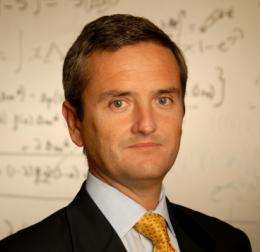
October 25, 2011 by Peter Dizikes

3 Questions: Ricardo Caballero on the search for safe investments

Enlarge

What caused the financial crisis of 2008? MIT economist Ricardo Caballero has posited that a key structural factor was a massive global imbalance between the demand for safe investments, especially bonds, and the supply of safe places to put new capital.

Because this “insatiable demand for safe debt instruments,” as Caballero has called it, was not wholly absorbed by the traditional safe haven of U.S. Treasury notes, it helped spur the growth of the mortgage-backed bond market. But these bonds, backed by subprime loans, turned out to be unsafe despite their AAA ratings, exploding en masse. Financial markets are still feeling the aftereffects.

As a solution to this imbalance, Caballero — an expert on global capital markets, financial panics and risk who is among the 100 most-cited economists worldwide — has proposed the idea of government-issued investment insurance meant to help spur financial activity. Without such policies, he has warned, we could see the “recurrent emergence of bubbles,” as capital chases emerging investment areas.

MIT News recently queried Caballero, MIT’s Ford International Professor of Economics, Macroeconomics and International Finance, about the shortage of safe .

Q. In recent months, the fiscal crisis in Europe has intensified and core European countries such as France are now at risk of having their credit ratings downgraded. What is the status today of this global imbalance between the demand for, and the supply of, safe investments?

A. Worse than ever. People do not realize how many odd things are happening as a result of this shortage. The most recent one is a sharp decline in the currencies of emerging market economies, following the peg (floor) set for the Swiss Franc against the Euro. All of a sudden, one of the key safe assets in currency markets disappeared, and now holding emerging-market currencies became much riskier, as a natural hedge is no longer available. As the safe assets’ relative supply shrinks, investors become less willing to invest in riskier assets, banks become more reluctant to lend and so on.

Q. In the mortgage-backed bond market, when the economy dipped, whole classes of securities blew up. Given this problem, why is an insurance-based solution your preferred policy choice, and how would it function?

A. Unfortunately, we may be beyond that point. I proposed that governments provide, for a fee, guarantees to banks against extreme macroeconomic risk so that banks could go back to the production of safe microeconomic assets — which they can generate through mortgages, loans and other growth-enhancing activities — without having to absorb macroeconomic risk, which is too capital-consuming. These types of measures are politically unfeasible at this time, so we will have to continue muddling through.

Q. What do you think of other ideas that might address the problem? For example, wouldn’t the proposed issuance of joint Euro-bonds, backed by the whole European Union, provide a new source of safer debt for investors?

A. It would, but this would effectively mean a transfer of German collateral to periphery countries. Germany could certainly issue more Bunds [their bonds] since they have plenty of credibility to do so. But I don’t think safe-asset production per se is an argument to justify these transfers. I suspect a better way to do it is to have the European Central Bank (ECB) provide some guarantees for marginal countries’ debt, either directly or indirectly. I have in mind Spain or Italy, not Greece, which is clearly bankrupt and not the business of the ECB.


This story is republished courtesy of MIT News (http://web.mit.edu/newsoffice/), a popular site that covers news about MIT research, innovation and teaching.

Provided by Massachusetts Institute of Technology search and more info website

Filter


Move the slider to adjust rank threshold, so that you can hide some of the comments.


Display comments: newest first

rwinners
Oct 26, 2011

Rank: not rated yet
This guy is a jerk. NO question about it. Money is not a storage medium for wealth and all assets share risk... if only by degree.
The US government does issue inflation adjusted bonds for those who want it. But the idea of guaranteeing banks against loss no matter what their individual actions is insane.
Rank not rated yet
Relevant PhysicsForums posts
  • Consumption rivalry
    createdMay 25, 2012
  • Bilateral trade between all countries
    createdMay 24, 2012
  • Is the economic foundation of social media in jeopardy?
    createdMay 20, 2012
  • Psychology: Rosenthal and Hawthorne Effect
    createdMay 15, 2012
  • Is GDP and National Income the Same Thing?
    createdMay 13, 2012
  • Difference between hourly wage and real GDP per hour worked?
    createdMay 12, 2012
  • More from Physics Forums - Social Sciences

More news stories

Change in developmental timing was crucial in the evolutionary shift from dinosaurs to birds: study

At first glance, it's hard to see how a common house sparrow and a Tyrannosaurus Rex might have anything in common. After all, one is a bird that weighs less than an ounce, and the other is a dinosaur that ...

Other Sciences / Archaeology & Fossils

created 2 hours ago | popularity 5 / 5 (2) | comments 0 | with audio podcast

Social welfare cuts ultimately come with heavy price, researchers say

(Phys.org) -- Slashing government funding for Medicaid, food stamps and other programs that serve the poor – while politically popular with some lawmakers and many conservatives – may do more harm ...

Other Sciences / Social Sciences

created May 24, 2012 | popularity 4.3 / 5 (16) | comments 152

Ancient Bethlehem seal unearthed in Jerusalem

Israeli archaeologists have discovered a 2,700-year-old seal that bears the inscription "Bethlehem," the Israel Antiquities Authority announced Wednesday, in what experts believe to be the oldest artifact ...

Other Sciences / Archaeology & Fossils

created May 23, 2012 | popularity 3.5 / 5 (14) | comments 23

Oldest Jewish archaeological evidence on the Iberian Peninsula

German archaeologists of the Friedrich Schiller University Jena found one of the oldest archaeological evidence so far of Jewish Culture on the Iberian Peninsula at an excavation site in the south of Portugal, ...

Other Sciences / Archaeology & Fossils

created May 25, 2012 | popularity 4.2 / 5 (6) | comments 12

Dollars and sense: Why are some people morally against tax?

As the U.S. presidential election campaigns heat up, the economic debate is dominated by bailouts, austerity and, inevitably, taxation. Now a new study published in Symbolic Interaction asks why tax is such an important issue ...

Other Sciences / Social Sciences

created May 23, 2012 | popularity 3 / 5 (2) | comments 12


Land and sea species differ in climate change response: study

(Phys.org) -- Marine and terrestrial species will likely differ in their responses to climate warming, new research by Simon Fraser University and Australia’s University of Tasmania has found.

Almost half of new vets seek disability

(AP) -- America's newest veterans are filing for disability benefits at a historic rate, claiming to be the most medically and mentally troubled generation of former troops the nation has ever seen.

'Unzipped' carbon nanotubes could help energize fuel cells, batteries

Multi-walled carbon nanotubes riddled with defects and impurities on the outside could replace some of the expensive platinum catalysts used in fuel cells and metal-air batteries, according to scientists at ...

T cells 'hunt' parasites like animal predators seek prey, study shows

By pairing an intimate knowledge of immune-system function with a deep understanding of statistical physics, a cross-disciplinary team at the University of Pennsylvania has arrived at a surprising finding: T cells use a movement ...

Computer model used to pinpoint prime materials for efficient carbon capture

When power plants begin capturing their carbon emissions to reduce greenhouse gases – and to most in the electric power industry, it's a question of when, not if – it will be an expensive undertaking.

Nvidia trumpets Tegra 3 phone design wins for 2012

(Phys.org) -- Nvidia’s competitive war paint has a name, Tegra 3. On the heels of Nvidia announcements about lowering costs of its Tegra 3 processors and Nvidia-enabled tablets running Android Ice Cream ...