New bacteria toxins against resistant insect pests
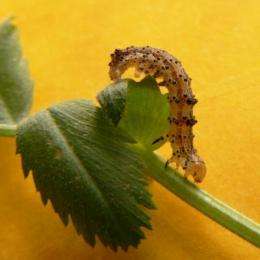
Toxins from Bacillus thuringiensis bacteria (Bt toxins) are used in organic and conventional farming to manage pest insects. Sprayed as pesticides or produced in genetically modified plants, Bt toxins, used in pest control since 1938, minimize herbivory in crops, such as vegetables, maize or cotton. Since 1996, Bt producing transgenic crops have been grown, which successfully control pests like the European corn borer, the tobacco budworm, the Western corn rootworm, and the cotton bollworm. Over the years, Bt resistant insects have emerged in organic and conventional farming. Scientists have therefore modified the molecular structure of two Bt toxins, Cry1Ab and Cry1Ac, in order to overcome resistance. The novel toxins, Cry1AbMod and Cry1AcMod, are effective against five resistant insect species, such as the diamondback moth, the cotton bollworm, and the European corn borer. Cry1AbMod and Cry1AcMod can be used alone or in combination with other Bt toxins for plant protection.
New insights into the mechanisms of action of Cry1Ab and Cry1Ac served as the basis for development of the modified Bt toxins. The primary question had been why the Cry proteins, which naturally occur in B. thuringiensis, have such a resoundingly toxic effect on many different herbivorous insects. Researchers had previously found a protein in the caterpillars' midgut that binds Bt toxins – with fateful consequences for the insects, because binding the toxins causes the gut cells to die. This protein is one of the many types of cadherin proteins in the cell. Mutations of a specific cadherin can make the caterpillars resistant against the toxins.
"When we studied the new Bt toxins in twelve resistant and non-resistant strains of five major pest species, the results of our experiments were encouraging but surprising. The new toxins are also effective against strains whose Bt resistance is not based on cadherin mutations," says David G. Heckel, director of the Department of Entomology at the Max Planck Institute for Chemical Ecology in Jena, Germany, and co-author of the study. Especially interesting was the finding that the new toxins were specifically effective against a super-resistant strain of tobacco budworm carrying both the cadherin mutation and another mutation affecting an ABC transporter which was discovered by the Max Planck researchers last year.
Particularly striking was the effect of Cry1AbMod and Cry1AcMod on a Bt resistant corn borer and a resistant diamondback moth strain that was 350 times stronger compared to that of the natural toxins. On the other hand, the new toxins had only a weak effect on some strains whose Bt resistance is due to a mutated cadherin.
If both novel Bt toxins prove to be useful in agriculture, they can be used in combination with different Bt toxins to guarantee a reliable effect on herbivorous pests. Biologists also agree that measures to reduce the occurrence of resistant insect pests must be strictly adhered to and that farmers should be informed in detail. Such measures would mainly include the use of different pesticides, crop rotation, and simultaneous sowing of non-Bt plants in fields, where transgenic Bt varieties are grown.
More information: Tabashnik, B. E., Huang, F., Ghimire, M. N., Leonard, B. R., Siegfried, B. D., Rangasamy, M., Yang, Y., Wu, Y., Gahan, L. J., Heckel, D. G., Bravo, A., Soberón, M. (2011). Efficacy of genetically modified Bt toxins against insects with different genetic mechanisms of resistance. Nature Biotechnology. doi: 10.1038/nBt.1988
Provided by Max-Planck-Gesellschaft


