Theaters group upset Sony to end free 3-D glasses
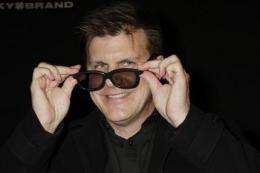
(AP) -- Sony Corp.'s movie studio will save millions of dollars per movie after it told theater owners it will stop paying for 3-D glasses next May. But moviegoers could end up footing the bill.
Sony Pictures suggested in letters sent the last few days to U.S. theater owners that they adopt a "guest ownership model" prevalent in Europe and Australia and charge patrons separately for the glasses, which they can re-use on future visits.
RealD Inc., one of the main suppliers of glasses, said a pair in Europe sells for about a euro, or around $1.36 at today's exchange rate. Most patrons spend more than $3 on popcorn and sodas each, according to major theater chain Regal Entertainment Group, and the average ticket to a 3-D movie already costs a few dollars more than a ticket to a traditional showing.
There also are designer 3-D glasses that run more than $100 a pair.
The change Sony's planning would come just before Sony is to release its 3-D blockbusters for next summer, "The Amazing Spider-Man" and "Men in Black III," although some of Sony's 3-D movies, including "Arthur Christmas," come out earlier.
Sony Pictures spokesman Steve Elzer said in a statement that "there are constructive ways to deal with the cost of 3-D glasses that will not adversely impact consumers and can also help the environment." He called on theater owners to come to the table to work out the issue.
Usually, such negotiations happen behind closed doors. In this case, Sony going public with its new policy didn't sit well with theater owners. The nation's largest cinema trade group, the National Association of Theatre Owners, said the unilateral policy change was "insensitive" to consumers in a weak economy.
Regal Entertainment Group on Wednesday threatened to cut the number of screens showing 3-D films if the move means it or its patrons will have to pay more.
"To the extent that Sony seeks to change the current model in a manner that shifts costs to exhibitors, we would be forced to evaluate this new economic model and program our screens accordingly," said Regal CEO Amy Miles in a statement.
Theater association president John Fithian said Sony's decision upends a six-year old practice of splitting the costs of the rollout of digital 3-D screens across the country.
While movie studios have paid for 3-D glasses and the cost of digital projectors and equipment - expecting to save on film printing costs in the future - theaters have paid for 3-D add-on technology and labor costs.
Sony's Elzer said there has never been an agreement that studios would always bear the cost of 3-D glasses.
The squabble comes amid changes in the movie business that have hurt studios' profits. People are buying fewer DVDs and aren't paying enough for Blu-ray discs, on-demand movie downloads, or online subscriptions to make up for the decline. Studios are trying to cut costs by laying off workers and cutting movie budgets.
Fithian said the belt-tightening shouldn't result in passing the buck to theater owners or moviegoers. "It is nonsensical to say theater owners and our patrons should be paying for their mistakes in the home market," he said.
It remains to be seen if other studios will follow Sony's lead and stop paying for the glasses. Time Warner Inc.'s Warner Bros. said it was sticking with its arrangements with theaters for now.
"We are evaluating the situation," said Chris Aronson, senior vice president of domestic distribution for News Corp.'s 20th Century Fox.
Representatives from Viacom Inc.'s Paramount, Comcast Corp.'s Universal and The Walt Disney Co. did not immediately respond to requests for comment.
One immediate result of the announced change was that RealD shares plunged $1.80, or 14.7 percent, to close at $10.42 in trading Wednesday. RealD supplies technology for about 90 percent of the 3-D screens in the U.S. and is a major supplier of the glasses, which made up about 40 percent of its revenue in the most recent quarter.
RealD spokesman Rick Heineman said the company is fine with any new model, including one in which consumers pay. He compared that system to buying headphones on an airplane. The core profit of the company comes through licensing its technology, he said.
Sony shares rose 12 cents to close at $19.34.
©2011 The Associated Press. All rights reserved. This material may not be published, broadcast, rewritten or redistributed.


