Scientists flag global food pricing too hot to ignore
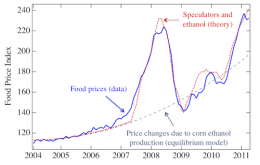
A paper on the surge in world food prices is calling on private and public policy makers to recognize the serious impact that price spikes in food bring to the world’s most vulnerable populations.
The paper, “The Food Crises: A Quantitative Model of Food Prices Including Speculators and Ethanol Conversion,” was prepared by the New England Complex Systems Institute in a study partly funded by the U.S. Army.
The surge in food prices has been frequently linked to numerous factors, while this study maintains two specific reasons account for the price increases. The authors slam and analyze the two culprits—speculators playing in the commodities markets and corn-to-ethanol conversion.
The authors refer to “since-debunked claims of the role of ethanol conversion in energy security and the environment.” They say a significant decrease in the conversion of corn to ethanol is warranted.
Using direct tests and statistical analysis, the paper pinpoints what is going on in global food pricing today. The authors discuss the motivations, techniques, and impact of commodity speculation, weather, development, and additional factors that are rounding out the pricing puzzle—exchange rates and energy costs.
The authors are Marco Lagi, Karla Bertrand, Yavni Bar-Yam, and Yaneer Bar-Yam. “The immediate implications of our analysis are policy recommendations for changes in regulations of commodity markets and ethanol production,” the authors state.
More information: Manuscript can be downloaded at: necsi.edu/research/social/food_prices.pdf
Provided by New England Complex Systems Institute


