New study quantifies use of social media in Arab Spring
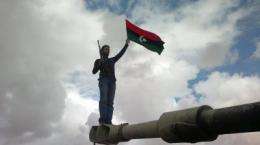
In the 21st century, the revolution may not be televised – but it likely will be tweeted, blogged, texted and organized on Facebook, recent experience suggests. After analyzing more than 3 million tweets, gigabytes of YouTube content and thousands of blog posts, a new study finds that social media played a central role in shaping political debates in the Arab Spring. Conversations about revolution often preceded major events, and social media has carried inspiring stories of protest across international borders.
"Our evidence suggests that social media carried a cascade of messages about freedom and democracy across North Africa and the Middle East, and helped raise expectations for the success of political uprising," said Philip Howard, the project lead and an associate professor in communication at the University of Washington. "People who shared interest in democracy built extensive social networks and organized political action. Social media became a critical part of the toolkit for greater freedom."
During the week before Egyptian president Hosni Mubarak's resignation, for example, the total rate of tweets from Egypt — and around the world — about political change in that country ballooned from 2,300 a day to 230,000 a day. Videos featuring protest and political commentary went viral – the top 23 videos received nearly 5.5 million views. The amount of content produced online by opposition groups, in Facebook and political blogs, increased dramatically.
"Twitter offers us the clearest evidence of where individuals engaging in democratic conversations were located during the revolutions," Howard said. Twitter provides a window into the broader world of digital conversations, many of which probably involved cell phones to send text, pictures or voice messages, he said. In Tunisia, for example, less than 20 percent of the population uses social media, but almost everyone has access to a mobile phone.
Data for the UW project came directly from immense digital archives the team built over the course of several months. The research is unusual because the team located data about technology use and political opinion from before the revolutions. The Project on Information Technology and Political Islam assembled data about blogging in Tunisia one month prior to the crisis in that country, and had special data on the link structure of Egyptian political parties one month prior to the crisis there.
Political discussion in blogs presaged the turn of popular opinion in both Tunisia and Egypt. In Tunisia, conversations about liberty, democracy and revolution on blogs and on Twitter often immediately preceded mass protests. Twenty percent of blogs were evaluating Ben Ali's leadership the day he resigned from office (Jan. 14), up from just 5 percent the month before. Subsequently, the primary topic for Tunisian blogs was "revolution" until a public rally of at least 100,000 people eventually forced the old regime's remaining leaders to relinquish power.
In the case of both Tunisia's and Egypt's revolutions, discussion spanned borders. In the two weeks after Mubarak's resignation, there was an average of 2,400 tweets a day from people in neighboring countries about the political situation in Egypt. In Tunisia after Ben Ali's resignation, there were about 2,200 tweets a day.
"In other words," Howard said, "people throughout the region were drawn into an extended conversation about social uprising. The success of demands for political change in Egypt and Tunisia led individuals in other countries to pick up the conversation. It helped create discussion across the region."
Howard said that although social media did not cause the upheaval in North Africa, they altered the capacity of citizens to affect domestic politics. Online activists created a virtual ecology of civil society, debating contentious issues that could not be discussed in public.
Ironically, government efforts to crack down on social media may have incited more public activism, especially in Egypt. People who were isolated by efforts to shut down the Internet, mostly middle-class Egyptians, may have gone to the streets when they could no longer follow the unrest through social media, Howard said.
"Recent events show us that the public sense of shared grievance and potential for change can develop rapidly," he said. "These dictators for a long time had many political enemies, but they were fragmented. So opponents used social media to identify goals, build solidarity and organize demonstrations."
More information: Download the full report at pitpi.org/?p=1051
Provided by University of Washington


