New tests for 'legal marijuana,' 'bath salts' and other emerging designer drugs
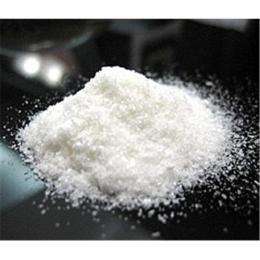
Scientists today reported development of much needed new tests to help cope with a wave of deaths, emergency room visits and other problems from a new genre of designer drugs sold legally in stores and online that mimic the effects of cocaine, ecstasy and marijuana. They spoke at the 242nd National Meeting & Exposition of the American Chemical Society (ACS).
The reports, among more than 7,500 on the ACS agenda, focus on drugs sold as "bath salts," "plant food," "incense" and other products with colorful names, such as "Ivory Wave," "Red Dove" and "legal marijuana." They provide users with a high, but many have not yet been made illegal and are undetectable with current drug tests. In one presentation on these "legal highs," a United Kingdom researcher reported a new method to trace the source of the substances in "bath salts." In the other, a U.S. researcher discussed the challenges facing law enforcement and policy makers in regulating synthetic versions of marijuana.
Oliver Sutcliffe, Ph.D., and his collaborators reported the successful use of a method called isotope ratio mass spectrometry (IRMS) to determine who is making bath salts — drugs that can cause euphoria, paranoia, anxiety and hallucinations when snorted, smoked or injected — and which chemical companies supplied the raw materials. He and his co-workers are based at the University of Strathclyde and the James Hutton Institute in the U.K.
"With the new method, we could work backwards and trace the substances back to the starting materials," said Sutcliffe. IRMS measures the relative amounts of an element's different forms, or isotopic ratio. "This method was successful because the isotopic ratio of the starting material is transferred like a fingerprint through the synthesis," he explained.
"Bath salts" first garnered major media attention in the U.K. in early 2010, and then became a problem in the U.S. These products are not in the supermarket soap aisle — they are sold on the Internet, on the street and in stores that sell drug paraphernalia. They are sold in small individual bags for as low as $20 each for the real purpose of providing a cheap, legal high.
The powders often contain mephedrone, which is a synthetic compound, structurally related to methcathinone, which is found in Khat — a plant that is illegal in many countries, including the U.K. and the U.S. Usually, that would mean that these compounds (and derivatives thereof) would be illegal in those countries too, but because the bath salts are labeled "not for human consumption," they get around this restriction and other legislation governing the supply of medicines for human use. However, Florida and Louisiana — two hotspots of bath salts abuse — specifically banned the substances. U.K. officials banned the import of bath salts, which may lead some in the drug trade to set up clandestine labs on U.K. soil, said Sutcliffe. The new method provides law enforcement with a tool to track down these bath salts manufacturers.
In previous work, Sutcliffe developed the first pure reference standard for mephedrone, as well as the first reliable liquid chromatography test for the substance, which could be easily run in a typical law enforcement lab. The team is also developing a color-change test kit for mephedrone, which he estimates may be available by the end of the year.
In another presentation, Robert Lantz, Ph.D., from the Rocky Mountain Instrumental Laboratories, described another high that is legal in most of the U.S. — synthetic cannabinoids marketed as incense, a spice product or "legal marijuana" that give a high similar to marijuana without showing up in conventional drug tests.
"We can detect synthetic cannabinoids with modern analytical chemistry techniques, such as liquid or gas chromatography coupled to mass spectrometry, but these assays are too expensive for the 5,000-10,000 urine samples that most drug testing labs receive each day," said Lantz. Most labs screen for drugs with less expensive antibody assays, but because the structures of these substances are so dissimilar, different antibodies would likely be required for many of them, driving up the cost of a more comprehensive test.
Synthetic cannabinoid abuse rose sharply in 2010, according to U.S. poison control centers, up to 2,863 compared to only 14 in 2009. About 200 synthetic cannabinoids exist, but the U.S. Drug Enforcement Agency (DEA) banned only five of those. A handful of states, such as Washington, Georgia and Colorado, banned five of them, but they are not always the same five that the DEA banned. "The states banned several specific compounds without a particular basis for their choices," Lantz pointed out.
Colorado recently passed a law banning any substance that binds to a cannabinoid receptor in the human body. "The bill was well-intentioned, but technically, the new law not only covers synthetic cannabinoids, but also endocannabinoids, which are naturally occurring substances that the human body produces to regulate many normal processes," said Lantz.
Provided by American Chemical Society


