A sweet defense against lethal bacteria
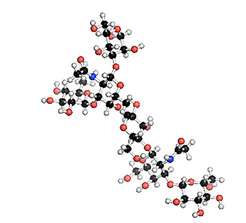
(PhysOrg.com) -- There is now a promising vaccine candidate for combating the pathogen which causes one of the most common and dangerous hospital infections. An international team of scientists from the Max Planck Institute of Colloids and Interfaces in Potsdam has developed a vaccine based on a carbohydrate against the Clostridium difficile bacterium, which is known to cause serious gastrointestinal diseases mainly in hospitals. The sugar-based vaccine elicited a specific and effective immune response in mice. Moreover, the scientists have also discovered strong indications that the substance can stimulate the human immune system to form antibodies against the bacterium.
Clostridium difficile bacterium can turn into a life-threatening condition: a highly virulent and antibiotic-resistant strain of the spore-forming pathogen Clostridium difficile bacterium appeared in the USA and certain Western European countries some eight years ago. Since then it has been posing a major risk for hospitalised patients, in particular, who are being treated with antibiotics or have a weak immune system, such as cancer or HIV patients. Whereas no more than four per cent of healthy humans have C. difficile in their gastrointestinal system, the bacterium colonises the intestines of 20 to 40 per cent of hospitalised patients. If other bacteria in the intestinal flora are repressed by antibiotics, the rod-shaped bacterium can reproduce extremely fast. It produces toxins which cause diarrhoea and gastrointestinal inflammation, often with a lethal outcome. Surviving patients require a very costly aftercare. This new, highly virulent pathogen can produce around 20 times more toxins and significantly more spores than previously identified pathogens.
However, a carbohydrate in the bacterial cell wall now provides the team of scientists led by Peter H. Seeberger at the Max Planck Institute of Colloids and Interfaces in Potsdam a “point of attack” for a potential vaccine. “Initial testing of the sugar-based antigen synthesised by the team has already produced very promising results”, says Peter H. Seeberger, Director at the Max Planck Institute in Potsdam.
The chemists in the team first developed a synthesis for the essential component of the antigen: the hexasaccharide. To assemble the oligosaccharide, they used four different monosaccharide building blocks. An efficient and convergent approach created the exact molecule with the required arrangement of the monosaccharides. “Synthesizing complex polysaccharides is still a challenge, not least because sugar molecules can bind in several different places”, Peter H. Seeberger says. However, the chemists were able to block other reaction sites so that they could exactly control where the original saccharides bound.
The scientists then conjugated the hexasaccharide to the CRM 197 protein, which is used in many vaccines, as sugar alone, as antigen, does not elicit an effective immune response. In order to defend itself successfully against a C. difficile infection, the immune system must also use another antigen. The chemical glycoprotein conjugate triggered a very effective immune response in two mice which were injected with the substance three times, at 2-week intervals. “The fact that mice are producing antibodies against the carbohydrates is in itself a success”, Peter H. Seeberger says. “Not all carbohydrates trigger the production of antibodies.” Furthermore, the antibodies produced by the mice bound exclusively to the sugar. Thus, the antigen cannot cause an autoimmune disease.
Additionally, the scientists proved that the antibodies developed against the hexasaccharide are also part of the human immune response; in the stool of hospital patients infected with C. difficile, they found antibodies against the sugar. “We can therefore expect to see that the human immune system produces antibodies against the sugar when vaccinated”, Seeberger concludes. What is more, “since the natural sugar already elicits the production of a small number of antibodies, we hope that the synthetic glycoprotein conjugate will trigger a more effective response.”
The vaccine candidate must now be subjected to further testing. First, it must be established whether it can effectively prevent infection in animals. “If these tests are successful, it will probably still take one or two years before the vaccine is tested on humans”, explains Peter H. Seeberger.
The vaccine candidate against C. difficile does not contain the only immunologically effective sugar from Seeberger's laboratory. Together with his colleagues, the chemist is developing sugar-based vaccines against numerous pathogens. “The current work is therefore also a proof of the progress made in glycochemistry and glycobiology”, according to Seeberger, who was awarded the 2007 Körber European Science Award for his development of a sugar synthesiser. The number of biological sugar molecules that can be produced by chemists in the laboratory is on the increase, which gives the biologists and medical scientists the opportunity to investigate their specific impacts. This fills Peter H. Seeberger with optimism: “These advances will lead to quantum leaps in related research areas, such as immunology, biology and medicine.”
More information: Matthias A. Oberli, et al. A Possible Oligosaccharide-Conjugate Vaccine Candidate for Clostridium difficile Is Antigenic and Immunogenic, Chemistry & Biology, 26 May 2011; DOI:10.1016/j.chembiol.2011.03.009
Provided by Max-Planck-Gesellschaft


