It's a jungle out there: New study uncovers gender bias in children's books with male characters
May 3, 2011

It's a jungle out there

Enlarge

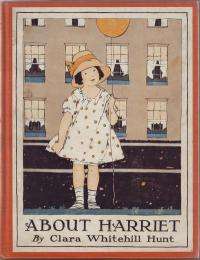
This is a book from 1916 featuring a female central character. Credit: Public Domain

The most comprehensive study of 20th century children's books ever undertaken in the United States has found a bias towards tales that feature men and boys as lead characters. Surprisingly, researchers found that even when the characters are animals, they tend to be male.

The findings, published in the April issue of Gender & Society, are based on a study of nearly 6,000 books published from 1900 to 2000. While previous studies have looked at the representation of male and female characters in children's books, they were often limited in scope. "We looked at a full century of books," says lead author Prof. Janice McCabe, Assistant Professor of Sociology at Florida State University. "One thing that surprised us is that females' representations did not consistently improve from 1900 to 2000; in the mid part of the century it was actually more unequal. Books became more male-dominated."

The study also found that:

  • Males are central characters in 57 percent of children's books published per year, while only 31 percent have female central characters.
  • No more than 33 percent of children's books published in any given year contain central characters that are adult women or female animals, but adult men and male animals appear in up to 100 percent of books.
  • Male animals are central characters in more than 23 percent of books per year, while female animals are in only 7.5 percent.
  • On average, 36.5 percent of books in each year studied include a male in the title, compared to 17.5 percent that include a female.
  • Although books published in the 1990s came close to parity for human characters (with a ratio of 0.9:1 for child characters; 1.2:1 for adult characters), a significant disparity of nearly 2 to 1 remains for male animal characters versus female.
Since children's books are a "dominant blueprint of shared cultural values, meanings, and expectations," the authors say the disparity between male and female characters is sending children a message that "women and girls occupy a less important role in society than men or boys." Books contribute to how children understand what is expected of women and men, and shape the way children will think about their own place in the world.

The authors collected information from the full series of three sources: Caldecott award-winning books, (1938-2000); Little Golden Books, (1942-1993) and the Children's Catalog, (1900-2000). They found that Golden Books tended to have the most unbalanced representations.

A closer look at the types of characters with the greatest disparity reveals that only one Caldecott winner has a female animal as a central character without any male central characters. The 1985 book Have You Seen My Duckling? follows Mother Duck asking other pond animals this question as she searches for a missing duckling.

In seeking to answer why there is such persistent inequality among animal characters in books for kids, the authors say some publishers—under pressure to release that are more gender balanced—use "animal characters in an attempt to avoid the problem of gender representation." However, their findings show that most animal characters are gendered and that inequality among animals is greater—not less—than that among humans.

The tendency of readers to interpret even gender-neutral animal characters as male exaggerates the pattern of female underrepresentation. The authors note that mothers frequently label gender-neutral animal characters as male when reading with their children, and that children assign gender to gender-neutral animal characters. "Together with research on reader interpretations, our findings regarding imbalanced representations among animal characters suggest that these characters could be particularly powerful, and potentially overlooked, conduits for gendered messages…The persistent pattern of disparity among animal characters may reveal a subtle kind of symbolic annihilation of women disguised through animal imagery."

Provided by Sociologists for Women in Society

2.7 /5 (3 votes)  

Filter


Move the slider to adjust rank threshold, so that you can hide some of the comments.


Display comments: newest first

rgwalther
May 03, 2011

Rank: 1 / 5 (2)
Does this study say whether the male and female characters are hetero or homo sexual?
If this all-important sexual preference data is not factored, then this research is obviously biased against gay and female by typical ignorant, insensitive, homophobic, misogynist, (your deprecation here) male elitist pigs.
I think I am going to cry....
Corban
May 03, 2011

Rank: 5 / 5 (1)
"Male" furries just means a furry without discernable female features, which form a narrow set of eyebrows and hair styles. If deciding whether to have a big desk to draw on, or a tiny desk to draw on, which do you think artists will pick?
Modernmystic
May 03, 2011

Rank: 3 / 5 (2)
So, what's the solution here? A regulation that for every kids book you publish with a male hero you need a female one too? Kinda like a "gender fairness doctrine" for kids?

What happens when an author doesn't WANT to do that? Make him "for the greater good"? What's the point of this study?
PPihkala
May 03, 2011

Rank: not rated yet
I think that a (large?) part of the problem lies in the English language itself. Contrary to Finnish in my native Finland, English does not have 'gender-neutral' pronouns. You have to write he or she, while when we write 'hän', it does not carry with it a determination of gender. So to avoid using he or she, one can write about animals and then refer to them as 'it', which is gender-neutral term. Maybe there should be more stories about snails, as they are really gender-neutral by being bi-sexual, having both sexual organs in each animal. As I don't think English will invent gender-neutral 'hän' -equivalent to replace he and she, this gender disparity will probably be maintained.
PinkElephant
May 03, 2011

Rank: not rated yet
@Modernmystic,
What's the point of this study?
To generate information and improve understanding. That what most of science is about.
nevermark
May 03, 2011

Rank: not rated yet
The sexes are different in both reality and fiction and there will never be complete parity. In any case, the goal shouldn't be elimination of disparity but elimination of discrimination. Two very different things.

As long as girls (and boys) are frequently exposed to a variety of female characters and successful real life role models, and encouraged to excel at whatever they want, then differing percentages of men or women in the news or in fiction that happen naturally are not causing harm.
plasticpower
May 04, 2011

Rank: not rated yet
Pretty sure parents can still decide which books to get for their kids, therefore parents are the ultimate influence on what gender balance their kids will experience in their reading. Based on that fact, what these researchers discovered is that AUTHORS of kids' books prefer to use male characters, but it DOES NOT mean that children are exposed to books where a particular gender is more dominant.
plaasjaapie
May 04, 2011

Rank: not rated yet
"Provided by Sociologists for Women in Society"

And this lot aren't biased from the get go? :-/
Modernmystic
May 04, 2011

Rank: not rated yet
@Modernmystic,
What's the point of this study?
To generate information and improve understanding. That what most of science is about.


This isn't about science, this is about a political agenda. Much like "climate change" (is that still what they're calling it these days I lose track). Anyone who can't read between the lines on this kind of crap its either stupid or willfully ignorant...
PinkElephant
May 07, 2011

Rank: not rated yet
This isn't about science, this is about a political agenda.
Bullshit, it's you who are about a political agenda. Basic facts aren't political. If it's a fact that more literary characters are male than female, then it's a fact. Whether you or anyone else wants to make political hay out of it, is irrelevant.
ubavontuba
May 07, 2011

Rank: 5 / 5 (1)
I sometimes dabble in writing children's tales, and I can say without doubt, the English language rules for using male gender pronouns when gender is undefined, has a lot to do with it.

And, most stories are written to engage the largest audience possible. "Typically male" gender roles appeal to the larger audience because it's socially acceptable for both boys AND girls to enjoy "typically masculine" role models - but it's socially unacceptable for boys to equally embrace "typically feminine" role models.

Therefore, the more commercially conscious authors are likely to include more masculine characters, than feminine.
Rank 2.7 /5 (3 votes)
Relevant PhysicsForums posts
  • Consumption rivalry
    createdMay 25, 2012
  • Bilateral trade between all countries
    createdMay 24, 2012
  • Is the economic foundation of social media in jeopardy?
    createdMay 20, 2012
  • Psychology: Rosenthal and Hawthorne Effect
    createdMay 15, 2012
  • Is GDP and National Income the Same Thing?
    createdMay 13, 2012
  • Difference between hourly wage and real GDP per hour worked?
    createdMay 12, 2012
  • More from Physics Forums - Social Sciences

More news stories

Social welfare cuts ultimately come with heavy price, researchers say

(Phys.org) -- Slashing government funding for Medicaid, food stamps and other programs that serve the poor – while politically popular with some lawmakers and many conservatives – may do more harm ...

Other Sciences / Social Sciences

created May 24, 2012 | popularity 4.2 / 5 (15) | comments 126

Ancient Bethlehem seal unearthed in Jerusalem

Israeli archaeologists have discovered a 2,700-year-old seal that bears the inscription "Bethlehem," the Israel Antiquities Authority announced Wednesday, in what experts believe to be the oldest artifact ...

Other Sciences / Archaeology & Fossils

created May 23, 2012 | popularity 3.5 / 5 (14) | comments 23

Oldest Jewish archaeological evidence on the Iberian Peninsula

German archaeologists of the Friedrich Schiller University Jena found one of the oldest archaeological evidence so far of Jewish Culture on the Iberian Peninsula at an excavation site in the south of Portugal, ...

Other Sciences / Archaeology & Fossils

created May 25, 2012 | popularity 4.3 / 5 (4) | comments 12

Dollars and sense: Why are some people morally against tax?

As the U.S. presidential election campaigns heat up, the economic debate is dominated by bailouts, austerity and, inevitably, taxation. Now a new study published in Symbolic Interaction asks why tax is such an important issue ...

Other Sciences / Social Sciences

created May 23, 2012 | popularity 3 / 5 (2) | comments 12

Oldest art even older

New dates from Geißenklösterle Cave in Southwest Germany document the early arrival of modern humans and early appearance of art and music.

Other Sciences / Archaeology & Fossils

created May 24, 2012 | popularity 5 / 5 (2) | comments 6


Nvidia trumpets Tegra 3 phone design wins for 2012

(Phys.org) -- Nvidia’s competitive war paint has a name, Tegra 3. On the heels of Nvidia announcements about lowering costs of its Tegra 3 processors and Nvidia-enabled tablets running Android Ice Cream ...

Browser wars flare in mobile space

The browser wars are heating up again, but this time the fight is for dominance of the mobile Internet.

Scientist: Evolution debate will soon be history

(AP) -- Richard Leakey predicts skepticism over evolution will soon be history. Not that the avowed atheist has any doubts himself.

Dell tablet leak: 10.1-inch display, two-battery choice

(Phys.org) -- Headline after headline talks about vendors’ tablets in the wings as likely number-one contenders for the iPad. Such claims have justifiably been taken with a grain of salt, considering ...

SpotterRF debuts Radar Backpack Kit (w/ Video)

(Phys.org) -- SpotterRF has announced a special radar backpack kit designed to enhance situational awareness for soldiers on the ground. The company says its special radar is designed for warfighters as part ...

SpaceX capsule has 'new car' smell, astronauts say (Update)

SpaceX's Dragon cargo vessel smells like a new car, said astronauts at the International Space Station after opening the hatches Saturday following the spacecraft's landmark mission to the orbiting lab.