Out of thick air: Refining tools and techniques of fog harvesting
In the arid Namib Desert on the west coast of Africa, one type of beetle has found a distinctive way of surviving. When the morning fog rolls in, the Stenocara gracilipes species, also known as the Namib Beetle, collects water droplets on its bumpy back, then lets the moisture roll down into its mouth, allowing it to drink in an area devoid of flowing water.
What nature has developed, Shreerang Chhatre wants to refine, to help the world’s poor. Chhatre is an engineer and aspiring entrepreneur at MIT who works on fog harvesting, the deployment of devices that, like the beetle, attract water droplets and corral the runoff. This way, poor villagers could collect clean water near their homes, instead of spending hours carrying water from distant wells or streams. In pursuing the technical and financial sides of his project, Chhatre is simultaneously a doctoral candidate in chemical engineering at MIT; an MBA student at the MIT Sloan School of Management; and a fellow at MIT’s Legatum Center for Development and Entrepreneurship.
Access to water is a pressing global issue: the World Health Organization and UNICEF estimate that nearly 900 million people worldwide live without safe drinking water. The burden of finding and transporting that water falls heavily on women and children. “As a middle-class person, I think it’s terrible that the poor have to spend hours a day walking just to obtain a basic necessity,” Chhatre says.
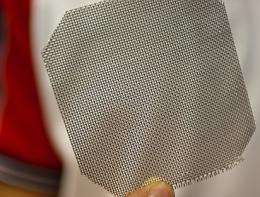
A fog-harvesting device consists of a fence-like mesh panel, which attracts droplets, connected to receptacles into which water drips. Chhatre has co-authored published papers on the materials used in these devices, and believes he has improved their efficacy. “The technical component of my research is done,” Chhatre says. He is pursuing his work at MIT Sloan and the Legatum Center in order to develop a workable business plan for implementing fog-harvesting devices.
Beyond beetle juice
Interest in fog harvesting dates to the 1990s, and increased when new research on Stenocara gracilipes made a splash in 2001. A few technologists saw potential in the concept for people. One Canadian charitable organization, FogQuest, has tested projects in Chile and Guatemala.
Chhatre’s training as a chemical engineer has focused on the wettability of materials, their tendency to either absorb or repel liquids (think of a duck’s feathers, which repel water). A number of MIT faculty have made advances in this area, including Robert Cohen of the Department of Chemical Engineering; Gareth McKinley of the Department of Mechanical Engineering; and Michael Rubner of the Department of Materials Science and Engineering. Chhatre, who also received his master's degree in chemical engineering from MIT in 2009, is co-author, with Cohen and McKinley among other researchers, of three published papers on the kinds of fabrics and coatings that affect wettability.
One basic principle of a good fog-harvesting device is that it must have a combination of surfaces that attract and repel water. For instance, the shell of Stenocara gracilipes has bumps that attract water and troughs that repel it; this way, drops collects on the bumps, then run off through the troughs without being absorbed, so that the water reaches the beetle’s mouth.
To build fog-harvesting devices that work on a human scale, Chhatre says, “The idea is to use the design principles we developed and extend them to this problem.”
To build larger fog harvesters, researchers generally use mesh, rather than a solid surface like a beetle’s shell, because a completely impermeable object creates wind currents that will drag water droplets away from it. In this sense, the beetle’s physiology is an inspiration for human fog harvesting, not a template. “We tried to replicate what the beetle has, but found this kind of open permeable surface is better,” Chhatre says. “The beetle only needs to drink a few micro-liters of water. We want to capture as large a quantity as possible.”
In some field tests, fog harvesters have captured one liter of water (roughly a quart) per one square meter of mesh, per day. Chhatre and his colleagues are conducting laboratory tests to improve the water collection ability of existing meshes.
FogQuest workers say there is more to fog harvesting than technology, however. “You have to get the local community to participate from the beginning,” says Melissa Rosato, who served as project manager for a FogQuest program that has installed 36 mesh nets in the mountaintop village of Tojquia, Guatemala, and supplies water for 150 people. “They’re the ones who are going to be managing and maintaining the equipment.” Because women usually collect water for households, Rosato adds, “If women are not involved, chances of a long-term sustainable project are slim.”
Finding financing for fog harvesting
Whatever Chhatre’s success in the laboratory, he agrees it will not be easy to turn fog-harvesting technology into a viable enterprise. “My consumer has little monetary power,” he notes. As part of his Legatum fellowship and Sloan studies, Chhatre is analyzing which groups might use his potential product. Chhatre believes the technology could also work on the rural west coast of India, north of Mumbai, where he grew up.
Another possibility is that environmentally aware communities, schools or businesses in developed countries might try fog harvesting to reduce the amount of energy needed to obtain water. “As the number of people and businesses in the world increases and rainfall stays the same, more people will be looking for alternatives,” says Robert Schemenauer, the executive director of FogQuest.
Indeed, the importance of water-supply issues globally is one reason Chhatre was selected for his Legatum fellowship.
“We welcomed Shreerang as a Legatum fellow because it is an important problem to solve,” notes Iqbal Z. Quadir, director of the Legatum Center. “About one-third of the planet’s water that is not saline happens to be in the air. Collecting water from thin air solves several problems, including transportation. If people do not spend time fetching water, they can be productively employed in other things which gives rise to an ability to pay. Thus, if this technology is sufficiently advanced and a meaningful amount of water can be captured, it could be commercially viable some day.”
Quadir also feels that if Chhatre manages to sell a sufficient number of collection devices in the developed world, it could contribute to a reduction in price, making it more viable in poor countries. “The aviation industry in its infancy struggled with balloons, but eventually became a viable global industry,” Quadir adds. “Shreerang’s project addresses multiple problems at the same time and, after all, the water that fills our rivers and lakes comes from air.”
That said, fog harvesting remains in its infancy, technologically and commercially, as Chhatre readily recognizes. “This is still a very open problem,” he says. “It’s a work in progress.”
This story is republished courtesy of MIT News (web.mit.edu/newsoffice/), a popular site that covers news about MIT research, innovation and teaching.
Provided by Massachusetts Institute of Technology


