Earth Day? In Texas, it's for the birds
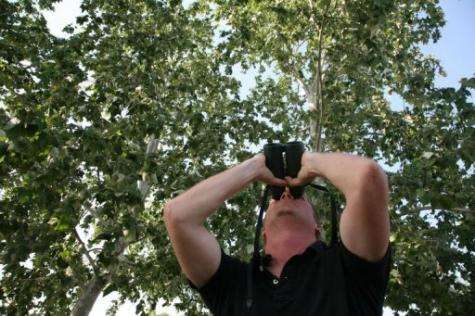
Team Sapsucker sped away in a minivan moments after midnight on Earth Day, ears perked and binoculars in hand, in a race to identify a US record number of bird species in a 24-hour period.
Within minutes the experts with the Cornell Lab of Ornithology had several birds in metaphoric hand -- a yellow-crowned night heron, a mallard, a barred owl -- but plenty more in the bush as they participated in the "Big Day" quest.
The annual challenge raises badly needed funds for research and conservation of America's bird species, many of which are in deep trouble.
What makes this year's event special? It falls by chance on April 22, which is Earth Day, the global celebration of the environment. Suddenly, the Cornell Lab is in the spotlight as part of humanity's broader efforts to do good for flora and fauna, and raise awareness about saving the planet.
Each year the lab chooses a location for its competition and, after assessing migration patterns and weather conditions, determines the day in April when conditions are best for bird-watching.
This year, for the first time, it's in South Texas, and the fact the Big Day coincides with Earth Day gives their challenge greater exposure -- and an increased likelihood of meeting their goal of raising $250,000 for the lab in Ithaca, New York.
"There are lots of birds in really serious trouble," said Team Sapsucker member Marshall Iliff.
Migrating bird numbers are declining because of habitat loss, acid rain and climate change, and Iliff says the public needs to know.
By 12:19 am the team members near the San Antonio zoo had six birds on the books, they told followers in a Twitter message. The night looked promising as they sought to break the national record of 261 unique sightings in a single day.
The more species the group identifies, the higher the public pledge of support. The lab suggested a minimum pledge of $0.25 to $1 per species.
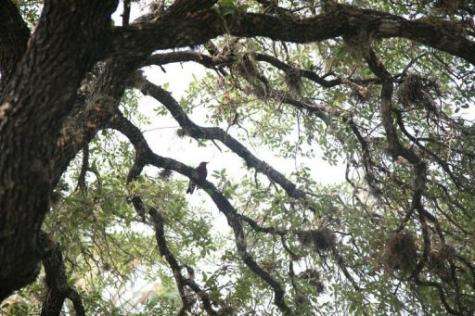
Iliff and the other group members -- Tim Lenz, Jessie Barry, Andrew Farnsworth, Brian Sullivan and captain Chris Wood -- know most of the birds by heart, and rarely have to check ornithology charts or birdwatching guides to confirm their sightings or hearings in the middle of the night.
In past years, bird watching marathons have taken place most often in the East Coast state of New Jersey, but this year marked the first in Texas, the sprawling southern state that borders Mexico.
"Thanks to a huge flood of migration that takes place in April from Mexico, Texas has an especially promising number of birds to see," Iliff said, explaining why they chose the Lone Star State.
Yet shortly after 1:00 am, a sightings slow-down was clearly ruffling the group's feathers.
They tweet via @Team_eBird: "Pauraque easily becomes bird seven just before 1am -- at this rate 168 will put us 93 short of the record :-(."
Earlier, at the San Antonio Botanical Garden, Iliff heard the red-feathered male calling. He also saw a blue jay and a mockingbird.
Once they finish at midnight on April 23, the group will compile its list of birds encountered along the way, hoping to spur the public into giving more than a tweet about regions of the ecosystem that are home to some of the country's most beautiful birds.
"When a bill comes up to save some forest somewhere, people are more likely to say 'Yes, that would be a good thing,'" Iliff said.
"People want to know that area is protected even if they have never been there. We have to be invested to care about it."
Team Sapsucker is invested for these 24 straight hours. The members will refuse sleep and live on the run, energizing with coffee and fast food as they race against the clock to find more species.
Their spirits were revived in a daybreak tweet: "We have scored with the Blue Jay, Green Jay, Audubon's Oriole trifecta. Yes!"
The team will wind up their challenge in Corpus Christi, a coastal city where they had hoped for rain to keep the birds in place a bit longer.
But South Texas did not oblige, and the ornithologists were welcomed with the usual blazing sun.
(c) 2011 AFP


