Despite overhaul, gas wastewater still a problem
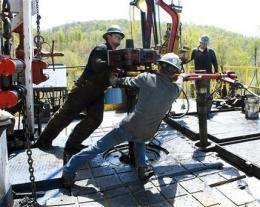
(AP) -- Pennsylvania's natural gas drillers are still flushing vast quantities of contaminated wastewater into rivers that supply drinking water, despite major progress by the industry over the past year in curtailing the practice.
Under pressure from environmentalists and state officials, energy companies that have been drilling thousands of gas wells in the state's countryside spent part of 2010 overhauling the way they handle the chemically tainted and sometimes radioactive water that gushes from the ground after a drilling technique known as high-volume hydraulic fracturing, or fracking.
Until the second half of last year, Pennsylvania had been the only state to allow most of this wastewater to be discharged into rivers after only partial treatment. Other states required most or all of the brine to be disposed of by injecting it deep underground.
In recent months, though, the industry has boasted big gains in the amount of well wastewater that is reused, rather than trucked to treatment plants that empty into rivers and streams.
New figures released by Pennsylvania regulators this week confirm many of those claims, showing that for the first time, a majority of well wastewater is now being recycled. But drilling in the vast, gas-rich rock formation known as the Marcellus Shale is growing so explosively that some of those gains are being erased by operators that still send their waste to plants that discharge into rivers.
Of the 10.6 million barrels of wastewater that gushed from the wells in the final six months of 2010, at least 65 percent was recycled, a dramatic increase from previous years, when little or no recycling took place. But the records also show that at least 2.8 million barrels of well wastewater were sent to treatment plants that discharge into rivers and streams.
By comparison, some 3.6 million barrels were sent to those same plants during the 12-month period that ended on June 30. That means that even with the recycling effort ramping up tremendously, more tainted wastewater is being dumped into rivers now than was the case a year ago.
A total of 1,386 new gas wells were drilled in the state last year, up from 768 a year earlier. Thousands more well permits have been approved.
Kathryn Klaber, president and executive director of the Marcellus Shale Coalition, a group that represents gas drillers, said in a statement that huge improvements in the recycling rate should be viewed as a success story.
"Pennsylvania is at the forefront of developing and implementing industry-leading water recycling and reuse technologies aimed at further reducing our environmental footprint. These commonsense advancements are a win-win for the environment, (and) local communities as well as our industry," she said.
Over the past year, most of the biggest drillers in Pennsylvania have moved toward systems in which water is recycled in new well projects. A variety of recycling methods exist, but most involve doing some light treatment of the wastewater, mixing it with fresh water, and then reusing it in the fracturing process. Companies benefit because it cuts down on the amount of fresh water they need.
Seneca Resources Corp., a subsidiary of National Fuel, reported reusing some 5 million barrels in well wastewater in the last 6 months of 2010.
Range Resources Appalachia, one of the first companies to heavily promote recycling as a solution, also eschewed river dumping entirely. Of the 400,000 barrels of wastewater it generated, much went into deep disposal wells. The rest was recycled.
Other big producers, including Chief Oil & Gas, Cabot Oil & Gas and Atlas Energy Inc., which was purchased by the Chevron Corp. in February, reported a mix of disposal options that include both recycling and the wastewater treatment plants that were previously dominant.
Even as it has made changes, the industry has argued that its original practice of sending most wastewater through partial treatment, and then into rivers, posed no danger to the environment or drinking water.
The drilling boom in the Marcellus Shale and other parts of the U.S. has been made possible by innovations in fracking, in which millions of gallons of water laced with sand and chemicals are injected into wells at such high pressure that the rocks split open, unlocking the gas. Some of the water comes gushing back up, polluted with metals like barium and strontium, and sometimes tainted with high levels of radium or benzene.
Pennsylvania has a few plants that specialize in treating wastewater from the oil, coal and gas business, and operators of these facilities say that they are adept at removing many of the worrisome contaminants.
They are unable, however, to remove the salty dissolved solids and chlorides that the wastewater picks up as it travels through the shale beds. There have been concerns about the salt levels rising in some Pennsylvania rivers that supply drinking water.
A smaller amount of wastewater, about 14 percent in the latest state data, is also being sent to municipal sewage plants that lack the ability to remove contaminants as efficiently as some of the treatment facilities that specialize in oil and gas industry waste.
Some environmentalists have also questioned what happens to all the water that is injected into gas wells but never comes back up. Industry experts have argued that the water is contained in rock formations so deep, there is no potential for it to escape and contaminate local groundwater. But opponents of drilling frequently cite examples where residential water wells have suddenly turned foul in areas where new wells had been dug.
©2010 The Associated Press. All rights reserved. This material may not be published, broadcast, rewritten or redistributed.


