What we know, and don't know, about Japan's reactors
In response to the confusion, speculation and apprehension surrounding the rapidly unfolding events at Japan's Fukushima Daiichi nuclear power plant in the aftermath of last week’s earthquake and tsunami, a panel of MIT nuclear engineering, public health and risk assessment specialists convened on Tuesday to explain how the reactors work, what we know about what has taken place there so far, and how to put the risks to the population in proper perspective.
In introducing the panel discussion, Richard Lester, head of the MIT Department of Nuclear Science and Engineering (NSE), said that “we’ve been taking in a lot of information, much of it I’m afraid not very good, but really what we wanted to do here is give an opportunity for people to ask questions” in order to get a realistic picture of what is known about the troubled reactors. After initial presentations by the panelists, the bulk of the session was devoted to answering questions from the audience.
“As a service to our students, and others in the community, we want to try to provide some technical information on the nuclear reactors that are in distress, on what may have happened, and on what the options may be going forward,” Lester said. He added that much is not known about the situation, and the unusual circumstances make this situation “uncharted territory … so what is said here is by definition going to be incomplete.”
There are a total of six reactors at the Fukushima Daiichi site about 134 miles northeast of Tokyo, explained Professor Mujid Kazimi, director of the Center for Advanced Nuclear Energy Systems. These were completed between 1970 and 1978 and were of “the first vintage” of boiling water reactors — a type that represents only about a third of U.S. reactors, but 60 percent of Japan's 54 operating reactors. In the Fukushima reactors, the spent fuel is stored within the reactor buildings, in pools built into the upper floors.
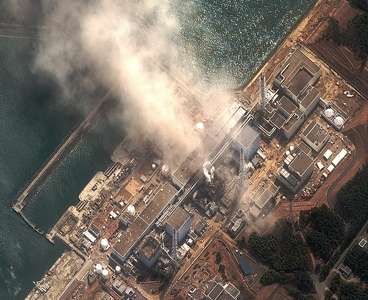
Of the six, units 4 through 6 had been shut down for maintenance long before the earthquake, said Professor Ian Hutchinson, the previous head of NSE. Unit number 1, ironically, was scheduled to be shut down permanently this month. Currently, there have been reported explosions at units 1, 2 and 3 and fires at unit 4. So far, units 5 and 6 have remained under control.
The plant apparently survived the earthquake itself tolerably well, Hutchinson said, and went through an automatic shutdown as it was supposed to. At that point, the ongoing nuclear chain reactions stopped, drastically lowering the heating going on in the reactor core, but not eliminating it — the fuel continues to generate heat for a long time, even after a year still producing about 0.2 percent of the heat generated when the reactor is running. An ongoing flow of water is required to keep the fuel rods from overheating, although the heat does dissipate naturally over time, he explained. When the reactor shut down, on-site diesel generators were started to provide the pumping power needed.
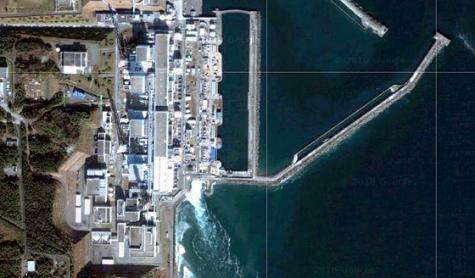
The plant site, on a straight stretch of steep coastline, is fronted by an artificial port — a set of jetties and a seawall that was supposed to protect the plant from a tsunami two meters (about six feet) high, but was easily overtopped in this case by tsunami waves that have been reported to be about twice that height. It was the tsunami that caused the major problems: it disabled the backup diesel generators that had kept the cooling-water pumps going for an hour after the earthquake had cut the main power to the plant. That left only short-term battery packs available. It was at that point that reactors 1 and 3 started losing water by evaporation, and were first left with their fuel rods uncovered by water for a time. Later on, the core of reactor 2 was also uncovered — most likely because of faulty valves, Hutchinson said.
That exposure of the fuel rods led to a buildup of hydrogen, which was vented along with steam from the containment vessel to avoid overstressing it, and that led to an explosion in the upper regions of the building, in each of the three units, over the next three days. “The safety systems should have prevented this [hydrogen buildup] from happening,” Hutchinson said. But, up to this point, the explosions had not breached the containment structures that surround the nuclear fuel.
Then, on Tuesday — although the information coming out has been “somewhat garbled,” Hutchinson said — there was an explosion in unit 2 that was reported to have damaged the inner containment structure, designed to keep the radioactive materials in the core from reaching the outside world. The size of the breach remains unknown, he said, “but this is a very bad thing, because there's an opportunity for a greater release of radiation.”
Another risk developed from the shut-down unit 4, where there has been a fire in the area of the spent fuel pool — which actually can contain similar amounts of radioactive isotopes to the active reactor fuel. “These are very serious problems,” Hutchinson said.
Lester said there were some factors that make the spent fuel in the storage pools easier to deal with than the fuel inside the reactors, and some that make it harder. The fact that it is outside the heavily reinforced containment structures makes it more vulnerable to potential leakage to the environment, he said, but because it is at atmospheric pressure and accessible it also makes it easier to get water inside to keep it cooled off. In addition, most of it is already much cooler than the active fuel, and so requires much less water to keep it cool.
The shut-down reactor cores themselves are putting out about 10 megawatts of thermal energy each, he said, while a very rough estimate suggests the spent fuel pools are putting out about one-tenth that amount.
Video from Tuesday's event. Video: TechTV
The key right now, stressed MIT nuclear engineering professor Michael Golay, is restoring outside power to the plant to provide a reliable power source for the pumps. “The ability to keep them running is crucial,” he said.
So far, Golay said, people have been evacuated from a 20-km (12 mile) zone from the plant, and “sheltering” ordered for those out to 30 km (18 miles). Those from 20 to 30 km out are free to leave, he explained, but if they stay should remain indoors and keep windows shut.
As has been widely reported, the pumping of seawater into at least three of the reactors is a last-ditch move that will prevent those reactors from ever being used again.
“The plants that have seawater in them are writeoffs, a total loss,” Golay said.
Asked to predict what the worst possible outcome might be, Kazimi said that “what we already have is damaged fuel” in at least three reactors, which brings with it “the possibility of [radioactive] releases as long as the water is not controlled. If for some reason the pumping of water is lost for a long period, that will precipitate a melting of the fuel.” However, since the reactors have already been shut down and the heat output is very low, that heating “is not a fast process,” he said.
If the fuel does fully melt, he said, it would “relocate downward,” where it would hit a pool of water at the base of the reactor building, which is there specifically to cool off the molten fuel in case of such an emergency. When the molten fuel reaches the water, Kazimi said, it would solidify again, where it could later be carved up and removed, as was done at Three Mile Island. “It is not likely we would see any explosion that would compare” with the one that took place in 1986 at Chernobyl, he said. Asked about the health consequences of the radiation releases so far from the plants, Jacquelyn Yanch, a specialist in radiation’s health effects and senior lecturer in NSE, said that in Tokyo, radiation had reached 20 times background levels (produced by natural sources such as rock and sunlight) for a short period, and in other prefectures as much as 30 to 40 times background. But to put that in perspective, she said, it would take several days of exposure at such levels to equal the exposure from a single chest X-ray.
In the event of further, larger radiation releases, she said, it is possible that the area where people have so far been temporarily evacuated could end up being evacuated permanently — or, alternatively, that people would choose to live there, knowing they face continuing radiation exposure and an elevated heath risk. They could be facing “a massive evacuation,” she said, “or figure that they need to live with elevated radiation levels.” There are some parts of the world that naturally receive 40 times the dose received on average in the U.S. But, there is “very little data” on the effects of such long-term, low-level exposure.
Lester added that there was one reported case of a plant worker who had received a high dose of radiation, 10 rem, which is about twice the allowed annual exposure for plant workers in one year. The health consequences of that, he said, would be an increase in that person’s lifetime risk of developing cancer from the 25 percent expected for the overall population to about 25.3 percent. Since that report, it seems likely that workers at the plant have been exposed to higher doses, but detailed information is lacking.
Overall, Golay said that the reporting about events at Japan’s nuclear reactors has not been anything like the “media feeding frenzy and misinformation” that he said accompanied the accidents at Three Mile Island and Chernobyl.
Lester noted that the Department of Nuclear Science and Engineering has set up a new blog, run by NSE graduate students with the support of faculty, to provide updated, detailed information about the ongoing situation at the Japanese reactors. It can be read at mitnse.com.
This story is republished courtesy of MIT News (web.mit.edu/newsoffice/), a popular site that covers news about MIT research, innovation and teaching.
Provided by Massachusetts Institute of Technology


