Chemical compounds in trees can fight deadly staph infections in humans
Feb 22, 2011
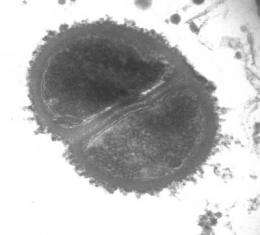
Methicillin-resistant Staphylococcus aureus (MRSA), a “superbug” that is resistant to most medications, sickened more than 94,000 people in 2005 and killed more than 19,000 in the US, according to a report from the Centers for Disease Control. Credit: George Stewart/University of Missouri

Most people would never suspect that a "trash tree," one with little economic value and often removed by farmers due to its ability to destroy farmland, could be the key to fighting a deadly bacterium. Now, a University of Missouri researcher has found an antibiotic in the Eastern Red Cedar tree that is effective against methicillin-resistant Staphylococcus aureus (MRSA), a "superbug" that is resistant to most medications.

"I wanted to find a use for a tree species that is considered a nuisance," said Chung-Ho Lin, research assistant professor in the MU Center for Agroforestry at the College of Agriculture, Food and Natural Resources. "This discovery could help people fight the bacteria as well as give farmers another cash crop."

MRSA is an evolving bacterium that is resistant to most medications. For most people, the infection is isolated to the skin. However, it can spread to vital organs causing toxic shock syndrome and pneumonia, especially in people with weakened immune systems. The incidence of disease caused by MRSA bacteria is increasing worldwide. Thirty years ago, MRSA accounted for 2 percent of all . By 2003, that number had climbed to 64 percent. In 2005, more than 94,000 people developed life-threatening MRSA infections in the United States, according to a Centers for Disease Control report. Nearly 19,000 people died during hospital stays related to these infections.

While the Eastern Red Cedar has few commercial uses, it is present in the U.S. in large numbers and its range extends from Kansas to the eastern United States. An estimated 500 million trees grow in Missouri. Lin began his investigation by building on existing research showing the anti-bacterial potential of chemical compounds derived from the tree.
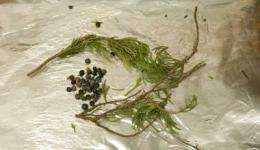
A chemical compound that can kill MRSA was found in needles from Red Cedar trees, an abundant and renewable resource that can be collected annually. Credit: Keith Montgomery/University of Missouri

Lin, George Stewart, professor and department chair of Pathobiology in the College of Veterinary Medicine, and Brian Thompson, postdoctoral fellow in the Bond Life Sciences Center, identified, isolated and tested 17 bioactive compounds and has plans to analyze more compounds. Scientists found that a relatively small concentration of a chemical compound found in the Eastern Red Cedar– 5 micrograms per milliliter – was effective against MRSA. The team tested the compound's effectiveness against many versions of MRSA in a test tube with promising initial results.

"We found this chemical from the cedar needles, an abundant and renewable resource that can be collected annually," co-researcher Brian Thompson said. "Because the compound is in the needles, we don't have to cut down the trees."

In addition to its potential use in fighting MRSA, researchers found that some in the tree are able to fight and kill skin cancer cells present in mice. It may also be effective as a topical acne treatment. Stewart said the compounds are years away from commercial use, as they must go through clinical trials. The team's research was presented recently at the International Conference on Gram-Positive Pathogens.

Explore further: Overcoming resistance to anti-cancer drugs by targeting cell 'powerhouses'

Related Stories

Staph infections carry long-term risks

Jul 03, 2008

Patients who harbor the highly contagious bacterium causing staph infections can develop serious and sometimes deadly symptoms a year or longer after initial detection, a UC Irvine infectious disease researcher has found.

Best treatment identified to reduce deadly Staph infections

Dec 03, 2007

One type of over-the-counter product for topical wound care is more effective than others in killing methicillin-resistant Staphylococcus aureus bacteria, or MRSA, which is potentially deadly and in recent years has moved ...

Study finds MRSA in Midwestern swine, workers

Jan 23, 2009

The first study documenting methicillin-resistant Staphylococcus aureus (MRSA) in swine and swine workers in the United States has been published by University of Iowa researchers.

Researchers find link to severe Staph infections

Dec 23, 2008

Researchers at The University of Texas School of Public Health recently described studies that support the link between the severity of community-acquired antibiotic-resistant Staphylococcus aureus (CA MRSA) infections and th ...

Recommended for you

Unspooling DNA from nucleosomal disks

5 hours ago

The tight wrapping of genomic DNA around nucleosomes in the cell nucleus makes it unavailable for gene expression. A team of Ludwig-Maximilians-Universitaet (LMU) in Munich now describes a mechanism that allows chromosomal ...

Chemists find new compounds to curb staph infection

7 hours ago

(Phys.org) —In an age when microbial pathogens are growing increasingly resistant to the conventional antibiotics used to tamp down infection, a team of Wisconsin scientists has synthesized a potent new ...

DNA damage: The dark side of respiration

May 22, 2013

(Phys.org) —Adventitious changes in cellular DNA can endanger the whole organism, as they may lead to life-threatening illnesses like cancer. Researchers at LMU now report how byproducts of respiration cause mispairing ...

User comments : 1

Adjust slider to filter visible comments by rank

Display comments: newest first

Fakeer
not rated yet Feb 28, 2011
Ayurveda derives almost all of its medical ingrediants from nature, tree barks and roots being a major source. There are numerous citations like the one in this article where plants are effective against organisms resistant to modern meds. Now a takeaway question - what prevents the superbug from developing resistance to even this ayurvedic supermedicine?

More news stories

Chemists find new compounds to curb staph infection

(Phys.org) —In an age when microbial pathogens are growing increasingly resistant to the conventional antibiotics used to tamp down infection, a team of Wisconsin scientists has synthesized a potent new ...

Unspooling DNA from nucleosomal disks

The tight wrapping of genomic DNA around nucleosomes in the cell nucleus makes it unavailable for gene expression. A team of Ludwig-Maximilians-Universitaet (LMU) in Munich now describes a mechanism that allows chromosomal ...

Hubble reveals the ring nebula's true shape

(Phys.org) —The Ring Nebula's distinctive shape makes it a popular illustration for astronomy books. But new observations by NASA's Hubble Space Telescope of the glowing gas shroud around an old, dying, ...

NASA head views progress on asteroid lasso mission

Surrounded by engineers, NASA chief Charles Bolden inspected a prototype spacecraft engine that could power an audacious mission to lasso an asteroid and tow it closer to Earth for astronauts to explore.

Solar Kettle allows for boiling water off the grid

(Phys.org) —A company called Contemporary Energy has unveiled a new device it calls the Solar Kettle. It looks very much like a normal coffee thermos, but has flaps on one side that open to allow for collecting ...