Samsung Nexus S impresses with a few new features but disappoints with slower network
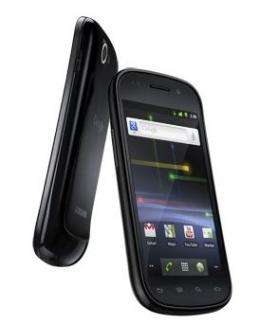
If iPhone launches are like Old Faithful, then Android handset releases are like earthquakes.
They're unpredictable, and major rumbles are often surrounded by smaller, inconsequential tremors.
The new Android-powered Nexus S from Samsung on T-Mobile's network is definitely a big deal. But it's hard to say if it's a bigger deal than the cutting-edge Android devices that came out a few months ago or the cutting-edge Android devices that will come out over the next few months.
There are three major new features in the Nexus S that no other phone has, and two substantial drawbacks.
Let's start with the good stuff.
First, this phone runs the absolute latest version of Android, version 2.3, code-named "gingerbread."
Some existing Android handsets will probably get updated to 2.3 eventually, but there are no guarantees.
Google loves its dessert-themed software names, in case you haven't noticed.
Previous versions of Android were dubbed "cupcake," "donut," "eclair" and "froyo," with "honeycomb" and "ice cream" coming soon.
Anyway, gingerbread brings a variety of changes, most of them minor, such as a brief orange glow at the top or bottom of the screen when you've scrolled to the top or bottom of a list.
But there's also copy and paste (clunky, but functional) and support for one of the other major new features in the Nexus S: near-field communication.
This bit of hardware is a short-range (as in, centimeters) scanner for detecting and reading computer chips that will eventually be embedded in ads, posters and other items.
So you'll be able to tap a movie poster with your phone, for example, and the chip in the poster will instantly direct the browser on your phone to the online preview for that movie.
Near-field communication can also be used as a wireless payment system.
You'd enter your credit card info into your handset and then just wave your phone over compatible readers at retail stores.
This is potentially a big deal Â- an actual digital wallet Â- and several wireless carriers are encouraging retailers and other companies to support this new standard.
The Nexus S isn't the first phone to support near-field communication, but it is the first major smart phone in the U.S. with the technology built in.
So if near-field communication does take off, this is very much a future-proof device.
Finally, the Nexus S sports an unusual concave screen that arcs ever so slightly from the top to the bottom.
Samsung says the curve better matches the natural contour of the human face than a flat slab, but I actually found the shape was better suited to riding comfortably in a pants pocket.
Now the omissions.
The fastest version of T-Mobile's network uses a technology called HSPA+ Â- what T-Mobile has taken to calling "4G" Â- but the Nexus S is limited to slower 3G.
That's a substantial drawback on a phone that's supposed to be top of the line, and the pokier data connection is noticeable compared with T-Mobile's other HSPA+ phones, the myTouch 4G and G2.
The Nexus S also has a pedestrian 5-megapixel camera and cannot shoot high-definition video.
So the Nexus S ($199 with a two-year contract) isn't quite the super phone you might hope for. But it does boast some innovative software and hardware, and if you want to play with those features before anyone else, this is the phone to get.
---
SAMSUNG NEXUS S
- Pros: Samsung's brilliant 4-inch Super AMOLED screen, the latest version of Android and the silky smooth performance of the 1-gigahertz processor make this phone a joy to use.
- Cons: The phone is hobbled by not being on the fastest possible data network.
- Bottom line: If near-field communication takes off, the Nexus S will be remembered not just as a good phone, but as a trendsetter.
(c) 2010, The Dallas Morning News.
Distributed by McClatchy-Tribune Information Services.


