Metabolism models may explain why Alzheimer's disease kills some neuron types first
Bioengineers from the University of California, San Diego developed an explanation for why some types of neurons die sooner than others in the brains of people with Alzheimer's disease. These insights, published in the journal Nature Biotechnology on November 21, come from detailed models of brain energy metabolism developed in the Department of Bioengineering at the UC San Diego Jacobs School of Engineering.
The Alzheimer's insights demonstrate how fundamental insights on human metabolism can be gleaned from computer models that incorporate large genomic and proteomic data sets with information from biochemical studies. UC San Diego bioengineering professor Bernhard Palsson and his students and collaborators first developed this "in silico" modeling approach for E. coli and other prokaryotes, and later extended it to human tissues.
The Nature Biotechnology paper describes the first time this modeling approach has been used to capture how the metabolism of specific human cell types affect the metabolism of other cell types.
"In human tissues, different cells have different roles. We're trying to predict how the behavior of one cell type will affect the behavior of other cell types," said Nathan Lewis, a Ph.D. candidate in the Department of Bioengineering at the UC San Diego Jacobs School of Engineering and the first author on the Nature Biotechnology paper, which also includes authors from the University of Heidelberg, Massachusetts Institute of Technology, and the German Cancer Research Center (DKFZ).
Similar approaches can be used to identify potential off-target effects of drugs, provide insights on disease progression, and offer new tools for uncovering the underlying biological mechanisms in a wide range of human tissues and cell types.
Why Some Neurons Die First in the Alzheimer's Brain
In the brains of people with Alzheimer's disease, certain cells, such as glutamatergic and cholinergic neurons, tend to die in much larger numbers in moderate stages of Alzheimer's disease, while GABAergic neurons are relatively unaffected until later stages of the disease.
"There is a big question as to what is causing this cell-type specificity," said Lewis.
The researchers built computational models that captured the metabolic interactions between each of the three neuron types and their associated astrocyte cells. Next, the bioengineers knocked down α-ketoglutarate, a gene known to be damaged in patients with Alzheimer's disease, and let their models of brain metabolism run to see what happens.
The results from the models agreed with clinical data. When the bioengineers disrupted the α-ketoglutarate enzyme in the models for cholinergic and glutamatergic neurons, the metabolic rate of these neurons dropped, leading to cell death. "But then you have the GABAergic neurons that show no effect. So the cell types that are known to be lost early on in Alzheimer's show slowed metabolic rates," explained Lewis.
Analysis of their models then led the bioengineers to the biochemical pathways that allowed the GABAergic neurons to be relatively unaffected despite the disrupted gene.
"We looked at what upstream is allowing this and found a GABA-specific enzyme called glutamate decarboxylase," said Lewis.
When the researchers added this enzyme to the models of the other neuron types, the metabolic rates of these neurons improved as well. Thus the model allowed the researchers to identify a gene and how it contributes to the whole cell to potentially prolong the life of certain cells in Alzheimer's disease.
Large Scale Modeling of Metabolic Interactions
The new Nature Biotechnology paper uses the Alzheimer's brain study as an example of how to build models of metabolism that go one level deeper than previous work by taking into account the tissue microenvironment and metabolic interactions between specific cell types.
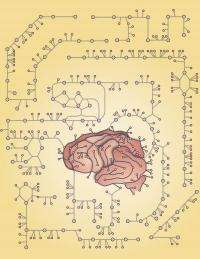
The models for each cell can be represented like a circuit, with certain inputs and outputs. For example, sugars, like glucose, are inputs, and the models detail how these inputs are used to build cell parts and secrete byproducts as outputs. The metabolic models the bioengineers built provide a means to study these networks.
For example, each cell type has different biochemical pathways that can take the sugars from point A to B. If you knock out a gene in between, the network might find a different route, produce different products, or predict cell death. When models for multiple cells are combined, additional insight can be gained since the inputs and outputs of each model begin to affect the other cells.
"There are many potential applications for these models. For example, this modeling approach could be useful for predicting off target side effects of drugs. You could theoretically take a cell line, throw a drug at it and see which metabolic pathways are significantly affected. Thus, you could decrease the amount of resources spent on drug development if the model suggests negative side effects that may cause it to fail," said Lewis.
More information: "Large-scale in silico modeling of metabolic interactions between cell types in the human brain," by Nathan E Lewis et al., Published online on November 21, 2010 in Nature Biotechnology.
Provided by University of California - San Diego


