Cycling is all about 'me time'and a return to childhood
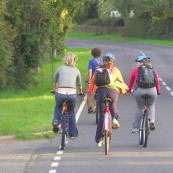
(PhysOrg.com) -- A ground breaking study into the image of cycling in Britain by a research team from the University of the West of England has revealed that people who regularly make small trips by bike are primarily motivated to get on their bikes by the sense of freedom, the opportunity for a bit of 'me time' and feelings that bring about memories of childhood.
“You feel like a kid again.” (Female occasional cyclist)
'The image of cycling in Britain', conducted by three researchers at UWE's Bristol Social Marketing Centre looked at image themes and the socio-cultural landscape of cycling to explore people's decisions against choosing to cycle for utility trips like travelling to work and going shopping.
Researcher Fiona Spotswood explains, “This research is part of a wider study to discover to what extent the image of cycling deters more people from cycling for regular utility trips. Ultimately we will use what we find to devise better ways of using marketing to broaden the appeal of cycling for everyday trips.
“Much work has already been done to highlight the health, environmental and time saving benefits associated with cycling but when presented as key elements in marketing campaigns to encourage cycling – these benefits can sometimes come across as being a bit worthy and preachy. We were keen to explore what people enjoy about cycling. Our project sought to get to the heart of the prime motivations that inspire people to get on their bikes.
“We used what are known as projective and enabling research techniques. We asked cyclists to draw pictures to demonstrate how it feels to be on a bike and to describe 'planet cycle' and tell us how it looked and what it felt like to be there. Planet cycle emerged as a place where the sun always shines, people are more relaxed and where they know their neighbours. On the other hand planet car was a busy place with people rushing around, stressed out.”
Key perceptions of cycling were found to be very positive – people associate the act of cycling with freedom, being fun, bringing back memories of childhood and a pause in the stresses of daily life allowing a space for 'me time'. Respondents also enjoyed the pure physical pleasure of cycling along, being alive and in charge of your own propulsion.
Describing his drawing: “It doesn't need words! Whoosh! I'm going quickly. Bombing along. No brakes. Flying. These are cars stuck in traffic. These are bikes bombing around, getting there a lot quicker than the cars.” (Male regular/sports cyclist)
“I'm happy that I'm going along. Exhausted when I'm going uphill. Peaceful to be going outside. Any worries or thoughts of the kids screaming, that's all gone. Peaceful.” (Female occasional cyclist)
“It's a bit of a stress buster though. It's exercise so it kicks off natural endorphins. And when the wind's blowing in your face. If you don't have to be anywhere it is a stress buster.” (Female lapsed cyclist)
“I made it to show relaxed, fresh air, outdoor, nice day, being calm, you know, no stress, straightforward. Fresh air, just being outdoors.” (Female leisure cyclist).
“I'll be coming home from work. It's nice to get on your bike after a stressful day. You don't have to sit in the traffic. It's a stress buster. It is. It feels good.” (Male utility cyclist).
The research team have used these findings to create a creative tool kit for a marketing communications campaign that reflects the feelings discovered from the findings. Researcher Sarah Leonard explained that “We believe that if we can get to the heart of describing the positive feelings people get rather than the good they are doing for themselves and the planet that it may be a more effective means of inspiring people to cycle.”
For the next phase of the research project the research team will test the toolkit by testing a set of creative concepts which award winning local agency 'Stuff' has generated based on the research findings. Then the resulting campaign will be rolled out and evaluated to consider the impact of a social marketing approach.
The project, 'The image of cycling in Britain', was funded by South Gloucestershire and Bristol City Councils and Bristol Social Marketing Centre at UWE.
Provided by University of the West of England


