Heavy metals and moose
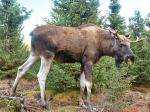
Moose in southern Norway are in significantly worse health than those further north and in eastern Norway. An analysis of roughly 600 moose livers, combined with information such as carcass weights and ages, shows that Norway’s southernmost herds are afflicted with kidney problems and osteoporosis.
Marit Nordlokken, a PhD candidate in NTNU's Department of Chemistry, is investigating whether one of the factors behind these findings may be high concentrations of heavy metals.
Cadmium accumulation
Nordløkken’s analysis shows that there is enough cadmium in the moose organs from southern Norway that hunters should think twice before they eat large amounts of foods made with moose liver or kidneys, such as liver pate or kidney pie.
“Many heavy metals are stored in the liver and kidneys of animals and humans alike. I have found a great deal of cadmium in my analysis. Cadmium is not acutely toxic, but the amount in the body increases with age and can eventually cause health problems and disease," Nordlokken says.
Geographical variation
Nordløkken has examined liver samples from about 600 animals. The samples are mainly supplied by hunters – primarly because it is rare that a moose will die of natural causes in a place where it can be found. She also collects information on carcass weight and age. This collection of information has enabled her to see that the size of the moose varies geographically, and that moose are larger the further north they live.
For example, the moose from the coasts of Nordland and Troms in northern Norway are much larger and heavier than their southern cousins, while moose from Trøndelag, in mid-Norway, are in the middle in terms of weight and size. Nordløkken is able to determine the age of the moose by counting the rings in their teeth, much like biologists can age trees by counting annual tree rings. The oldest animal she has found to date is a cow that was 17-and-a-half years old.
Different diets
It has long been known that there are higher levels of air pollution and higher levels of heavy metals in southern Norway than in the rest of the country. This is due to atmospheric long-range transport from the rest of Europe where the heavy metals fall with acid rain. The most severely affected areas are in West and East Agder counties and parts of Telemark county. This area is characterized by bedrock with granite and gneiss, both of which are not very good at neutralizing acid rain. “It may also be important that the moose are living on different diets in different parts of the country.
The department has another project that examines plants in the southern region and will provide further information about heavy metals in the plants that moose graze on,” say NTNU Professor Torunn Berg and Associate Professor Trond Peder Flaten, who along with Eiliv Steinnes are Nordlokken’s advisers.
Provided by Norwegian University of Science and Technology


