GM safety debate may have new twist
October 28, 2010

GM safety debate may have new twist

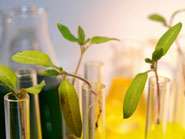
In planta transformation. Image: By Kirsty Foster

By studying plant-fungi-bacteria interactions at plant wound sites, the team have identified a natural process stimulated by a hormone released by the wounded plant that would allow synthetic genes to move across organisms and out into the wild.

The bacterium Agrobacterium tumefaciens transforms plant tissue as part of its infection process.  This natural process provides an important toolbox for scientists to genetically manipulate many species of plants.  Recently this technology has been developed for non-plant organisms including by the Bailey & Foster Group in Bristol’s School of Biological Sciences.

Their success has come from adding the plant wound hormone acetosyringone, which triggers Agrobacterium transformation mechanisms and allows foreign genes to modify cells (genetic transformation).  In the natural environment Agrobacterium and fungi likely encounter each other at plant wound sites where acetosyringone is present, raising the possibility of natural gene transfer from bacterium to fungus.

Professor Gary Foster and colleagues tested whether transformation of fungi by Agrobacterium can occur in nature on plants.  Their results clearly demonstrate that when placed together on damaged plant tissue, Agrobacterium readily transforms associated fungi.  “This suggests a previously unknown route for horizontal gene transfer in nature,” said Professor Foster.

These results may have implications for the risk assessment of GM plants generated via Agrobacterium-mediated transformation.  Agrobacterium can survive within following artificial transformation in tissue culture, and can be detected within regenerated transgenic plants.  This research shows that these have the potential to move the same genetic modifications to fungi in a natural environment.

Prior to release of a GM plant, elimination of Agrobacterium following modern genetic modification is a key concern of geneticists and policy makers as it is essential to prevent later escape of synthesised gene from Agrobacterium to other organisms. 

Professor Foster said: “This study suggests that the encounter between Agrobacterium and a fungus on the plant surface may lead to gene flow in a previously overlooked way, potentially leaking GM genes into the natural world.”

More information: The Bristol study, published online in PLoS ONE, was carried out with financial support from NERC.

Provided by University of Bristol search and more info website


Rank 5 /5 (1 vote)
Relevant PhysicsForums posts

More news stories

Global warming winner: Once rare butterfly thrives

(AP) -- Global warming is rescuing the once-rare brown Argus butterfly, scientists say.

Biology / Ecology

created 1 hour ago | popularity 5 / 5 (1) | comments 1

Researchers find a way to delay aging of stem cells

Stem cells are essential building blocks for all organisms, from plants to humans. They can divide and renew themselves throughout life, differentiating into the specialized tissues needed during development, ...

Biology / Cell & Microbiology

created 8 hours ago | popularity 5 / 5 (4) | comments 0 | with audio podcast

Brightly colored bird bills indicate good health

Troy Murphy has found female bill colour reflects the health of the bird. Females with more colourful bills have higher antibody levels, indicating greater strength and the ability to fight off invaders.

Biology / Plants & Animals

created 2 hours ago | popularity not rated yet | comments 0

Fungi shifted plant balance of power

Cooperating with fungi didn't just help the earliest plants spread across a barren, rocky landscape; it also played a decisive role in the rise of more complex plants with roots and leaves that make up most ...

Biology / Plants & Animals

created 8 hours ago | popularity not rated yet | comments 0 | with audio podcast

Gourmet butterflies speed north: study

A new study led by scientists in the Department of Biology at the University of York has shown how a butterfly has changed its diet, and consequently has sped northwards in response to climate change. Their study is published ...

Biology / Ecology

created 3 hours ago | popularity not rated yet | comments 1 | with audio podcast


New mapping of Mars shows western Medusae Fossae formation older than once thought

(Phys.org) -- Recent geologic mapping of the Medusae Fossae Formation on Mars—an intensely eroded deposit near the northern edge of the cratered highlands—has revealed a wider distribution of its ...

Gene discovery points towards non-hormonal male contraceptive

A new type of male contraceptive could be created thanks to the discovery of a key gene essential for sperm development.

Infections may be deadly for many dialysis patients

An infection called peritonitis commonly arises in the weeks before many dialysis patients die, according to a study appearing in an upcoming issue of the Journal of the American Society of Nephrology (JASN). The findings sugges ...

Obese patients face increased risk of kidney damage after heart surgery

Oxidative stress may put obese patients at increased risk of developing kidney damage after heart surgery, according to a study appearing in an upcoming issue of the Journal of the American Society of Nephrology (JASN). Effect ...

Is a classical electrodynamics law incompatible with special relativity?

(Phys.org) -- The laws of classical electromagnetism that were developed in the 19th century are the same laws that scientists use today. They include Maxwell’s four equations along with the Lorentz la ...

HyperSolar shows dirty water no barrier to power world

(Phys.org) -- The Santa Barbara, California, company, HyperSolar, is set to transparently share the ups and downs of its research experiences toward the company’s ultimate vision, successfully producing ...