Why The Moon?
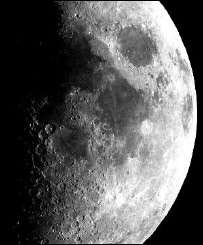
If you asked 100 people why we should return to the moon, you'd probably get 100 answers - or more! Over the past year, NASA posed this question not just to 100 people, but to more than 1,000 from around the world. Scientists, engineers, commercial entrepreneurs, space advocates, and the general public all provided answers to this intriguing question.
Starting with just their responses, NASA worked with 13 of the world's space agencies to develop a Global Exploration Strategy. The strategy explains why the global community believes we should explore space, how space exploration can benefit life on Earth, and how the moon can play a critical role in our exploration of the solar system. One of the primary activities the global space community pursued in 2006 was to answer the questions, "Why should we return to the Moon?" and "What do we hope to accomplish through lunar exploration?"
Lunar Exploration Themes
Six lunar exploration themes evolved from the recent Global Exploration Strategy discussions. NASA engaged the global space community to develop the themes by asking the question, "Why should we return to the Moon?"
From the answers emerged six common areas of interest – six areas of pursuit which, seen through the eyes of the world, define the value of going to the moon. NASA took these six ideas and worked with other space agencies to develop the following lunar exploration themes.
+ Human Civilization
+ Extend human presence to the Moon to enable eventual settlement.
+ Scientific Knowledge
+ Pursue scientific activities that address fundamental questions about the history of Earth, the solar system and the universe - and about our place in them.
+ Exploration Preparation
+ Test technologies, systems, flight operations and exploration techniques to reduce the risks and increase the productivity of future missions to Mars and beyond.
Global Partnerships
+ Provide a challenging, shared and peaceful activity that unites nations in pursuit of common objectives.
+ Economic Expansion
+ Expand Earth's economic sphere, and conduct lunar activities with benefits to life on the home planet
Public Engagement
+ Use a vibrant space exploration program to engage the public, encourage students and help develop the high-tech workforce that will be required to address the challenges of tomorrow
Lunar Exploration Objectives
Almost 200 lunar exploration objectives resulted from the Global Exploration Strategy process. NASA engaged the global space community to develop the objectives by asking the question, "What do we hope to accomplish through lunar exploration?"
NASA took the many answers to this question and compiled them into a comprehensive database of almost 200 different things we could do on the moon! The lunar exploration objectives are meant to capture the entire set of activities that anyone involved in lunar exploration may want to pursue. These activities could be carried out by NASA, another space agency, a private company, a university, or anyone else who invests in space exploration.
Most importantly, each lunar exploration objective can help achieve the broad goals defined by at least one of the lunar exploration themes. For example, the objective "studying craters on the moon" is linked to the "Scientific Knowledge" theme, since studying craters will help us learn more about the moon and the solar system. By linking the objectives to the themes, organizations such as NASA can better understand the specific activities necessary to accomplish the goals.
NASA will take ideas from the lunar exploration themes and objectives and begin to lay out a timeline for what NASA plans to do on the moon.
The themes and objectives are meant to capture the entire set of activities that anyone involved in lunar exploration (a space agency, private firm, university, or other) may want to pursue, as developed by the process described previously. The themes and objectives do not set forth U.S. government or NASA policy. They do not establish a set of activities that NASA or any member of the global space community intends to pursue. The themes and objectives do not reflect whether domestic legislation, international agreements, or both would be necessary to carry them out.
NASA merely facilitated development of these themes and objectives, which are simply one data set to consider as the United States and its potential international partners begin to define lunar exploration architectures.
Copyright 2006 by Space Daily, Distributed by United Press International


