Climate change hits southeast Australia fish species
Sep 28, 2010
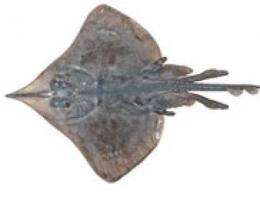
The Maugean skate is currently listed as Endangered by the IUCN Red List of Threatened Animals. Credit: CSIRO

Scientists are reporting significant changes in the distribution of coastal fish species in south-east Australia which they say are partly due to climate change.

CSIRO's Climate Adaptation and Wealth from Oceans Flagships have identified 43 species, representing about 30 per cent of the inshore fish families occurring in the region, that exhibited shifts thought to be climate-related.

These include warm temperate surf-zone species such as Silver Drummer and Rock Blackfish that are breeding and have become more abundant, and range increases in Snapper and Rock Flathead. There is also a greater abundance of warm water tunas and billfishes and occasional visits from Queensland Groper and Tiger Sharks.

"Furthermore, up to 19 species, or 5 per cent, of Tasmanian coastal fish fauna have undergone serious declines or are possibly extinct locally," says the Curator of the Australian National Fish Collection, Dr Peter Last. "At the same time many warm temperate species have moved in and colonised the cool temperate Tasmanian region.

"Shifts in the distribution of marine animals in response to can be detrimental to some species. The problem is that in southern Tasmania, shallow cold water species have nowhere to escape warmer conditions in the sea," Dr Last says.

Particularly at risk are species such as the Maugean Skate, which is now confined to Port Davey and Macquarie Harbour in Tasmania's southwest.

Dr Last and his colleagues from CSIRO and the Tasmanian Aquaculture and Fisheries Institute outline the changes in a research paper published in the journal and Biogeography.

Their data come from a range of sources - published accounts, scientific surveys, spearfishing and angling competitions, commercial catches and underwater photographic records - from the late 1800s to the present. The findings support information provided in Australia's first Marine Climate Change Impacts Report Card, released in 2009, which describes recorded and projected changes to marine species from shifts in climate.

Dr Last says south-eastern Australia is a climate change hotspot with well-documented changes already occurring over the past 70 years, including; southward penetration of the East Australian Current by about 350 kilometres and a temperature rise of almost 2ºC.

"Increased water temperatures in the Tasman Sea are likely to have a cascading effect through local marine ecosystems and, for example, the Bass Strait islands act as stepping stones or distributional pathways south. Already we are seeing biological responses to these changes in the increased presence of sea urchins and fishes from further north."

Explore further: Climate change may have little impact on tropical lizards

add to favorites email to friend print save as pdf

Related Stories

Fish growth changes enhanced by climate change

Apr 27, 2007

Changes in growth rates in some coastal and long-lived deep-ocean fish species in the south west Pacific are consistent with shifts in wind systems and water temperatures, according to new Australian research published in ...

Marine ecosystems get a climate form guide

Nov 27, 2009

(PhysOrg.com) -- The first-ever Australian benchmark of climate change impacts on marine ecosystems and options for adaptation is being released in Brisbane today.

Nine new species for disappearing handfish family

May 21, 2010

(PhysOrg.com) -- Nine new species of handfish have been described by CSIRO in research that highlights an urgent need to better understand and protect the diversity of life in Australia's oceans.

Over 100 new sharks and rays classified

Sep 18, 2008

(PhysOrg.com) -- Australian scientists have completed an ambitious 18-month project to name and describe more than 100 new species of sharks and rays.

Highest-ever winter water temperatures recorded

Aug 06, 2009

(PhysOrg.com) -- Tasmania’s east coast is recording its highest-ever winter water temperatures of more than 13ºC - up to 1.5ºC above normal - due to a strengthening of an ocean current originating north ...

Recommended for you

Climate change may have little impact on tropical lizards

May 17, 2013

A new Dartmouth College study finds human-caused climate change may have little impact on many species of tropical lizards, contradicting a host of recent studies that predict their widespread extinction in a rapidly warming ...

Wetlands: value to locals matters most

May 17, 2013

A new way of valuing ecosystem services, incorporating the local perspective, is the driving force behind a project assessing aquatic ecosystems in highland areas of Asia

Symbolic saviour of an endangered species

May 16, 2013

In 2006 Berlin Zoo saw the birth of their first polar bear cub in 33 years. A retired circus polar bear gave birth to two cubs at the zoo. One of them died soon after, but Knut survived. At only a month old he became the ...

User comments : 0

More news stories

Honeybees trained in Croatia to find land mines

(AP)—Mirjana Filipovic is still haunted by the land mine blast that killed her boyfriend and blew off her left leg while on a fishing trip nearly a decade ago. It happened in a field that was supposedly ...

Bold action, big money needed to curb Asia floods

Asia's flood-prone megacities should fund major drainage, water recycling and waste reduction projects to stem deluges and secure clean supply for their booming populations, experts said Sunday.