Study reveals regulatory spending and staffing is at all-time high
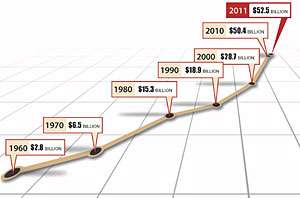
(PhysOrg.com) -- Over the last decade, annual budget outlays for regulatory activities increased by more than 75 percent, according to a federal regulatory spending study conducted by The George Washington University Regulatory Studies Center and the Weidenbaum Center at Washington University in St. Louis.
The FY 2011 Budget of the United States Government calls for fiscal regulatory expenditures of more than $59 billion, the largest federal regulatory budget to date. Contributing to this increase is the number of full-time federal regulatory staff, which is also expected to reach an all-time high of almost 284,000 employees in 2011, up by more than 7,000 employees in 2010.
“The dollar growth in spending over the last decade was more than double that of any previous decade,” said Melinda Warren of Washington University’s Weidenbaum Center on the Economy, Government and Public Policy. Ms. Warren is the co-author of the study, which has been conducted for the past 32 years.
“Spending and staffing in 2011 will continue this trend,” said Susan Dudley, co-author of the report and director of the GW Regulatory Studies Center. “The allocation of regulatory expenditures among the different departments and agencies reflects continued national concerns about homeland security, housing and financial markets and corporate governance.”
The study, “A Decade of Growth in the Regulators’ Budget: An Analysis of the U.S. Budget for Fiscal Years 2010 and 2011,” reveals that budget expenditures and staffing at the Transportation Security Administration (TSA), under the Department of Homeland Security, dominate the growth in the 2011 Regulators’ Budget. President Obama has requested a $1.4 billion increase in expenditures from 2010 and almost 4,600 more positions at the agency. Due in part to the growing number of federal employees engaged in airport screening at the TSA, federal regulatory agencies employed 100,000 more full-time staff in 2010 than in 2000, an increase of more than 57 percent.
Other agencies with homeland security missions also received budget increases in 2011, including the Coast Guard ($158 million increase), the Federal Aviation Administration ($129 million increase) and Immigration and Customs Enforcement ($101 million increase). Additionally, the Food and Drug Administration, the Patent and Trademark Office, the Federal Deposit Insurance Corporation and the Securities and Exchange Commission all received budget increases of $100 million or more.
The report is available online at the GW Regulatory Studies Center and Weidenbaum Center websites.
Provided by Washington University in St. Louis


