Street justice

Mar 29, 2010
Street justice
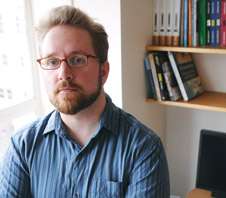
Drakulich found distrust of police, courts creates code of violence in poor minority communities. Photo by Lauren McFalls.

(PhysOrg.com) -- More robberies, muggings and murders take place in low-income neighborhoods where residents lack faith in police, courts and correctional facilities, says criminal justice assistant professor Kevin Drakulich.

He based his conclusions on a National Science Foundation-funded project that included a survey of 6,000 Seattle residents. Drakulich helped complete the study as a PhD candidate at the University of Washington.

According to the study, members of low-income African-American communities in Seattle, distrusting of the , take protection into their own hands and live by a code of street justice based on toughness, respect and pride.

“There is more emphasis on protecting yourself if you don’t have faith in the formal system,” explains Drakulich, whose scholarship focuses on and race, including racial profiling.

The unprecedented surge in incarceration across the United States in the last 40 years has been disproportionately concentrated in a relatively small number of already disadvantaged communities, he says. And hyper-aggressive styles of policing don’t help to control crime, and in fact may be doing more harm than good when it comes to safeguarding individuals, families and communities, says Drakulich.

“When parents go to jail, they can’t take care of their kids, and so the children go unsupervised. They can’t bring revenue to their communities,” he says. “When they get released, their human capital is severely reduced, their chances of marrying are severely reduced.”

Rebuilding those communities that have been hit hardest by crime begins with increasing access to jobs and social service programs, Drakulich says.

But it may also require changing the minds of people whose skewed views on crime have perpetuated racial segregation. According to the NSF-funded study, Seattle residents overestimate crime in African-American communities.

“People are relying on stereotypes to believe there is more crime than there actually is,” he says. “And they’re avoiding the source of their fears by not having any contact with residents of other races.”

Drakulich became interested in criminological research on race and class as an undergraduate at Skidmore College, where he helped a professor evaluate the effectiveness of the Vermont Restorative Justice Program. The community-based initiative aims, in part, to help children address problems of underage drinking and petty theft.

Years later, he’s shedding light on the racial and class disparities among prisoners in the country’s correctional facilities, as well as the impact of policing styles on crime levels.

“If we can better understand exactly how community social processes either facilitate or deter crime, we can design more effective policies to help the most troubled ,” Drakulich says.

Explore further: Challenging the public's view of gender and science

add to favorites email to friend print save as pdf

Related Stories

Active living in diverse and disadvantaged communities

Apr 03, 2008

About 25 million US children and adolescents are overweight or obese. As obesity continues to increase while physical activity continues to decline in the United States, the disparity between the general population and low-income ...

Community gardens don't impact crime rate

Sep 08, 2009

Urban residents across the United States have dug in to create green spaces in their neighborhoods, transforming vacant lots into colorful and crowd-pleasing community gardens. According to the American Community ...

Study examines correlation between race and police force size

Oct 01, 2007

Empirical studies have long shown that crime rate and budget alone do not account for the size of an area’s police force. Police forces tend to be larger in areas where blacks comprise a larger percentage, and many sociologists ...

Recommended for you

Challenging the public's view of gender and science

May 24, 2013

According to She Figures 2012, which analyses gender equality in research, in 2010 women accounted for only 10 % of university rectors in Europe and 15.5 % were heads of institutions of the higher education ...

New study offers insight into how to best manage workaholics

May 22, 2013

(Phys.org) —Workaholics tend to live in extremes, with great job satisfaction and creativity on the one hand and high levels of frustration and exhaustion on the other hand. Now, a new Florida State University study offers ...

The tea party and the politics of paranoia

May 22, 2013

Members of tea party claim the movement springs from and promotes basic American conservative principles such as limited government and fiscal responsibility.

The new retirement: No retirement?

May 22, 2013

For growing numbers of Americans, the new retirement may really mean no retirement. That's the conclusion of an article in the current issue of the ISR Sampler, the annual magazine of the University of Michigan Institute ...

User comments : 1

Adjust slider to filter visible comments by rank

Display comments: newest first

croghan27
not rated yet Mar 30, 2010
I would think that the phrase: "low-income African-American communities" would indicate a certain economic push before the trust of a legal system is involved.

They just do not have the resources to afford some things - and so take them. Had I no alternative I would react badly when a landlord comes to evict me, or would gladly steal food/clothes for my children.

More news stories

Submerged structure stumps Israeli archaeologists

The massive circular structure appears to be an archaeologists dream: a recently discovered antiquity that could reveal secrets of ancient life in the Middle East and is just waiting to be excavated.

Mais non! French universities may teach in English

In France, there's a brewing debate over whether to speak anglais in universite. The National Assembly on Wednesday was taking up an education reform bill that would allow public universities to hold some courses—like science ...

Galaxies fed by funnels of fuel

(Phys.org) —Computer simulations of galaxies growing over billions of years have revealed a likely scenario for how they feed: a cosmic version of swirly straws.