Galaxy Collision Switches on Black Hole
Dec 10, 2009
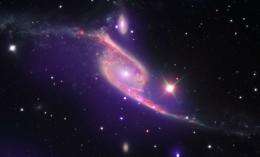
Image: X-ray: NASA/CXC/SAO/M.Machacek; Optical: ESO/VLT; Infrared: NASA/JPL/Caltech

(PhysOrg.com) -- This composite image of data from three different telescopes shows an ongoing collision between two galaxies, NGC 6872 and IC 4970.

X-ray data from NASA's is shown in purple, while Spitzer Space Telescope's infrared data is red and from ESO's Very Large Telescope (VLT) is colored red, green and blue.

Astronomers think that supermassive black holes exist at the center of most galaxies. Not only do the galaxies and black holes seem to co-exist, they are apparently inextricably linked in their evolution. To better understand this symbiotic relationship, scientists have turned to rapidly growing black holes - so-called active galactic nucleus (AGN) - to study how they are affected by their galactic environments.

The latest data from Chandra and Spitzer show that IC 4970, the small galaxy at the top of the image, contains an AGN, but one that is heavily cocooned in gas and dust. This means in optical light telescopes, like the VLT, there is little to see. X-rays and , however, can penetrate this veil of material and reveal the light show that is generated as material heats up before falling onto the black hole (seen as a bright point-like source).

Despite this obscuring gas and dust around IC 4970, the Chandra data suggest that there is not enough hot gas in IC 4970 to fuel the growth of the AGN. Where, then, does the food supply for this black hole come from? The answer lies with its partner galaxy, NGC 6872. These two galaxies are in the process of undergoing a collision, and the gravitational attraction from IC 4970 has likely pulled over some of NGC 6872's deep reservoir of cold gas (seen prominently in the Spitzer data), providing a new fuel supply to power the giant black hole.

Provided by Chandra

Explore further: Dusty surprise around giant black hole

add to favorites email to friend print save as pdf

Related Stories

Black Holes Go 'Mano a Mano'

Oct 06, 2009

(PhysOrg.com) -- Two black holes in galaxy NGC 6240 are only 3,000 light years apart -- and getting closer.

Chandra catches 'piranha' black holes

Jul 24, 2007

Supermassive black holes have been discovered to grow more rapidly in young galaxy clusters, according to new results from NASA's Chandra X-ray Observatory. These "fast-track" supermassive black holes can ...

New Panorama Reveals More Than a Thousand Black Holes

Mar 12, 2007

By casting a wide net, astronomers have captured an image of more than a thousand supermassive black holes. These results give astronomers a snapshot of a crucial period when these monster black holes are growing, ...

A new way to weigh giant black holes

Jul 16, 2008

How do you weigh the biggest black holes in the universe? One answer now comes from a completely new and independent technique that astronomers have developed using data from NASA's Chandra X-ray Observatory.

Chandra sees remarkable eclipse of black hole

Apr 12, 2007

A remarkable eclipse of a supermassive black hole and the hot gas disk around it has been observed with NASA's Chandra X-ray Observatory. This eclipse has allowed two key predictions about the effects of supermassive ...

Chandra finds black holes are 'green'

Apr 24, 2006

Black holes are the most fuel efficient engines in the Universe, according to a new study using NASA's Chandra X-ray Observatory. By making the first direct estimate of how efficient or "green" black holes ...

Recommended for you

Dusty surprise around giant black hole

1 minute ago

(Phys.org) —ESO's Very Large Telescope Interferometer has gathered the most detailed observations ever of the dust around the huge black hole at the centre of an active galaxy. Rather than finding all of ...

Three centaurs follow Uranus through the solar system

Jun 18, 2013

Astrophysicists from the Complutense University of Madrid have confirmed that Crantor, a large asteroid with a diameter of 70 km has an orbit similar to that of Uranus and takes the same amount of time to ...

Final curtain for Europe's deep-space telescope

Jun 17, 2013

The deep-space telescope Herschel took its final bow on Monday, climaxing a successful four-year mission to observe the birth of stars and galaxies, the European Space Agency (ESA) said.

Hubble spots a very bright contortionist

Jun 17, 2013

(Phys.org) —The contorted object captured by Hubble in this picture is IRAS 22491-1808, also known as the South America Galaxy. It is an ultra-luminous infrared galaxy (ULIRG) that emits a huge amount of ...

User comments : 1

Adjust slider to filter visible comments by rank

Display comments: newest first

yyz
5 / 5 (1) Dec 10, 2009
While IC 4970's black hole gets revved up by this interaction, the nucleus of the larger galaxy NGC 6872 shows no signs of current star formation or nuclear activity. But for how long? A study using Spitzer, Chandra and the VLT out last year found a stream of interstellar matter 4000 parsecs from the nucleus falling inward, possibly providing fuel for future star formation or nuclear activity similar to IC 4970. This matter originates in the 'ring' portion of NGC 6872 as seen above. The paper describing these multiwavelength observations can be found here: http://arxiv.org/...77v1.pdf .

More news stories

Dusty surprise around giant black hole

(Phys.org) —ESO's Very Large Telescope Interferometer has gathered the most detailed observations ever of the dust around the huge black hole at the centre of an active galaxy. Rather than finding all of ...

China astronauts float water blob in kids' lecture

Astronauts struck floating martial arts poses, twirled gyroscopes and manipulated wobbling globes of water during a lecture Thursday from China's orbiting space station that's part of efforts to popularize ...

Singapore haze at worst yet, Malaysia schools shut

Singapore urged people to remain indoors amid unprecedented levels of air pollution Thursday as a smoky haze wrought by forest fires in neighboring Indonesia worsened dramatically. Nearby Malaysia closed ...

Philippines financial capital bans plastic bags

The Philippines financial capital banned disposable plastic shopping bags and styrofoam food containers on Thursday, as part of escalating efforts across the nation's capital to curb rubbish that exacerbates ...

How do bees make honey? It's not just bee barf

(Phys.org) —Last weekend, my daughter asked me how bees made honey, and I realized that I didn't know the answer. How do bees make honey? I did some homework, and can now explain it to her – and to you.