Researchers Begin to Decipher Metabolism of Sexual Assault Drug
Nov 19, 2009 By Jennifer Donovan
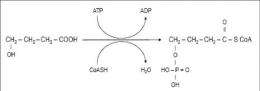
Initial steps in metabolism of 4-HB.

(PhysOrg.com) -- It’s a naturally occurring brain chemical with an unwieldy name: 4-hydroxybutyrate (4-HB). Taken by mouth, it can be abused or used as a date-rape drug.

Now, a team of Ohio and Michigan scientists have determined new routes by which 4-HB is metabolized by the body. “This is new and important information,” said K. Michael Gibson, professor and chair of biological sciences at Michigan Technological University and a member of the research team. “It may provide new clues on how to counteract the drug’s effects, or to enhance its metabolism and decrease toxicity for chronic abusers or victims of sexual assault.”

Gibson is co-author with Guo-Fang Zhang and others in the laboratory of Prof. Henri Brunengraber from the Department of Nutrition at Case Western Reserve University School of Medicine of a paper published online today by the . Their findings will appear in as “paper of the week” in the the print edition of the weekly journal on Nov. 27, 2009. The journal is published by the American Society of Biochemistry and Molecular Biology.

4-HB is a derivative of a major brain in humans and other species. . It occurs naturally in small amounts in the brains of most animals and humans. In a rare genetic metabolic disorder, 4-HB accumulates in extremely high levels, causing significant developmental delays and seizures.

But 4-HB—also called gamma hydroxybutyrate or GHB—is best known and most feared when it is taken orally, because it is a drug that impairs the capacity to exercise judgment, like rohypnol and ketamine hydrochloride. For that reason, it can be used to facilitate acquaintance sexual assault, commonly called date rape.

Analyzing the chemicals produced by the breakdown of 4-HB in mice and rats, Zhang, Gibson and colleagues used very sophisticated approaches to identify previously unknown enzymes and pathways that appear to act on 4-HB and other similarly structured compounds. They discovered that 4-HB is metabolized by two different chemical mechanisms or pathways. Their discovery of those pathways should open the door for future studies that can identify the enzymes involved in the following steps of the breakdown of 4-HB.

“This work may help to develop new antidotes and treatments for people who have ingested 4-HB, as well as treatment for children with the rare genetic disorder that causes the compound to accumulate in high levels,” Gibson said. (For more information on genetic disorders of 4-HB, see www.pndassoc.org).

The 4-HB research was supported by the National Institutes of Health and the Cleveland Mt. Sinai Health Care Foundation.

Provided by Michigan Technological University (news : web)

Explore further: Protein study suggests drug side effects are inevitable

add to favorites email to friend print save as pdf

Related Stories

Genetic signature predicts outcome of pediatric liver cancer

Dec 08, 2008

Scientists have identified a genetic signature that is remarkably effective at predicting the prognosis of an aggressive liver cancer in children. The research, published by Cell Press in the December issue of the journal ...

Anticancer drugs might be of benefit to sickle-cell patients

Dec 06, 2007

Sickle cell disease (SCD) is an inherited blood disorder caused by a genetic mutation that leads to the generation of a mutant form of the beta-globin chain of hemoglobin (Hb). Red blood cells containing Hb with this mutant ...

Removing user fees does not improve health outcomes in Ghana

Jan 06, 2009

Removing user fees for primary health care changed health utilization behaviour but did not improve health outcomes among households with children under the age of five in Ghana, says a new study published in the open access ...

Recommended for you

Protein study suggests drug side effects are inevitable

1 hour ago

A new study of both computer-created and natural proteins suggests that the number of unique pockets – sites where small molecule pharmaceutical compounds can bind to proteins – is surprisingly small, meaning drug side ...

Attacking MRSA with metals from antibacterial clays

May 17, 2013

In the race to protect society from infectious microbes, the bugs are outrunning us. The need for new therapeutic agents is acute, given the emergence of novel pathogens as well as old foes bearing heightened antibiotic resistance.

Keeping fruit, vegetables and cut flowers fresh longer

May 15, 2013

New technology offers the promise of reducing billions of dollars of losses that occur each year from the silent, invisible killer of fruits, vegetables and cut flowers—a gas whose effects are familiar to everyone who has ...

Why don't beetles freeze in the winter?

May 14, 2013

For 37 years, Queen's University Biochemistry professor Peter Davies has been unraveling the mystery of why some organisms including insects and fish don't freeze in the winter. His research into insect antifreeze protein ...

The molecular basis of strawberry aroma

May 13, 2013

You know that summer is here when juicy red strawberries start to appear on the shelves. In Germany, this seasonal fruit has never been more popular: on average 3.5 kilos per head were consumed in 2012—a ...

User comments : 0

More news stories

Non-wetting fabric drains sweat

(Phys.org) —Waterproof fabrics that whisk away sweat could be the latest application of microfluidic technology developed by bioengineers at the University of California, Davis.

Protein study suggests drug side effects are inevitable

A new study of both computer-created and natural proteins suggests that the number of unique pockets – sites where small molecule pharmaceutical compounds can bind to proteins – is surprisingly small, meaning drug side ...

Beautiful 'flowers' self-assemble in a beaker

By simply manipulating chemical gradients in a beaker of fluid, materials scientists at Harvard have found that they can control the growth behavior of crystals to create precisely tailored structures—such ...

Attacking MRSA with metals from antibacterial clays

In the race to protect society from infectious microbes, the bugs are outrunning us. The need for new therapeutic agents is acute, given the emergence of novel pathogens as well as old foes bearing heightened antibiotic resistance.

Study shows how bilinguals switch between languages

(Medical Xpress)—Individuals who learn two languages at an early age seem to switch back and forth between separate "sound systems" for each language, according to new research conducted at the University of Arizona.

Lab sets a new record for creating heralded photons

(Phys.org) —Entanglement, by general consensus of physicists, is the weirdest part of quantum science. To say that two particles, A and B, are entangled means that they are actually two parts of an inseparable ...