Biologists identify the molecular basis of high-altitude adaptation in mice
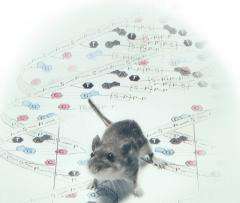
(PhysOrg.com) -- Biologists have long known how adaptive evolution works. New mutations arise within a population and those that confer some benefits to the organism increase in frequency and eventually become fixed in the population.
A significant challenge for evolutionary biologists, however, has been to identify the specific mutations that are responsible for adaptive change. But new research by an international team led by Jay Storz of the University of Nebraska-Lincoln has succeeded in identifying the specific gene mutations that have allowed deer mice to migrate from grasslands at relatively low elevations to low-oxygen alpine peaks.
In a paper published in the Aug. 10-14 online edition of the Proceedings of the National Academy of Sciences, Storz (pronounced storts) and his team describe findings from a population genetic analysis of 75 wild deer mice captured in Colorado -- 38 at about 3,300 feet above sea level in Yuma County near the Kansas border and 37 at the peak of 14,345-foot Mount Evans in Clear Creek County.
Animals in high-altitude, low-oxygen environments such as those at the top of Mount Evans are subject to hypoxia, a condition that results when arterial blood does not carry a sufficient supply of oxygen to bodily tissues. Among the high-altitude mice, however, Storz and his team found mutations in four different hemoglobin genes that enable the animals to tolerate chronic hypoxia.
The mutations found in high-altitude mice increase the oxygen-binding affinity of hemoglobin, which in turn augments the concentration of oxygen in the arterial bloodstream. The mutations were absent in the low-altitude mice.
"The significance of this work is that we have identified the specific mutations involved in evolutionary adaptation to different environments," Storz said. "One of the challenges of living in a low-oxygen environment is that the arterial blood does not carry a sufficient amount of oxygen to all the cells of the body. For animals living in these low-oxygen conditions, it's often advantageous to have hemoglobin with an especially high oxygen-binding affinity. These fine-tuned adjustments in hemoglobin function provide a decisive physiological advantage to animals living in such an extreme environment.
"By using biotechnology methods, we were able to pinpoint the specific mutations that enable the high-altitude mice to tolerate chronic hypoxia. These findings provide important insights into the process of Darwinian evolution at the molecular level."
An assistant professor of biological sciences at UNL since 2005, Storz said the mutations had to have occurred in a relatively short period of time, the 10,000 years since the end of the last glacial maximum since the mice could not have colonized the alpine areas until after Ice Age conditions retreated.
He also said the hemoglobins of high-altitude deer mice are functionally similar to the fetal hemoglobins of humans. Thus, evolution has fashioned similar solutions to the physiological challenges associated with life at high altitude and those associated with pre-natal development in the hypoxic intrauterine environment.
Provided by University of Nebraska-Lincoln (news : web)


