Future of newspapers is digital: Murdoch
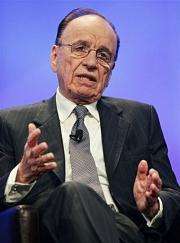
News Corp. chairman Rupert Murdoch said on Thursday that the future of newspapers is digital, but it may be 10 to 15 years before readers go fully electronic.
Murdoch, in an interview with the News Corp.-owned Fox Business Network, also said that newspapers, faced with eroding print advertising revenue and circulation, are going to have to start charging readers on the Web.
The News Corp. chief said newspapers in the future will continue to make money "from our readers, from our advertisers (but) the newspapers may look very different.
"Instead of an analog paper printed on paper you may get it on a panel which would be mobile, which will receive the whole newspaper over the air, (and) be updated every hour or two," he said.
"You'll be able to get the guts or the main headlines and alerts and everything on your Blackberry, on your Palm or whatever, all day long.
"All these things are possible. Some of the greatest electronics companies in the world are working on this very hard," Murdoch said.
"I think it's two or three years away before they get introduced in a big way and then it will probably take 10 years or 15 years for the public to swing over."
Murdoch, who has announced plans to charge readers of his publications online, also said "you're going to have to pay for your favorite newspaper on the Web."
The days of free news online were "going to stop," he said.
"I believe newspapers will be selling subscriptions on the Web," he said. "A (newspaper) website will be vastly improved, much more in them and you'll pay for them."
"There's a case that newspapers rushing on to the Web to try and get a bigger audience and get more attention for themselves have damaged themselves," he said. "Now they're going to have to pull back from that and say 'Hey, we're going to charge for this.'"
Asked by Fox about a government bailout for newspapers, Murdoch said News Corp. would never take government money.
"We'd give up our freedoms and everything else to criticize or to play our full role in the community," he said. "Nothing that News owns will ever take money from the government and I don't believe even The New York Times would."
The 78-year-old Murdoch announced this month that he planned to begin charging readers of the websites of News Corp. newspapers "within the next 12 months."
Murdoch's holdings include The Wall Street Journal, the New York Post, The Times of London, the Sun and The Australian, among others. The Wall Street Journal online already requires a subscription fee for access to all of its content.
Murdoch's comments came as The Atlantic magazine reported that top US newspaper executives held a "discreet" meeting in Chicago on Thursday to discuss the future of the troubled industry.
(c) 2009 AFP


