India's 'holy powder' finally reveals its centuries-old secret
Apr 20, 2009
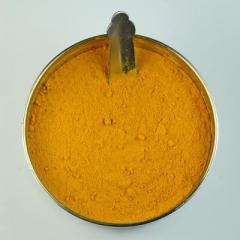
Scientists have unlocked the secrets of the "holy powder" turmeric. Image: Wikimedia Commons

Scientists in Michigan are reporting discovery of the secret behind the fabled healing power of the main ingredient in turmeric — a spice revered in India as "holy powder." Their study on the ingredient, curcumin, appears in the Journal of the American Chemical Society.

In the study, Ayyalusamy Ramamoorthy and colleagues point out that turmeric has been used for centuries in folk medicine to treat wounds, infections, and other health problems. Although modern scientific research on the spice has burgeoned in recent years, scientists until now did not know exactly how curcumin works inside the body.

Using a high-tech instrument termed solid-state NMR spectroscopy, the scientists discovered that molecules of curcumin act like a biochemical disciplinarian. They insert themselves into cell membranes and make the membranes more stable and orderly in a way that increases cells' resistance to infection by disease-causing .

More information: "Determining the Effects of Lipophillic Drugs on Membrane Structure by Solid-State NMR Spectroscopy -- the Case of the Antioxidant Curcumin," .

Source: American Chemical Society (news : web)

Explore further: Reading the unreadable

add to favorites email to friend print save as pdf

Related Stories

Synthetic Molecules Could Add Spice To Fight Against Cancer

Aug 18, 2008

Seeking to improve on nature, scientists used a spice-based compound as a starting point and developed synthetic molecules that, in lab settings, are able to kill cancer cells and stop the cells from spreading. The researchers ...

Curry spice found to fight cancer

Jul 12, 2005

Turmeric, a spice that is a key ingredient in Indian curry dishes, contains a potent cancer-fighting agent, the New York Daily News reported Tuesday.

Recommended for you

Attacking MRSA with metals from antibacterial clays

May 17, 2013

In the race to protect society from infectious microbes, the bugs are outrunning us. The need for new therapeutic agents is acute, given the emergence of novel pathogens as well as old foes bearing heightened antibiotic resistance.

Beautiful 'flowers' self-assemble in a beaker

May 16, 2013

By simply manipulating chemical gradients in a beaker of fluid, materials scientists at Harvard have found that they can control the growth behavior of crystals to create precisely tailored structures—such ...

Reading the unreadable

May 16, 2013

Pioneering X-ray technology is making it possible to read fragile rolled-up historical documents for the first time in centuries.

User comments : 3

Adjust slider to filter visible comments by rank

Display comments: newest first

Mercury_01
5 / 5 (1) Apr 20, 2009
I already take it every day
nilbud
not rated yet Apr 20, 2009
How about ginger?
Mercury_01
5 / 5 (1) Apr 20, 2009
That too. They go well together with some lemon juice and water. Turmeric is a great anti anti inflammatory and also helps prevent cancer, heart disease, and arthritis. I even once put it on a cut and it healed very quickly.I cant say enough about turmeric. Except if your not careful, it will stain ANYTHING. even glass. Come to think of it, it probably makes great paint

More news stories

Attacking MRSA with metals from antibacterial clays

In the race to protect society from infectious microbes, the bugs are outrunning us. The need for new therapeutic agents is acute, given the emergence of novel pathogens as well as old foes bearing heightened antibiotic resistance.

Beautiful 'flowers' self-assemble in a beaker

By simply manipulating chemical gradients in a beaker of fluid, materials scientists at Harvard have found that they can control the growth behavior of crystals to create precisely tailored structures—such ...

Heat-related deaths in Manhattan projected to rise

Residents of Manhattan will not just sweat harder from rising temperatures in the future, says a new study; many may die. Researchers say deaths linked to warming climate may rise some 20 percent by the 2020s, ...

Kinks and curves at the nanoscale

One of the basic principles of nanotechnology is that when you make things extremely small—one nanometer is about five atoms wide, 100,000 times smaller than the diameter of a human hair—they are going ...