Software for safe bridges
Nov 03, 2008
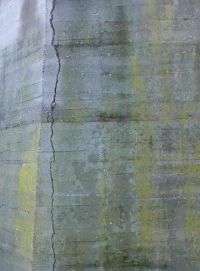
Cracks in bridges are far from unusual. A new software program can now help to identify such damage at an early stage. Credit: Fraunhofer ITWM

Spanning deep gorges, rivers and freeways, bridges are an indispensable part of the traffic network. Yet their condition in Germany is appalling: In a survey carried out by the German automobile club ADAC in 2007, one in ten bridges out of the fifty that were inspected failed the test; a total of four were rated "poor" and one was even rated "very poor". The changing effects of weather and temperature, road salt and the increasing volume of traffic all take their toll on the material – quickly causing damage such as hairline cracks, flaking concrete, and rust penetration. If the bridge engineers fail to recognize these in time, motorists, cyclists and pedestrians are endangered.

Until now, inspectors have always examined a bridge for visible damage directly on site. They cover cracks, for instance, with adhesive strips that expand if the crack gets larger. A new image processing program is set to make these inspection measures unnecessary in future.

Research scientists at the Fraunhofer Institute for Industrial Mathematics ITWM in Kaiserslautern have developed this software jointly with fellow scientists from the Italian company Infracom. "The software automatically examines the photos of a bridge for certain characteristics and irregularities, for instance marked discoloration," explains ITWM scientist Markus Rauhut. "Unlike a human, the tool doesn't miss any abnormalities – even minor damage is identified and signaled."

The challenge is that no two bridges are alike. They differ in terms of their shape, construction material and surface structure, while the color depends on the material, the dirt or fouling, and the degree of humidity. The software has to be able to handle these discrepancies. To make this possible, the researchers have extracted metrics from photographs that include the characteristically elongated shape of a hairline crack, the typical discoloration in damp places, and the structures of the material – which are different for a concrete bridge than for a steel bridge. All of this information is now stored in a database.

When the researchers load a photo into the program, the software compares the features of the new image with those of the saved images. If it detects any irregularities, it marks the respective area on the photo. The bridge inspector can now decide how serious the damage is. Does something need to be done? The faster any damage is identified and clearly categorized, the simpler and less expensive it is to repair it. The engineers have been using the new software successfully for the past six months to inspect bridges in Italy.

Source: Fraunhofer-Gesellschaft

Explore further: Researchers use light projector and single-pixel detectors to create 3-D images

add to favorites email to friend print save as pdf

Related Stories

Opening a window into vector-borne viruses

Apr 12, 2013

Agricultural Research Service scientists in New York and California have developed very different technologies that share a common thread. They offer scientists new, innovative ways to probe what happens ...

Apple's Maps fiasco and the mobile arms race

Oct 16, 2012

A sense of vindication has most likely spread throughout the headquarters of Google in Mountain View, Calif., after reports surfaced that Apple's new Maps app contained glaring imperfections, such as removing ...

Recommended for you

GPS solution provides 3-minute tsunami alerts

May 17, 2013

Researchers have shown that, by using global positioning systems (GPS) to measure ground deformation caused by a large underwater earthquake, they can provide accurate warning of the resulting tsunami in ...

Innovative concrete to facilitate building rehabilitation

May 16, 2013

The Structural Technology Group of the Universitat Politècnica de Catalunya, BarcelonaTech (UPC), in collaboration with the company PROMSA, is participating in the rehabilitation of the Gaudí House Museum in Barcelona's P ...

User comments : 0

More news stories

US seizes Bitcoin operator accounts

US authorities seized the accounts of a Bitcoin digital currency exchange operator, claiming it was functioning as an "unlicensed money service business," court documents showed Friday.

Facebook, Twitter announce apps for Google's Glass

Google says it's still figuring out the best ways to use Glass, but the company announced Thursday that Facebook, Twitter and several other media firms have built their own applications for the futuristic-looking wearable ...

Alaska volcano shoots ash 15,000 feet into the air

(AP)—One of Alaska's most restless volcanoes has shot an ash cloud 15,000 feet into the air in an ongoing eruption that has drawn attention from a nearby community but isn't expected to threaten air traffic.

Chinese, Indian airlines face EU pollution fines

Eight Chinese and two Indian airlines face fines of up to several million euros for not paying for their greenhouse gas emissions during flights within the bloc, the European Commission said on Friday.

Temporal processing in the olfactory system

The neural machinery underlying our olfactory sense continues to be an enigma for neuroscience. A recent review in Neuron seeks to expand traditional ideas about how neurons in the olfactory bulb might encode information about ...