Magnetic Sensor That Brooks No Interference
Jun 03, 2008
Magnetic Sensor That Brooks No Interference
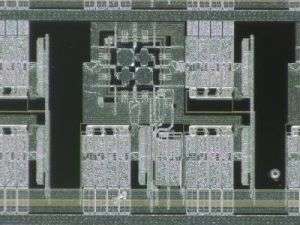
The novel magnetic sensor is capable for the first time of detecting tiny fluctuations in a small magnetic field, and does not allow even a strong magnet to interfere with it. (c) Fraunhofer IIS

Sensors accurately register the slightest temperature fluctuations, the tiniest changes to a magnetic field, or barely perceptible air currents. In some cases, however, there are limits to their accuracy – for instance when a sensor is supposed to register a small fluctuation to a magnetic field in a place where a strong magnetic field already exists.

Take the sensors in a car mirror: If there is a change of driver, the seat and the mirror usually have to be re-adjusted. It would be easier if the position of the seat and the mirror could be saved individually for each driver. With the aid of a tiny chip in the key or a corresponding button on the dashboard, the driver can move these into the correct position at the press of a single button.

There is a tiny magnet in the mirror and another in the seat, whose position is detected by a magnetic sensor and which enables the mirror to be correctly adjusted. The only problem with this system is that the cables which supply the power for heating the mirror and controlling the stepper motor also generate a magnetic field. The sensor therefore sees not only the field generated by the magnet, but also that of the power cable – and comes to the wrong conclusions. Up to now, therefore, such magnetic field sensors have had to be screened. This is difficult and expensive.

A new type of integrated 3-D magnetic field sensor from the Fraunhofer Institute for Integrated Circuits IIS in Erlangen can work without screening. The researchers have arranged several sensors in a pixel cell in such a way that they can measure all three components of the magnetic field in one place. If two of these pixel cells are placed on a chip, the sensor measures not only the magnetic field as such, but also how the position of the magnetic field changes.

"This sensor enables us for the first time to identify magnetic interference fields as such and to separate them from the useful field. The sensor works perfectly even when the interference field is considerably larger than the useful field," says IIS team leader Dr. Hans-Peter Hohe. "There is therefore no need for shielding."

The sensors have another advantage, too: They are suitable for high-temperature applications up to around 150°C and can therefore be utilized in places such as the engine compartment. The sensors have already been tested and developed to a stage where they are suitable for industrial use. To facilitate serial production of the sensors, the researchers used low-cost standard CMOS techniques to manufacture them.

Source: Fraunhofer-Gesellschaft

Explore further: Researchers use light projector and single-pixel detectors to create 3-D images

add to favorites email to friend print save as pdf

Related Stories

New technique helps robotic vehicles find their way

9 hours ago

(Phys.org) —A Wayne State University researcher understands that the three most important things about real estate also apply to small ground robotic vehicles: location, location, location.

Oxygen-sensing microrobots

May 06, 2013

(Phys.org) —When the retina's supply of blood and oxygen runs low, physicians have to react quickly to preserve a patient's eyesight. But up until now there have been no methods sensitive enough to measure ...

16 atomic ions simulate a quantum antiferromagnet

May 03, 2013

(Phys.org) —Frustration crops up throughout nature when conflicting constraints on a physical system compete with one another. The way nature resolves these conflicts often leads to exotic phases of matter ...

GOES-R EXIS instrument ready for integration

May 02, 2013

The first of six instruments that will fly on GOES-R, NOAA's next-generation of geostationary operational environmental satellites, has been completed on schedule, seven months before its scheduled installation ...

Recommended for you

GPS solution provides 3-minute tsunami alerts

May 17, 2013

Researchers have shown that, by using global positioning systems (GPS) to measure ground deformation caused by a large underwater earthquake, they can provide accurate warning of the resulting tsunami in ...

Innovative concrete to facilitate building rehabilitation

May 16, 2013

The Structural Technology Group of the Universitat Politècnica de Catalunya, BarcelonaTech (UPC), in collaboration with the company PROMSA, is participating in the rehabilitation of the Gaudí House Museum in Barcelona's P ...

User comments : 0

More news stories

German energy shift faces headwinds

Tense engineers have their eyes peeled on complex colour-coded diagrams on a wall-sized screen that makes their control room look like the inside of a spaceship.

Internet in 'coma' as Iran election looms

Iran is tightening control of the Internet ahead of next month's presidential election, mindful of violent street protests that social networkers inspired last time around over claims of fraud, users and ...

China police billions spell profit opportunity

Mannequins in riot gear, armoured cars and drones line a police equipment and "anti-terrorism technology" trade fair in Beijing as vendors seek to profit from China's huge internal security budget.

Heat-related deaths in Manhattan projected to rise

Residents of Manhattan will not just sweat harder from rising temperatures in the future, says a new study; many may die. Researchers say deaths linked to warming climate may rise some 20 percent by the 2020s, ...

Kinks and curves at the nanoscale

One of the basic principles of nanotechnology is that when you make things extremely small—one nanometer is about five atoms wide, 100,000 times smaller than the diameter of a human hair—they are going ...