African dust forecast may help hurricane season predictions
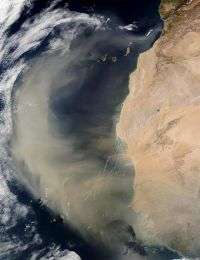
As the official June 1 start of the Atlantic hurricane season approaches, forecasters are developing predictions about the severity of this year's season. For the first time this year, African dust may provide a piece of this puzzle.
Researchers in the Cooperative Institute for Meteorological Satellite Studies (CIMSS) reported earlier this year that African dust storms may dampen hurricanes by cooling sea surface temperature of the tropical Atlantic.
Now CIMSS scientist Amato Evan is extending this work, offering a dust storm activity forecast as a tool to help predict severity of the upcoming hurricane season.
Based on patterns of precipitation in Africa during the past year, Evan predicts a moderate level of dust storm activity this summer. "We have a computer model that takes the dust forecast and tries to estimate how much that dust storm activity will cool the ocean," he says. "There is not likely to be an anomalously large warming or cooling [of ocean temperatures] due to dust storm activity."
The dust originates in the Sahara Desert, where windstorms loft particles and carry them west over the Atlantic. High levels of airborne dust reduce the amount of sunlight that reaches the ocean, lowering sea surface temperatures and, generally, hurricane probability.
In contrast, low dust years correlate with higher ocean temperatures and conditions more conducive to hurricane formation. Warmer waters also contribute to storm severity. "If you have really warm water, it's more likely a hurricane could reach category 5," Evan says. For example, the record-breaking 2005 hurricane season had below-average dust storm activity, very warm sea surface temperatures and an unprecedented four hurricanes that reached category 5, the highest classification.
For this year, Evan's models predict that dust will cool the Atlantic by about 1.1 degrees Celsius, very close to the average effect of dust on the ocean temperature during the past 27 years. He says this amount of cooling alone is not likely to trigger especially high or low hurricane activity.
In the future, Evan hopes to be able to use dust forecasts to predict large peaks or drops in Atlantic Ocean temperatures that may influence tropical storm activity. "Now that the dataset is over a quarter of a century long, we finally have enough information that we can do this," he says.
More detailed information about the dust forecasting method is available online.
Source: University of Wisconsin


