Scientists develop robotic rats to aid in rescue missions
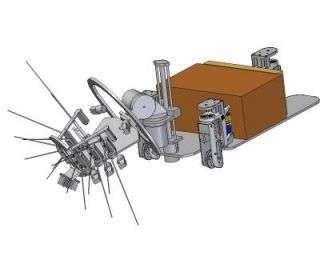
A new initiative, bringing together nine research groups from seven countries, including teams of robotics and brain researchers from Europe, the USA and Israel, has recently been set up with the aim of imitating nature.
Based on principles of active sensing adopted widely in the animal kingdom, the multinational team is developing innovative touch technologies, including a 'whiskered' robotic rat. The whiskered robot will be able to quickly locate, identify and capture moving objects. 'The use of touch in the design of artificial intelligence systems has been largely overlooked, until now,' says Prof. Ehud Ahissar of the Weizmann Institute of Science’s Neurobiology Department, whose research team is one of the groups participating in the multinational project.
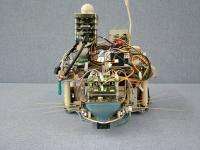
'In nocturnal creatures, or those that inhabit poorly-lit places, the use of touch is widely preferred to vision as a primary means of learning and receiving physical information about their surrounding environment.' One such animal that employs this method is the rat. Several groups of the international consortium are investigating the ways in which rats use their bristly whiskers to explore their environment, and how the brain processes such information. 'If we succeed in understanding what makes an animal’s sense of touch so efficient, we will be able to develop robots imitating this feature, and put them to effective use.'
What is the whisker’s 'secret'? Why is the sense of touch through a rat’s whiskers much more efficient than that of the average person’s finger tips? The consortium’s teams have provided some insights into these questions. One explanation concerns the way in which the sensory system works: Whiskers actively sweep back and forth repetitively, accumulating information about its surrounding environment. The sensing begins in the neurons at the whiskers’ bases, which then fire signals off to the brain.
Moreover, experiments have shown that the way in which a rat uses its whiskers is context-dependent. The seemingly simple act of feeling out a 3-D object, for example, requires three different types of code, each encoding a different dimension – the horizontal, the vertical, and the radial (distance from the whisker base). The horizontal plane, for instance, is encoded in the precise timing of neural signals relative to the whisking motion. The vertical, i.e., the object height, is encoded by the vertical spacing of the whiskers, which are arranged grid-like on either side of the snout. The radial plane, on the other hand, is encoded in the number of times the neurons fire: The closer an object is to the rat's snout, the higher the number of neuron-signaling spikes.
The consortium’s research also suggest that the signals travel from the whiskers through parallel pathways that function within parallel closed feedback loops, constantly monitoring the signals they receive and changing their responses accordingly. The researchers believe that it is the complex interactions between the feedback loops that are responsible for the rich and accurate control of movement, but at the same time, it poses an engineering challenge when trying to build artificial systems based on this concept.
'In order to investigate the role of feedback loops further,' says Prof. David Golomb of Ben Gurion University, Israel, whose research team is one of the groups participating in the multinational project, 'consortium members will implement theoretical methods and calculations from theoretical physics and applied mathematics in order to develop and research models that describe the complicated neural processes that control active sensing'. The models are based on experimental observations, and are expected to be tested by experimental consortium teams.
Ahissar: 'The aim of this research is to help gain a better understanding of the brain on the one hand, and advance technology on the other. That is to say, researchers can use robots as an experimental tool, by building a brain-like system, step-by-step, gaining insights into the workings of the brain’s inside components. With regard to technological applications, we suggest that it is the multiple closed feedback loops that are the key features giving biological systems an advantage over robotic systems. Therefore, implementing this biological knowledge will hopefully allow robotics researchers to build machines that are more efficient, which can be used in rescue missions, as well as search missions under conditions of restricted visibility'. In this way, basic research conducted on animals can contribute to the well-being of humans, other than for medicinal purposes.
Source: Weizmann Institute of Science


