NIST measures performance of auto crash warning systems
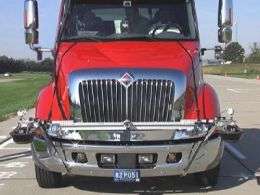
Engineers at the National Institute of Standards and Technology have developed and tested a laser-based ranging system to assess the performance of automobile collision warning systems.
Researchers in industry and at the U.S. Department of Transportation (DOT) will be able to use the NIST technology to accelerate the development and commercialization of safety systems that alert drivers to multiple, and sometimes virtually simultaneous potential crash hazards—both from forward or side collisions as well as from running off the road. DOT believes that such warning systems could reduce substantially the number and severity of injuries to motorists and save lives.
Preliminary tests of prototype collision detection systems with the NIST technology have revealed both potential benefits of the systems and areas that need improvement.
According to DOT, of the 3.6 million rear-end, road departure and lane change crashes that occur each year in the United States, 27,500 result in one or more fatalities—about three-quarters of the nation’s yearly auto-related deaths. DOT estimates that widespread deployment of advanced integrated driver assistance systems may reduce such collisions by 48 percent. The department has formed a partnership with the automobile industry called the Integrated Vehicle Based Safety Systems (IVBSS) initiative to hasten deployment of advanced warning systems in the U.S. vehicle fleet.
To evaluate the performance of crash warning systems, which generally use radar, researchers needed an accurate measurement tool based on entirely different principles. NIST researchers developed an independent measurement system (IMS) consisting of a camera and microphone in the cab to detect the driver warning, a suite of calibrated cameras to measure the distance to lane boundaries and laser scanners to measure the distance to obstacles forward and to the side of the vehicle. The system can be mounted on cars or trucks with trailers and requires no modifications or connections to the warning system being tested. The NIST system can detect an object to within about eight-tenths of a meter from up to 60 meters away at speeds up to 25 m/s (within 33 inches at a distance of 197 feet and speeds up to 56 mph.)
NIST used the IMS to evaluate the performance of two systems built by IVBSS industry partners for a light vehicle and a heavy truck. Researchers collected data in representative crash-imminent driving scenarios in which a crash warning should be issued as well as scenarios that might cause a system to issue a false alarm. Both systems passed most of the more than 30 tests conducted this fall in East Liberty, Ohio and Dundee, Mich. However, the IMS revealed some warning system problems in detecting whether forward vehicles were in-lane or out-of-lane on curves or during lane changes. The IMS also measured significant warning delays that resulted in test failures. Such problems are common in automotive crash warning systems that must operate in real-time, at highway speeds, and use multiple low-cost sensors to measure complex three-dimensional scenes.
DOT is currently analyzing the IMS data and if the results indicate the warning systems pass DOT muster, the next step calls for the IVBSS to equip approximately 20 automobiles and 10 trucks with the warning systems. Volunteer motorists and truckers would be asked to use vehicles on the highway for a month. The DOT will analyze the data to refine estimates of benefit if these systems are deployed in most vehicles.
Source: National Institute of Standards and Technology


