Rescue Robot Tests To Offer Responders High-Tech Help
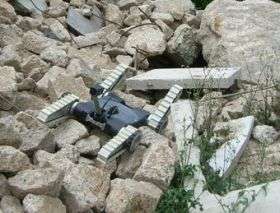
National Institute of Standards and Technology engineers are organizing the fourth in a series of Response Robot Evaluation Exercises for urban search and rescue (US&R) responders to be held on June 18-22, 2007, at Texas A&M’s “Disaster City” training facility in College Station, Texas.
These events, sponsored by the Department of Homeland Security’s (DHS) Science and Technology Directorate, test robot performance on emerging standard test methods using actual training scenarios for emergency responders. The results will be used to refine the test methods, and in developing usage guides that match specific kinds of US&R robots to particular disaster scenarios.
This exercise will use two Disaster City training scenarios. A simulated structural collapse of a municipal building will allow responders to deploy robots to search for victims and assist in “rendering the structure safe” for responders to extricate those victims. This will require robots to face a variety of challenges as they traverse complex and confined spaces within the structure’s semi-collapsed walls, sloping floors, rubble and voids while searching for victims. The robots will be deploying high-tech sensors such as laser scanners to capture the size and shape of interior voids to help structural engineers set up shoring supports.
Responders also will use robots to investigate a “train wreck/derailment” involving a passenger train and an industrial HAZMAT tanker train carrying unknown substances. The unknown hazards of the incident will require emergency responders to direct work from a distance of 150 m (500 ft) initially. This scenario will require robots to traverse railroad tracks, wreckage and debris to map the scene, look in windows to locate victims, find hazardous leaks and identify tanker placards describing their contents. Some robots also may take samples of unknown substances for analysis, all while being remotely controlled from a safe distance. This exercise will focus on ground robots that are highly agile, human-portable, or even throwable, and robots that can circumnavigate a large area from a remote operator station. The robots will feature a variety of sensors, including color cameras, two-way audio transmitters, thermal imagers, chemical sensors, 3D mapping systems and GPS locators paired with geographic information systems (GIS).
Robot developers and vendors benefit from these exercises by learning firsthand what emergency responders need to perform their roles safely and effectively, and by getting feedback about their systems during mock deployments. The emergency responders benefit by getting to work with a wide variety of high-tech solutions within their own deployment scenarios and to guide robot developers toward answering their needs. Both communities will benefit from the emerging standard robot test methods being developed as a result of these exercise, which will provide a means of measuring and comparing robot performance to help responders understand the trade-offs of particular devices, and also help measure and compare operator proficiency in performing critical task through remote control interfaces.
This Response Robot Evaluation Exercise is locally hosted by the Texas A&M Engineering Extension Service and the Texas Federal Emergency Management Agency (FEMA) task force team (TX-TF1).
Source: NIST


