'Happy Feet Jr.' found stranded in New Zealand
Feb 20, 2013
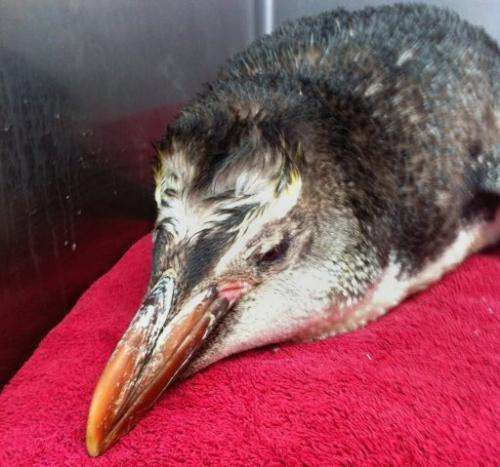
A penguin dubbed Happy Feet junior, has been found stranded in New Zealand, February 20, 2013. The latest wandering stray was discovered close to death on the coast south of Wellington over the weekend and taken to the capital's zoo suffering from malnutrition and kidney failure.

A penguin dubbed Happy Feet junior has been found stranded 2,000 kilometres (1,250 miles) from home in New Zealand, reviving memories of another wayward penguin that washed up in 2011.

The latest wandering stray was discovered close to death on the coast south of Wellington over the weekend and taken to the capital's zoo suffering from malnutrition and .

Wellington Zoo veterinary surgeon Lisa Argilla said it was a juvenile royal penguin, which had drifted far from a breeding colony in sub-Antarctic Macquarie Island and was believed to be the first ever seen in the North Island.

"He's probably left Macquarie in February last year and been caught in a current as he's been feeding and ended up here," she told AFP.

"He's in terrible condition, absolutely emaciated with his kidneys not functioning. Hopefully we can reverse that, feed him up and bring him back to good health but it's touch and go at the moment."

The original Happy Feet, named after the hit 2006 animated film, was an stranded near Wellington in June 2011, attracting worldwide interest during its eight-week recuperation at the zoo.

A New Zealand research ship eventually released the penguin into the Southern Ocean after it received visits from celebrities such as Stephen Fry and best wishes from New Zealand Prime Minister John Key.

However, a tracking device attached to the bird stopped transmitting after a few days, sparking fears it had been eaten by a shark.

Argilla said if the latest penguin made a recovery it would be released off the coast of the South Island, where royal occasionally turn up, and left to swim back home.

"They're amazing at navigation so that shouldn't be a problem for him," she said.

Explore further: Scientists take a new look at an ancient crop

add to favorites email to friend print save as pdf

Related Stories

Happy Feet the penguin begins long swim home

Sep 04, 2011

Happy Feet, the lost penguin who became a worldwide celebrity after he washed up on a New Zealand beach was released back into the Southern Ocean on Sunday to begin a long swim home to Antarctica.

Happy Feet the penguin missing in Southern Ocean

Sep 12, 2011

Scientists tracking Happy Feet, the wayward penguin who became a worldwide celebrity after washing up on a New Zealand beach, said Monday they had lost contact with the giant bird.

New Zealand's lost penguin sets sail for home

Aug 29, 2011

A wayward emperor penguin that found international fame after washing up lost on a New Zealand beach made a low-key exit from Wellington Monday aboard a research ship bound for his home waters.

Concerns for New Zealand's wayward penguin

Jun 24, 2011

An Emperor penguin that washed up lost on a New Zealand beach this week was taken to Wellington Zoo Friday after its health deteriorated, wildlife experts said. ...

Recommended for you

Scientists take a new look at an ancient crop

1 hour ago

Though the price makes you wince, you might just buy that bottle of your favorite olive oil anyway. Perhaps it's exactly what you want for the salad dressing you're making tonight and for your special stir-fry ...

Bittersweet: Bait-averse cockroaches shudder at sugar

19 hours ago

Sugar isn't always sweet to German cockroaches, especially to the ones that avoid roach baits. In a study published May 24 in the journal Science, North Carolina State University entomologists show the ne ...

White tiger mystery solved

21 hours ago

White tigers today are only seen in zoos, but they belong in nature, say researchers reporting new evidence about what makes those tigers white. Their spectacular white coats are produced by a single change ...

User comments : 0

More news stories

EU bans three pesticides harmful to bees

The European Commission said Friday that it will ban for two years beginning in December pesticides blamed for killing the bees that pollinate food and fruit crops.

Studying the Noble King Mackerel

They are sometimes called "smokers," due to the speed at which a fishing line zips out the reel and "smokes" after they hit on the bait.