A tale of turkey tail: The part of the bird best left uneaten
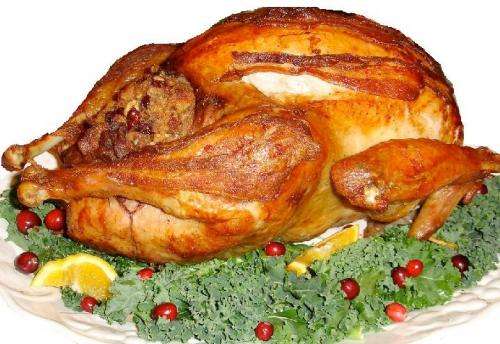
While most Americans look forward to eating turkey on Thanksgiving, Pacific Islanders in the U.S. and on the islands are most likely to eat a part of the bird few other Americans are familiar with: its tail.
"Turkey tail is marketed selectively to Pacific Island communities throughout the U.S. and in Pacific Island territories, as well as independent nations," said University of Michigan researcher Sela Panapasa. "Actually it's not the tail but a gland that attaches the tail to the turkey's body. It's filled with oil that the turkey uses to preen its feathers."
Many islanders think turkey tail is delicious. It's also cheap but far from nutritious.
"It's full of fat and cholesterol, and contributes to one of the major health problems facing Pacific Islanders—obesity," said Panapasa, a Pacific Islander originally from Fiji.
Native Hawaiians and Pacific Islanders are now the second-fastest growing minority group in the nation, according to the U.S. Census Bureau, increasing by 40 percent between 2000 and 2010. Alone or in combination with other races and ethnicities, the group now numbers more than 1.25 million people.
In the Pacific Islander Health Study that Panapasa recently conducted with colleagues from the U-M Institute for Social Research and Harvard University School of Public Health, she found that more than 80 percent of the Samoan and Tongan adults were overweight or obese.
"This is a serious health problem," she said. "And while diet is not the only cause, it is a major contributing factor."
Some Pacific Island nations have attempted to ban the importation of turkey tails and other high-fat food products, but the bans have been lifted in order for these nations to join the World Trade Organization. Panapasa hopes that increasing public awareness will eventually lead to changes in eating habits and that the diets of Pacific Islanders will soon come to include fewer high-fat turkey tails and more low-fat parts of the bird.
More information:
www.sampler.isr.umich.edu/2012 … c-islanders-um-study
projects.isr.umich.edu/nhpi/index.html
Provided by University of Michigan


