Water resources management and policy in a changing world: Where do we go from here?
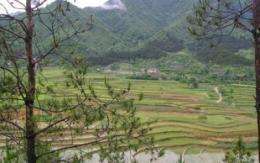
Visualize a dusty place where stream beds are sand and lakes are flats of dried mud. Are we on Mars? In fact, we're on arid parts of Earth, a planet where water covers some 70 percent of the surface.
How long will water be readily available to nourish life here?
Scientists funded by the National Science Foundation's (NSF) Dynamics of Coupled Natural and Human Systems (CNH) program are finding new answers.
NSF-supported CNH researchers will address water resources management and policy in a changing world at the fall meeting of the American Geophysical Union (AGU), held in San Francisco from Dec. 3-7, 2012.
In the United States, more than 36 states face water shortages. Other parts of the world are faring no better.
What are the causes? Do the reasons lie in climate change, population growth or still other factors?
Among the topics to be covered at AGU are sociohydrology, patterns in coupled human-water resource systems and the resilience of coupled natural and human systems to global change.
Researchers will report, for example, that human population growth in the Andes outweighs climate change as the culprit in the region's dwindling water supplies. Does the finding apply in other places, and perhaps around the globe?
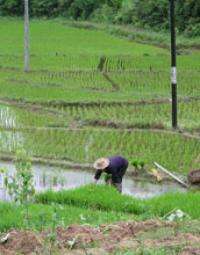
Scientists presenting results are affiliated with CHANS-Net, an international network of researchers who study coupled natural and human systems.
NSF's CNH program supports CHANS-Net, with coordination from the Center for Systems Integration and Sustainability at Michigan State University.
CHANS-Net facilitates communication and collaboration among scientists, engineers and educators striving to find sustainable solutions that benefit the environment while enabling people to thrive.
"For more than a decade, NSF's CNH program has supported projects that explore the complex ways people and natural systems interact with each other," says Tom Baerwald, NSF CNH program director.
"CHANS-Net and its investigators represent a broad range of projects. They're developing a new, better understanding of how our planet works. CHANS-Net researchers are finding practical answers for how people can prosper while maintaining environmental quality."
CNH and CHANS-Net are part of NSF's Science, Engineering and Education for Sustainability (SEES) investment. NSF's Directorates for Geosciences; Social, Behavioral and Economic Sciences; and Biological Sciences support the CNH program.
"CHANS-Net has grown to more than 1,000 members who span generations of natural and social scientists from around the world," says Jianguo "Jack" Liu, principal investigator of CHANS-Net and Rachel Carson Chair in Sustainability at Michigan State University.
"CHANS-Net is very happy to support another 10 CHANS Fellows—outstanding young scientists—to attend AGU, give presentations there, and learn from leaders in CHANS research and build professional networks. We're looking forward to these exciting annual CHANS-Net events."
Speakers at AGU sessions organized by CHANS-Net will discuss such subjects as the importance of water conservation in the 21st century; the Gila River and whether its flows might reduce the risk of water shortages in the Colorado River Basin; and historical evolution of the hydrological functioning of the old Lake Xochimilco in the southern Mexico Basin.
Other topics to be addressed include water conflicts in a changing world; system modeling of the Great Salt Lake in Utah to improve the hydro-ecological performance of diked wetlands; and integrating economics into water resources systems analysis.
"Of all our natural resources, water has become the most precious," wrote Rachel Carson in 1962 in Silent Spring. "By a strange paradox, most of the Earth's abundant water is not usable for agriculture, industry, or human consumption because of its heavy load of sea salts, and so most of the world's population is either experiencing or is threatened with critical shortages."
Fifty years later, more than 100 scientists will present research reflecting Rachel Carson's conviction that "seldom if ever does nature operate in closed and separate compartments, and she has not done so in distributing Earth's water supply."
More information: chans-net.org/
Provided by National Science Foundation


