Scientists examine California's vulnerability to climate change
As climate change threatens to reshape California’s landscape, University of California, Davis, researchers are helping to inform policymakers about the state’s vulnerability and provide strategies for adaptation.
The UC Davis research appears in a report, “Our Changing Climate,” released today by the California Natural Resources Agency and the California Energy Commission. The report is the third assessment from the California Climate Change Center since 2006.
UC Davis scientists authored nine of the 35 studies contained in the report. The UC Davis work addresses climate change impacts on native fishes, agriculture, urban planning, water management and other issues:
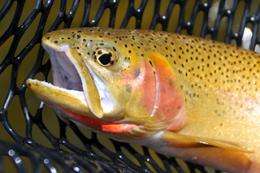
• Peter Moyle, a wildlife, fish and conservation biology professor in the UC Davis Center for Watershed Sciences, studied the predicted effects of climate change on native fishes. His team found that most native fishes will suffer population declines, and some will likely go extinct. Fishes requiring cold water are particularly vulnerable. Meanwhile, non-native fishes are expected to increase, although they will also experience habitat loss during severe droughts.
“California’s unique native fishes are already in steep decline, and climate change is making the situation worse,” Moyle said. “This is likely to increase the complexity of managing California’s water supply. Preventing predictable extinctions is possible but will require planning now for increased water temperatures and more variable flows.”
• James Thorne, a researcher in the Department of Environmental Science and Policy, helped create a model that simulates how rainfall interacts with the landscape. Thorne’s research group looked at hydrologic data from the past and present to help predict what may happen in the future. That model was used for other studies in the report, such as those regarding fire and agriculture, allowing cross comparisons among the researchers’ work.
Thorne also looked at six different policy options for urban growth, including smart-growth, infill and “business as usual” approaches.
“If we want the most lands preserved for a variety of different purposes — agricultural and biodiversity protection, reduced fire threats — the infill policy was best,” Thorne said.
•Studies by Louise Jackson, a professor of land, air and water resources, complemented Thorne’s growth policy conclusion. Her group’s case study focused on greenhouse gas emission mitigation and adaptation to climate change in Yolo County. They found that “channeling much or all future urban development into existing urban areas” will help preserve agricultural land and open space, reduce Yolo County’s greenhouse gas emissions and enhance agricultural sustainability. Their research also found that farmers concerned about climate change were more likely to voluntarily adopt practices that would conserve water and reduce greenhouse gas emissions.
Jackson’s group also developed an agricultural vulnerability index for California that identified four areas as especially vulnerable to the effects of climate change: the Sacramento-San Joaquin Delta; Salinas Valley; the corridor between Merced and Fresno; and the Imperial Valley.
• Jay Lund, director of the UC Davis Center for Watershed Sciences, examined climate change adaptations for managing water in the San Francisco Bay Area. His group's research suggests that Bay Area urban water demands can be largely met even under severe forms of climate change, but at a cost. The cost includes buying water from agricultural users, using more expensive alternatives such as water recycling and desalination, and some increased water scarcity. A shared connection of public water systems, or interties, recently completed for emergency response, greatly aids adaptation, the study reports.
• Joshua Viers, associate director of the Center for Watershed Sciences, co-authored a study analyzing “water year” classifications. These indices determine whether a year is considered wet, dry or in-between, as well as how much water is allocated and who gets it.
“Unfortunately, the method to distinguish different water year types is indexed to historical climatic conditions and is intended to represent an equal chance for any given year,” said Viers. “Our science suggests that future climatic conditions are not likely to represent this history, and thus water management agencies may need to reconsider these arbitrary indexing thresholds going forward to achieve a more equitable situation.”
Viers also co-authored a study about climate change’s impact on hydropower production in the Sierra Nevada. It found that an 11 F increase in air temperature would reduce hydropower in the area by about 10 percent, and that most reductions would occur in the northern Sierra Nevada. The central Sierra Nevada would adapt better to changes in runoff, while hydropower generation in the southern watershed would decrease.
Other institutions, including UC Berkeley, UC Santa Cruz, Stanford, the Scripps Institution of Oceanography, and Lawrence Berkeley National Laboratory researched climate change impacts on electricity consumption, sea level, wildfires and coastal flooding.
This assessment will provide a foundation for the state’s 2012 Climate Adaptation Strategy, with completion expected in December 2012. Comprised of scientific studies from several academic institutions, the assessment is directed by the Governor’s Office and intended to help state and local communities protect public health, grow the state’s economy, ensure energy reliability and safeguard the environment.
More information: www.climatechange.ca.gov/adapt … ion/third_assessment
Provided by UC Davis


