Poaching puts pressure on Malayan tiger
May 15, 2012
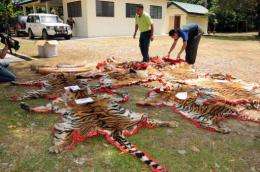
Malaysian Department of Wildlife and National Parks officers display confiscated tiger skins to the media in the northern Kedah state, February 2012. A Malaysian government plan to double its population of endangered Malayan tigers to 1,000 through tighter protection is under threat due to persistent poaching.

A Malaysian government plan to double its population of endangered Malayan tigers to 1,000 through tighter protection is under threat due to persistent poaching, a conservation group warned Tuesday.

Illegal hunting, fuelled by continued demand for tiger parts remains a serious threat to the animal and other endangered wildlife, MYCAT Tracks, an alliance of conservation groups, said in a report.

The Malayan tiger is a subspecies of the great cat and is found in central and southern parts of the Malayan peninsula.

In 2009, the government announced a plan to double the wild Malayan -- now estimated at just 500 -- by the year 2020.

Conservationists say factors behind the fall in numbers include poaching, declines in prey such as deer and , and habitat loss due to agricultural development.

But protective measures, among them a ban on deer hunting aimed at preserving tiger food sources, are being cancelled out by continued poaching, MYCAT Tracks said.

"This is evidenced by the discovery of many poaching signs and close to a thousand snares in (key areas) between 2010 and 2011 as well as the arrest of several poachers," it said.

WWF-Malaysia has previously said demand for wildlife parts to be used in posed a grave threat to tigers and a range of other species.

There were an estimated 3,000 tigers in Malaysia as recently as the 1950s but numbers have steadily declined since.

Explore further: Reports from the Central African Republic indicate security has returned to Dzanga-Sangha National Park

add to favorites email to friend print save as pdf

Related Stories

Malaysian officials save endangered Malayan tiger

Oct 05, 2009

Malaysian wildlife authorities rescued a five-year old Malayan tiger, badly injured in a snare set up by poachers near the country's jungle border with Thailand, officials said Monday.

Viable tiger populations, tiger trade incompatible

Jun 05, 2007

In the cover story of this month’s BioScience journal, leading tiger experts warn that if tigers are to survive, governments must stop all trade in tiger products from wild and captive-bred sources, as well as ramp up eff ...

WWF says China's wild tigers face extinction

Jan 19, 2010

The World Wildlife Fund warned on Tuesday that the wild tiger faced extinction in China after having been decimated by poaching and the destruction of its natural habitat.

Nepal expands critical tiger habitat

Oct 27, 2009

The Government of Nepal announced today an expansion of Bardia National Park in the Terai Arc Landscape by 900 sq km, which will increase critical habitat for tigers.

Malaysia plans sanctuary for captive tigers

Jan 14, 2011

Malaysia plans to set up a large enclosed natural habitat for captive tigers, a senior wildlife official said Friday, an ambitious proposal that has raised concerns among conservationists.

Wild tigers need cat food

Dec 13, 2006

A landmark study by the Wildlife Conservation Society (WCS) and U.S. Geological Survey (USGS) says tigers living in one of India’s best-run national parks lose nearly a quarter of their population each year from poaching ...

Recommended for you

New method for assessing future tree and plant disease risks

6 hours ago

A new method for assessing the impacts and risks of potential future tree and plant pest and disease outbreaks has been developed by the University's Professor Robert Fraser as one of the key recommendations of the government ...

Slow pokes: Acupuncture helps hypothermic turtles

7 hours ago

Two endangered sea turtles that are shells of their former selves after getting stranded on Cape Cod during a cold spell are getting some help easing back into the wild—from an acupuncturist.

Unkempt, weedy land unintentionally boosts wildlife

May 20, 2013

Parts of the farm landscape that look overgrown and 'scruffy' are more important in supporting wildlife than they first appear, according to new research published today in Ecology Letters.

User comments : 1

Adjust slider to filter visible comments by rank

Display comments: newest first

Shifty0x88
not rated yet May 15, 2012
That picture is so sad!!

What a waste of a tiger!!

More news stories