Designing wildlife corridors in the digital age
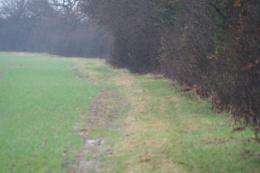
Development is squeezing animals into smaller pockets of land, and without sufficient planning and protection, individual animal populations could find themselves increasingly isolated.
To address this issue, researchers have been reestablishing and protecting connections on the landscape for many years, from building highway crossings to maintaining swaths of forest. These wildlife corridors are designed to enable the meanderings and migrations of animals. As scientists' efforts to improve the quality of these connections become increasingly sophisticated and more mathematical, they are finding that solving the problem has much in common with what happens when someone asks an online service to provide driving directions between two points on a map.
For planners, the goal is to preserve or create effective connections for wildlife at low cost, just as online map services aim to route travelers in the most efficient way possible. Designing a landscape to simultaneously serve the needs of multiple animal species is much more difficult because each may prefer a different type of environment. It's similar to trying to find the single best set of directions between two points for multiple modes of transportation, such as driving, walking, and mountain biking.
"Because they bring several dimensions, these problems are computationally much harder," said Carla Gomes, a computer scientist from Cornell University in Ithaca, N.Y. "If the problem is to connect just two terminals, for one species, then that problem is exactly the same computationally speaking as the problem that Google solves when I ask for the shortest path, for the fastest way to go from Boston to Ithaca, N.Y."
Michael Schwartz, a research ecologist with the U.S. Forest Service's Rocky Mountain Research Station in Missoula, Mont. had been gathering genetic data for more than 10 years and began to find that the methods they were using to analyze certain wildlife management topics were insufficient.
"We got to the point where the math became intractable to us," said Schwartz.
Schwartz started working with Claire Montgomery, a forest economist at Oregon State University in Corvallis, who had been developing methods to address both animal populations and timber management strategies.
"I was beginning to look at problems where uncertainty played a much bigger role than it had in the past in my research," said Montgomery. "And that kind of created a whole new dimension to the problem that I didn't even have a clue how to address computationally."
Multi-Purpose Land Use
Land can be managed with many different outcomes in mind. The land might be used to provide timber or to preserve native species while simultaneously being used for public recreation. Finding the best outcome for many competing interests can be complicated.
One option is providing stable habitat areas for wildlife and connecting them with corridors that enable animals to roam or migrate safely.
These competing interests make compromises inevitable. Analyzing the potential outcomes of different strategies on the inhabitants and resources that rely on a piece of land is complicated, and when the equation also includes the cost of purchasing additional land to provide those wildlife corridor areas, tradeoffs are unavoidable. Setting up a decision-making process with easily understood priorities is also important. Finding the best solution requires computational power and advanced algorithms.
"We felt pretty good about that approach for a single species," said Schwartz. "The question became, 'What happens when you look at multiple species?'"
About two years ago, Schwartz and Montgomery started working with Gomes, who is developing a new field she calls "computational sustainability." It combines aspects of ecology, economics and operations research to intensely analyze data to reveal more comprehensive solutions to difficult problems.
"You want to optimize the quality of the corridors you get for a given budget you have," said Gomes. "A lot of these problems are really highly computational."
Identifying the crucial pieces of land that offer the greatest preservation potential for many animal species and not just one is a multi-layered problem that requires intensive analysis. Consider that the best corridor for grizzly bears may not be ideal habitat for wolverines, and the best compromise for those two may not assist birds.
Factoring in the impacts of those corridors on how humans use the land in question makes the problem more complex.
Useful Data
Ecologists can collect massive amounts of data about animal habits, movement patterns and more. But, even while many of them have expertise in some of the issues at hand, bringing together a multidisciplinary team may be required to identify the most important pieces of land to protect.
The data revolution of recent decades has resulted in increased computational power that has appealed to others researching related topics as well.
"We've obviously benefited tremendously from the ability to do some of these more complex modeling and mathematical computations that weren't available to us when it was done by paper and pen," said Jon Beckmann, a conservation scientist for the Wildlife Conservation Society's North American program who doesn't work with the team. "We've gone from expert-based opinion modeling to models that are based on actual field data."
Beckmann trained as a field ecologist and has had training in computational techniques, but feels that the power of analysis is only as powerful as the data used to underlie the models.
"What you do is build teams with biologists or ecologists that have these strengths because you need both components," said Beckmann. "As we develop these new mathematical capabilities and theories, then it's a continual process that's always changing."
Corridors are complicated and they must be crafted to appeal to animals and in a way that maintains animals' safe passage. If a corridor is designed in a way different from how animals travel the landscape, then it might not work as intended.
"Animals don't read signs," said Cheryl Chetkiewicz, a conservation biologist with Wildlife Conservation Society Canada, who also doesn't work with the team. "It's about maintaining flow. Flows of animals, flows of energy, flows of plants…Corridors are one conservation tool to maintain these flows and avoid barriers in some areas."
Researchers can attempt to translate these factors into models and equations for computer analysis. But Chetkiewicz, who has also studied intact landscapes, isn't convinced that corridors are the best or only solution to the problems faced by animals while they travel. Corridors are a popular management tool, but they don't necessarily represent the ideal situation from an animal's point of view.
"Corridors to me are a last ditch effort to reconnect patches that used to be connected," said Chetkiewicz.
Applying Models to Real Problems
Schwartz said that the models he developed with Montgomery and Gomes are complex and layered, so translating them into a form that land managers can understand and use is critical to protecting contemporary and future landscapes. Schwartz said that without that next step of translating computer model results into the protection of land, animal habitats may collapse to form what he said a colleague calls "a bunch of isolated zoos."
This makes it important to be able to effectively communicate the science to land managers, who report to the public and must be able to make effective and transparent decisions.
The problem can be simply stated, but the solution may not be obvious. Tracking the effects of choices on numerous variables and finding the best overall outcome really is difficult.
"In the past in most forestry applications we look at a particular landscape and we find a management strategy for that landscape, but it's specific to that landscape and to the spatial configuration of vegetation and roads and so on and you can't take it anywhere else," said Montgomery.
"What we are trying to do is combine what the animals like with the reality of economic constraints and budget constraints," said Gomes.
Provided by Inside Science News Service


