UK taxi driver becomes first mummy for 3,000 years
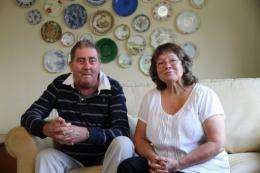
A former British taxi driver has become the first person in the world for 3,000 years to be mummified in the same way as the pharaohs.
Channel Four viewers will see Alan Billis turned into a mummy over the space of a few months as his body is preserved using the techniques which the ancient Egyptians used on Tutankhamun.
Billis had been terminally ill with cancer when he volunteered to undergo the procedure which a scientist has been working to recreate for many years.
The 61-year-old from Torquay in Devon had the backing of his wife Jan, who said: "I'm the only woman in the country who's got a mummy for a husband."
The process is revealed in a new documentary Mummifying Alan: Egypt's Last Secret to be screened next Monday, October 24.
Dr Stephen Buckley, a chemist and research fellow at York University, has spent 19 years trying to uncover the preservation techniques which the Egyptians used during the 18th dynasty.
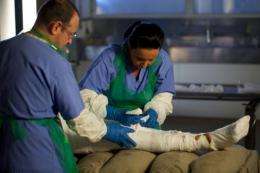
Channel Four viewers will see Alan Billis turned into a mummy over the space of a few months as his body is preserved using the techniques which the ancient Egyptians used on Tutankhamun.
Alongside archaeologist Dr Jo Fletcher, Dr Buckley has studied mummified bodies, analysing tissue samples and finally putting his findings into practice by putting them to the test on Mr Billis's body at Sheffield's Medico-Legal Centre."It's turned current understanding, including my own, completely on its head," said Dr Buckley.
Billis had been diagnosed with terminal lung cancer when he heard about the search for a body donor.
"I was reading the paper and there was a piece that said 'volunteer wanted with a terminal illness to donate their body to be mummified'," he told the documentary team.
"People have been leaving their bodies to science for years and if people don't volunteer for anything nothing gets found out."
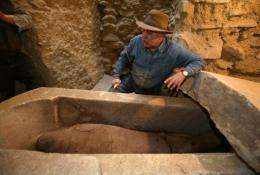
A former British taxi driver has become the first person for 3,000 years to be mummified in the same way as the pharaohs. Channel Four viewers will see Alan Billis turned into a mummy over the space of a few months as his body is preserved using the techniques which the ancient Egyptians used on Tutankhamun.
Billis - who dubbed himself "Tuten-Alan" - continued: "Experimenting is all about trying different processes to make things work. If it doesn't work it's not the end of the world, is it? Don't make any difference to me, I'm not going to feel it. It's still bloody interesting."
His wife took his decision in her stride and said: "He just said, 'I've just phoned someone up about being mummified'. I said 'you've what?' 'Yes, I've phoned up someone about being mummified'.
"And I thought here we go again. What's going to go on now? It's just the sort of thing you would expect him to do."
Dr Buckley has used specialist scientific equipment such as a gas chromatograph mass spectrometer to identify materials which were used by priests, including beeswax, oils and resins.
He went on to conduct a series of experiments using pigs' legs as a substitute for human flesh, rigging up makeshift desert conditions in his shed.
Billis's internal organs - including his lungs and intestines - were removed through an incision in his side, and the sterilised cavity was padded with linen, although the brain was left in place. Then the body's moisture content was removed using a caustic salt from the region, called natron which was described by Greek historian Herodotus in 450BC - 800 years after the 18th dynasty.
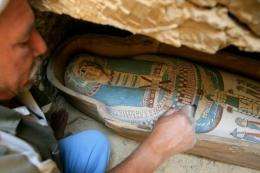
Taxi driver Alan Billis was terminaly ill with cancer when he volunteered to undergo the mummification procedure which a scientist has been working to recreate for many years.
The scientists then immersed the corpse in a salt bath for more than a month to draw out the water. And to protect the skin from the harsh salt it was covered in a special protective layer of oils.The body was then wrapped in linen - like the classic image of a mummy - protecting it from light and insects, and his wife made a visit, leaving favourite photographs and drawings by his grandchildren.
After three months of drying, the process was judged to be complete.
Leading forensic pathologist Professor Peter Vanezis, who was also part of the team of scientists, said: "The skin itself has this leathery appearance which indicates that he has become mummified all over. It makes me very confident that his tissues have been mummified correctly and in a very successful manner."
Dr Buckley was pleased with the results of the natron bath, particularly the preservation of the brain.
"I think he's on the road to looking very much like the best of the best of the 18th Dynasty in 3,000 years' time."
The scientists believe the results may help in developing an alternative to formaldehyde in the preservation of tissue.
Channel 4 said the experiment had a scientific purpose and had not been done for sensationalism.
A spokesman said: "This is a serious scientific project, the result of a two-decade academic investigation to rediscover and replicate how the ancient Egyptians preserved their greatest pharaohs for thousands of years.
"The research may also offer an alternative to the preservation of tissue using formaldehyde, which has been found to be carcinogenic.
"The donor gave full consent to take part and his family are very happy with the mummification process and the programme."
Billis' family said they had given their full support. A statement issued on their behalf said: "Alan found out about this project when he was diagnosed with terminal cancer, and the project gave him something to focus on during his final months.
"As a family we were all supportive of his decision and have been overwhelmed by the care and attention he has received since his death. We would like to thank all involved for making his wish possible, and for making this such a positive experience."
The body will be kept at the Sheffield Medico-Legal Centre until the end of the year and it is hoped it will be used for further study into mummification and decomposition.
(c) 2011 AFP
-
From lemons to lemonade: Reaction uses carbon dioxide to make carbon-based semiconductor,
32 comments
-
Thioridazine kills cancer stem cells in human while avoiding toxic side-effects of conventional cancer treatments,
3 comments
-
SpaceX private rocket blasts off for space station (Update),
42 comments
-
Climate scientists say they have solved riddle of rising sea,
31 comments
-
SpaceX capsule has 'new car' smell, astronauts say (Update),
3 comments
-
What would stain as translucent on light-coloured fabric?
21 hours ago
-
How do I identify different bacteria on culture plates?
May 26, 2012
-
Why Do Dogs do Strange things...
May 25, 2012
-
What does exophillic and endophillic mean in terms of mosquito and their control?
May 24, 2012
-
Semen stains glows under black lights (uv light)?
May 23, 2012
-
Question on Human Chromosome 2
May 23, 2012
- More from Physics Forums - Biology
More news stories
Change in developmental timing was crucial in the evolutionary shift from dinosaurs to birds: study
At first glance, it's hard to see how a common house sparrow and a Tyrannosaurus Rex might have anything in common. After all, one is a bird that weighs less than an ounce, and the other is a dinosaur that ...
Other Sciences / Archaeology & Fossils
1 hour ago |
5 / 5 (2) |
0
|
Social welfare cuts ultimately come with heavy price, researchers say
(Phys.org) -- Slashing government funding for Medicaid, food stamps and other programs that serve the poor while politically popular with some lawmakers and many conservatives may do more harm ...
Other Sciences / Social Sciences
May 24, 2012 |
4.3 / 5 (16) |
151
Ancient Bethlehem seal unearthed in Jerusalem
Israeli archaeologists have discovered a 2,700-year-old seal that bears the inscription "Bethlehem," the Israel Antiquities Authority announced Wednesday, in what experts believe to be the oldest artifact ...
Other Sciences / Archaeology & Fossils
May 23, 2012 |
3.5 / 5 (14) |
23
Oldest Jewish archaeological evidence on the Iberian Peninsula
German archaeologists of the Friedrich Schiller University Jena found one of the oldest archaeological evidence so far of Jewish Culture on the Iberian Peninsula at an excavation site in the south of Portugal, ...
Other Sciences / Archaeology & Fossils
May 25, 2012 |
4.4 / 5 (5) |
12
Dollars and sense: Why are some people morally against tax?
As the U.S. presidential election campaigns heat up, the economic debate is dominated by bailouts, austerity and, inevitably, taxation. Now a new study published in Symbolic Interaction asks why tax is such an important issue ...
Other Sciences / Social Sciences
May 23, 2012 |
3 / 5 (2) |
12
'Unzipped' carbon nanotubes could help energize fuel cells, batteries
Multi-walled carbon nanotubes riddled with defects and impurities on the outside could replace some of the expensive platinum catalysts used in fuel cells and metal-air batteries, according to scientists at ...
T cells 'hunt' parasites like animal predators seek prey, study shows
By pairing an intimate knowledge of immune-system function with a deep understanding of statistical physics, a cross-disciplinary team at the University of Pennsylvania has arrived at a surprising finding: T cells use a movement ...
Computer model used to pinpoint prime materials for efficient carbon capture
When power plants begin capturing their carbon emissions to reduce greenhouse gases and to most in the electric power industry, it's a question of when, not if it will be an expensive undertaking.
Yale study concludes public apathy over climate change unrelated to science literacy
Are members of the public divided about climate change because they don't understand the science behind it? If Americans knew more basic science and were more proficient in technical reasoning, would public consensus match ...
Same gene that stunts infants' growth also makes them grow too big: research
UCLA geneticists have identified the mutation responsible for IMAGe* syndrome, a rare disorder that stunts infants' growth. The twist? The mutation occurs on the same gene that causes Beckwith-Wiedemann syndrome, which makes ...
Scientists develop ultra-sensitive test that detects diseases in their earliest stages
Scientists have developed an ultra-sensitive test that should enable them to detect signs of a disease in its earliest stages, in research published today in the journal Nature Materials.


Oct 18, 2011
Rank: 5 / 5 (1)
And I guess the family didn't want the hook going up his nose to remove the liquified brain matter.
Oct 18, 2011
Rank: 2.3 / 5 (3)
Oct 18, 2011
Rank: 3 / 5 (2)
Oct 18, 2011
Rank: 5 / 5 (1)
Dr. Bob Brier did this in 1994; National Geographic made a documentary about it.
http://en.wikiped...evements
Oct 18, 2011
Rank: not rated yet
As I understand it, the brain was removed in one of two ways: either a hook was inserted into the nasal cavity and the brain was removed piece by piece, or the hook was repeatedly jammed into the cranial cavity until the brain was a viscous slime (liquid, for brevity's sake) and the "liquified" brain was drained through the nose.
This could be old information, but that's what I learned in school and at the museum as a kid.
Oct 18, 2011
Rank: not rated yet
Oct 18, 2011
Rank: 5 / 5 (1)
Oct 19, 2011
Rank: 1 / 5 (1)
Hi what is your email i would like a copy of this tape of that is possible.
Oct 19, 2011
Rank: not rated yet
This is what I'm saying, dude! Have you listened to Dr Brier's Egypt lectures from The Teaching Company? They're great! He's a fascinating and fun guy to listen to.
Oct 19, 2011
Rank: not rated yet
Oct 21, 2011
Rank: not rated yet
I sent you a PM with my private email address if you still want a copy of the videotape.